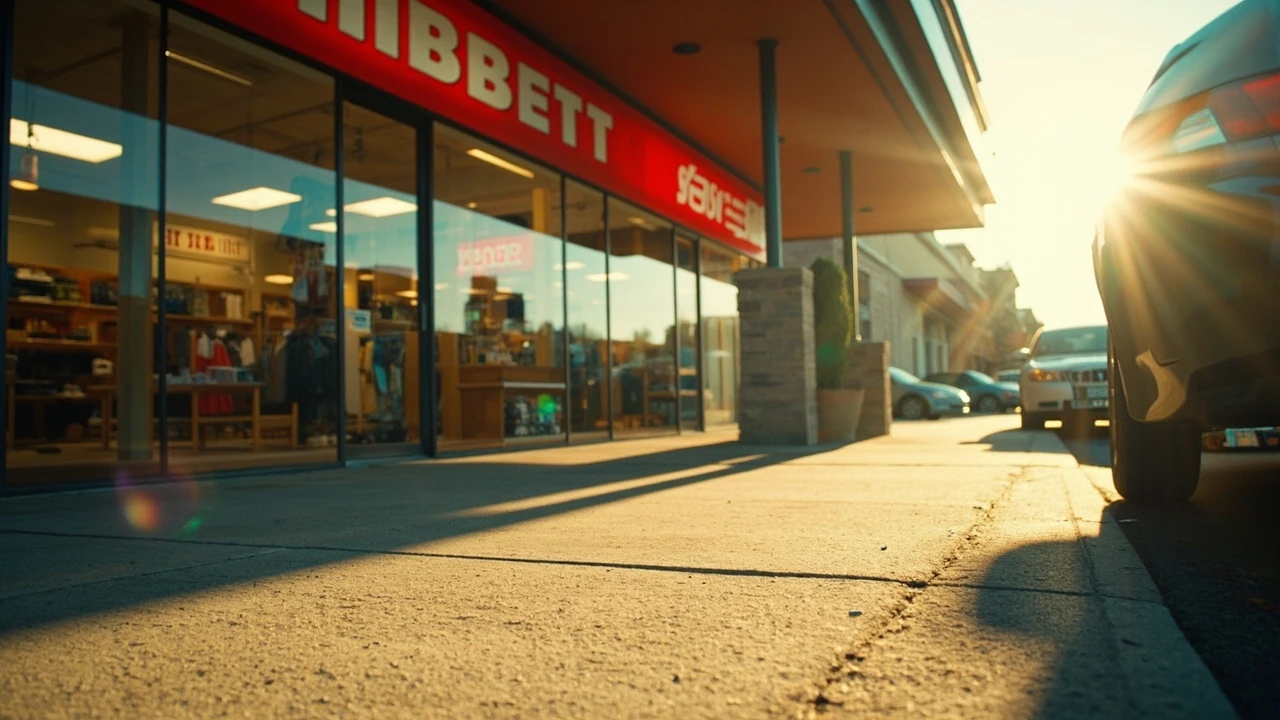
Hibbett Sports: what the chain actually sells and why gymnasts end up shopping there
A gymnast in Alabama who needs a new pair of training shoes before Saturday, a parent in Ohio looking for a team warm-up that arrives before the next meet, and a coach in Texas sourcing grip pads and wrist guards for a junior group will often type the same three words into a search bar: Hibbett Sports. The chain is not the largest sporting goods retailer in the United States, and it does not try to be. What it does, and the reason it keeps appearing in the search behavior of competitive gymnasts and other young athletes, is fill a middle layer of American sports retail that sits between a big-box generalist and a specialty gymnastics shop.
Walk into a typical Hibbett Sports and you will see a wall of athletic footwear, a rack of team-licensed apparel, a smaller section of training gear such as gloves, wristbands, and compression sleeves, and a register area stacked with branded bags and hats. You will not see full gymnastics apparatus, full leotard catalogs from elite brands, or a chalk bar built into the wall. The chain’s job is different. It is a neighborhood-level sporting goods store for communities where the nearest specialty shop is two hours away, and a dependable second stop when a parent needs to replace a lost grip bag the morning of practice.
For gymnasts, parents, and coaches, understanding what Hibbett Sports is, what it stocks, where it sits inside the larger sporting goods market, and how it compares to a few of its peers matters more than it first appears. The wrong gear order can delay a meet, a closed store can leave a team without matching warm-ups for a photo, and a confused loyalty program can quietly cost a regular customer real money over a season.
What Hibbett Sports is and where it sits in the U.S. sporting goods market
Hibbett Sports is an American sporting goods retailer headquartered in Birmingham, Alabama. It operates a network of small-format stores concentrated in the South, the Midwest, and parts of the Mid-Atlantic, primarily in communities where a smaller footprint makes more sense than a 40,000-square-foot big-box store. The company went public in 1996 and has spent most of its history as an independent mid-market chain. In 2024, JD Sports Fashion plc, a British sports-fashion retailer, completed its acquisition of Hibbett, and the brand now operates as a subsidiary within JD Sports’ North American platform.
That corporate history matters for shoppers because the in-store experience and category mix are different from what a customer finds at a Dick’s Sporting Goods or a Nike Factory Store. Hibbett stores typically range from about 5,000 to 8,000 square feet, which is large enough to carry meaningful inventory in core categories but small enough to force the buying team to make deliberate choices. Footwear takes the most space, followed by team-licensed apparel, then a tighter edit of training and fitness accessories.
For a gymnast, that mix translates into a real-world pattern. A customer can count on the chain to carry mainstream training shoes, basic activewear, team fan gear, and a rotating supply of small training accessories. A customer cannot count on the chain to carry the deep specialty catalog that an online gymnastics retailer or a regional gymnastics pro shop maintains.
Core categories Hibbett Sports stocks in a typical store
- Athletic footwear, with running, training, basketball, and casual lifestyle styles taking the most wall space.
- Team-licensed apparel and headwear, including NCAA, NFL, NBA, and MLB designs.
- Training accessories such as gloves, wristbands, compression sleeves, and basic recovery items.
- Casual athleisure, including hoodies, joggers, and shorts that cross over from sport to everyday wear.
- Footwear from major athletic brands such as Nike, Jordan, adidas, New Balance, ASICS, and Under Armour, depending on regional demand and vendor availability.
What Hibbett Sports does not typically stock
- Full gymnastics apparatus or competition-grade equipment such as beams, bars, vaults, or mats.
- A deep catalog of competition leotards from specialist brands such as GK, Victory, or Destira.
- Specialist gymnastics footwear such as the higher-end models in the Charkbins or Capezio line that serious competitors favor.
- Major fitness equipment such as treadmills, racks, or home gym systems.
Why competitive gymnasts still shop at Hibbett Sports
Competitive gymnastics is unusual among youth sports in the United States because the most important gear is purchased through specialist channels. Competition leotards, grips, beam shoes, and club warm-ups typically come from a small group of online retailers, regional pro shops, or direct team orders. So why does Hibbett Sports show up in a gymnast’s search history at all?
There are several practical reasons, and each one is tied to a specific moment in a competitive season.
Daily training shoes and lifestyle sneakers
Gymnasts spend a surprising amount of time off the mat. They warm up, they condition, they travel to meets in regular clothes, and they walk around school in regular shoes. A gymnast who trains 15 to 20 hours a week still needs two or three pairs of normal athletic shoes per year. Hibbett Sports stocks the major brands at prices that often sit between discount-store rates and the prices a specialty running shop charges. For a family buying four pairs of shoes across two kids who train in three different sports, that mid-market price point is meaningful.
Team fan gear and travel-day clothing
Travel days, team dinners, and “rep your gym” moments are part of the rhythm of a competitive season. A gymnast who needs a basketball hooded sweatshirt for a teammate’s birthday, a set of matching joggers for the bus to a regional meet, or a team-colored hat for a Friday practice will often find a workable option at a Hibbett store without a special order.
Replacement accessories on short notice
Grips tear, wristbands get left in the car, and compression sleeves disappear in the lost-and-found pile. When a gymnast needs a wristband, a basic training glove, or a pair of cotton socks before a session that starts in two hours, a chain like Hibbett becomes the practical answer. The product will not be specialist gymnastics gear, but it will be in the car by the time the parent pulls out of the parking lot.
Off-season crossover into other sports
Many gymnasts cross-train in basketball, soccer, or track during the off-season, and their parents prefer to buy general athletic shoes in one stop rather than chase specialist outlets for every sport. Hibbett’s mix of running, training, and lifestyle footwear is well suited to that kind of multi-sport household.
How Hibbett Sports compares to its closest retail peers
Choosing where to buy athletic gear usually comes down to three questions: how close is the store, how deep is the inventory, and how much will the total order cost. The table below shows how Hibbett Sports compares to the retailers a gymnast’s family is most likely to weigh against it. To place this section in context, the Sports overview offers a concise background reference.
| Retailer | Typical store size | Core strength | Best fit for a gymnast’s family |
|---|---|---|---|
| Hibbett Sports | 5,000 to 8,000 sq ft | Mid-market footwear, team-licensed apparel, small-town footprint | Daily training shoes, fan gear, and on-the-spot accessories |
| Dick’s Sporting Goods | 40,000 to 80,000 sq ft | Broad sporting goods, strong footwear wall, in-store services | Larger footwear buys, general fitness, and family multi-sport needs |
| Foot Locker | 2,000 to 6,000 sq ft | Athletic and lifestyle footwear, urban and suburban presence | Streetwear, basketball, and sneaker culture |
| Finish Line (now part of JD Sports) | 1,500 to 5,000 sq ft | Running, training, and lifestyle footwear, mall presence | Training shoes and lifestyle sneakers |
| Specialty gymnastics retailer (online) | Online only | Competition leotards, grips, beam shoes, and warm-ups | Competition-specific gear and team orders |
The comparison is not about which retailer is best overall, because each one is designed for a different job. The point is that Hibbett Sports occupies a specific layer in the market, and a gymnast’s family that knows which layer it occupies can use it efficiently.
What the JD Sports acquisition changed for shoppers
The 2024 acquisition of Hibbett by JD Sports Fashion plc reshaped the chain’s role inside a much larger global retail platform. For an American customer, the visible change has so far been gradual. JD Sports has used the Hibbett store base to expand its North American footprint, and the company has signaled plans to convert some locations and integrate others into a broader JD-branded experience.
For a gymnast’s family, the practical question is what that change means at the register. So far, the most visible outcomes have been an expanded lifestyle and sneaker assortment and a gradual harmonization of loyalty and marketing programs across the two brands. Customers who also shop at JD Sports locations in larger U.S. cities may see shared promotions and a more unified online experience. Customers who relied on Hibbett mainly for team fan gear and general athletic shoes should still find the same core categories in stock.
What has not changed is the chain’s role as a mid-market neighborhood store. The store size, the regional concentration, and the focus on footwear and team-licensed apparel remain the same in the near term, and shoppers should expect a slow, store-by-store evolution rather than a sudden rebranding.
Practical signals to watch as a customer
- New store signage in locations that are converted to the JD Sports brand.
- Expanded sneaker and lifestyle selections in larger Hibbett stores.
- Unified loyalty rewards across Hibbett and JD Sports online accounts.
- Marketing emails that combine offers from both brands under a single customer profile.
How a gymnast’s family can use Hibbett Sports efficiently
Most of the friction that comes with buying athletic gear is not about price. It is about time. A parent driving between work, school pickups, and gym sessions has a small window to find what a gymnast needs, and the wrong stop wastes it. The pattern below is how families who treat Hibbett Sports as part of a layered buying strategy tend to shop it.
Step-by-step: planning a Hibbett run for a gymnast’s needs
- List the items the gymnast actually needs this week: shoes, socks, fan gear, accessories, or a warm-up layer.
- Check the chain’s website or app for stock at the local store before driving over, because the smaller footprint means popular sizes can sell out by mid-afternoon on a Saturday.
- Group the trip with another errand in the same strip mall to avoid a separate stop, since Hibbett stores are commonly anchored next to grocery and general retail.
- Bring the gymnast’s current shoe size in two different fits, because athletic brand sizing can vary by half a size from a school shoe.
- Use any active loyalty or app promotion at the register, since mid-market chains often run member-only discounts that do not appear on the price tag.
- Save the receipt in the app for returns, because store credit and digital receipts are easier to manage than a paper slip that sits in a gym bag.
Where Hibbett Sports falls short for a competitive gymnast
It is just as useful to be clear about where Hibbett Sports is not the right answer. Anyone who treats the chain as a one-stop shop for competitive gymnastics gear will be disappointed, because the chain does not stock the specialist equipment that competition demands.
Items competitive gymnasts must buy elsewhere
- Competition leotards in club colors and cuts, which come from specialist gymnastics brands.
- Leather or dowel grips sized to a gymnast’s hand, which are fitted by a coach or a pro shop.
- Competition warm-ups in team-specific designs, which are usually ordered through a club or a specialist dealer.
- Beam and floor shoes, which are typically sourced from specialist dance and gymnastics retailers.
- Chalk, grip water, and grip enhancers, which are more reliably stocked by specialist online shops.
For a deeper look at how grips fit into a gymnast’s training, the guide to bar grips in gymnastics covers sizing, break-in, and care in detail.
Common mistakes gymnasts and parents make at Hibbett Sports
Most of the frustration families report about mid-market sporting goods chains comes from a small set of predictable mistakes. Each one is fixable once it is named.
Buying the wrong shoe for conditioning
Running shoes and training shoes look similar but are built for different movement patterns. A gymnast who needs a flat, stable sole for plyometric conditioning should not walk out of a Hibbett store with a heavily cushioned running shoe that was the first pair a sales associate pulled off the wall. The simpler fix is to ask for a cross-trainer or a training flat, and to test the sole by bending it before paying.
Skipping the stock check before driving
The smaller footprint that makes Hibbett convenient in a small town also means a hot size or color can be sold out. A two-minute stock check on the website saves a 30-minute drive in the wrong direction. Readers can also consult the launches e-commerce site after brutal sales for an independent source related to this section.
Ignoring the return window
Footwear return policies at mid-market chains are usually 30 to 60 days, and the time frame can be shorter during peak back-to-school or holiday seasons. A receipt left in a gym bag is a return window that quietly closes.
Treating Hibbett as a specialist gymnastics shop
The most common mistake is expecting the chain to carry items it does not stock. The chain is designed for the broader athletic market, and a gymnast’s family that uses it for that broader layer and keeps specialist purchases through specialist channels avoids most of the frustration.
How Hibbett Sports fits into a multi-sport athlete’s shopping pattern
Many gymnasts play a second sport during the year. Basketball in winter, soccer in spring, or track in the off-season all create overlapping gear needs. A household that has two or three athletes in different sports can use Hibbett Sports as a sort of general-purpose training and footwear supplier, while keeping the deep specialist purchases in the right places. The table below shows how a multi-sport family might split purchases across Hibbett and specialist channels.
| Purchase type | Best channel for a multi-sport household | Why |
|---|---|---|
| Daily training shoes | Hibbett Sports | Mid-market pricing, in-store fit, fast replacement |
| Team fan apparel | Hibbett Sports | Wide team-licensed selection, local store stock |
| Casual athletic wear | Hibbett Sports | Athleisure, hoodies, joggers, and lifestyle pieces |
| Competition leotards | Specialist gymnastics retailer | Club colors, custom cuts, team orders |
| Grips and beam shoes | Specialist gymnastics retailer | Correct sizing, break-in, and coach approval |
| Competition warm-ups | Club or specialist dealer | Team-issued, custom embroidery, consistent sizing |
For a broader look at how the skills gymnasts build carry into team sports such as football, basketball, and hockey, the article on how gymnastics skills transfer to other sports is a useful companion read.
What to look for in the next few years from Hibbett Sports
Any retailer in the middle of an acquisition and a platform integration is in motion, and the changes customers see tend to arrive unevenly. For a gymnast’s family, the indicators below are the ones most likely to shape the shopping experience over the next several seasons.
Store-format evolution
Some Hibbett locations are likely to be converted to the JD Sports brand, particularly in larger markets. Converted stores tend to carry a deeper sneaker and lifestyle assortment, which can be useful for a family that already buys a lot of training and lifestyle footwear. Stores that remain under the Hibbett name are likely to keep the current format, with possible expansion in team fan gear and small training accessories.
Online and loyalty integration
Customers who shop both Hibbett and JD Sports online should expect a more unified account experience. That usually means shared loyalty points, combined promotional emails, and a single digital wallet for receipts. For a household that already buys athletic gear online, that integration can save a small but real amount of time.
Category mix
Footwear is unlikely to lose its dominant wall position, because that is the chain’s strongest category. The most likely expansion is in lifestyle and athleisure, where JD Sports’ buying strength complements what Hibbett already does well. The least likely change is a deeper move into competition-specific gymnastics gear, because the economics of small-format stores do not support deep specialist inventory.
Geographic footprint
The chain’s strongest concentration remains in the South and the Midwest. As the JD platform expands, some new Hibbett or JD-branded stores are likely to appear in markets the chain has not historically served, and the existing footprint should remain stable. For a family that moves within the chain’s current footprint, the local store is unlikely to disappear.
How Hibbett Sports handles pricing, promotions, and loyalty
Mid-market sporting goods chains live or die on the strength of their promotional calendar. A family that uses the chain well knows when to buy and when to wait, and the basic pattern below holds across most seasons.
Typical promotion windows at Hibbett Sports
- Back-to-school in late summer, with a strong focus on athletic footwear and team-licensed apparel.
- Holiday season from late November through December, with bundled deals on shoes and activewear.
- Spring sport season, with promotions aligned to baseball, softball, and running.
- Loyalty-member promotions delivered through the chain’s app or email program, which often include a percentage off or a stackable discount.
How to stretch a Hibbett budget
- Stack a loyalty discount with a seasonal promotion when the chain allows it.
- Buy shoes off-cycle, in the weeks after a sport’s peak season, when inventory clearance begins.
- Check the chain’s online-only deals before going to the store, since some online prices are lower than in-store prices.
- Use store credit from returns within the return window rather than letting the credit expire.
Working with a coach when buying gear at Hibbett Sports
Coaches are the most underused resource in a gymnast’s gear-buying decisions, because they see how equipment holds up under real training conditions. A short message to a coach before a Hibbett run can save a return.
Questions to ask a coach before the trip
- What shoe brand or sole type does the gymnast currently use for conditioning?
- Are there any brand or color restrictions for warm-up or travel-day clothing?
- Is the team ordering competition gear this season, or should the parent buy separately?
- What small accessories does the gymnast keep losing, and are there preferred replacements?
For a fuller picture of the equipment decisions that shape a competitive season, the practical guide to artistic gymnastics apparatus explains which events rely on which types of gear, and the parent’s guide to choosing a gymnastics program helps frame the broader decisions that determine which equipment the gymnast will actually need.
Frequently asked questions
What is Hibbett Sports?
Hibbett Sports is an American sporting goods retailer headquartered in Birmingham, Alabama. It operates small-format stores concentrated in the South, the Midwest, and parts of the Mid-Atlantic, with a core focus on athletic footwear, team-licensed apparel, and training accessories. Since 2024, the chain has operated as a subsidiary of JD Sports Fashion plc.
Is Hibbett Sports the same as JD Sports?
Not exactly. Hibbett and JD Sports are separate retail brands that share a corporate parent. JD Sports acquired Hibbett in 2024, and the two brands operate side by side in North America. Over time, some Hibbett locations may convert to the JD Sports brand, but the Hibbett name still appears on a large number of stores.
Does Hibbett Sports sell real gymnastics gear?
Hibbett sells general athletic gear that gymnasts use off the mat, such as training shoes, athleisure, and small training accessories. It does not stock competition-specific gymnastics equipment such as competition leotards, leather or dowel grips, beam shoes, or full apparatus. Those items are usually sourced from specialist gymnastics retailers or through a club order.
What brands does Hibbett Sports typically carry?
The chain’s footwear wall usually includes major athletic brands such as Nike, Jordan, adidas, New Balance, ASICS, and Under Armour, with regional variation. Apparel selection rotates around team-licensed NCAA, NFL, NBA, and MLB gear, plus a core of branded activewear and athleisure.
How big is a typical Hibbett Sports store?
Most Hibbett stores range from about 5,000 to 8,000 square feet, which is significantly smaller than a typical big-box sporting goods store. That smaller footprint is the reason the chain focuses on a tight edit of core categories rather than a broad specialty assortment.
Can a gymnast use Hibbett Sports for team-issued gear?
Not usually. Competition warm-ups, club leotards, and team-issued training kits are typically ordered through a club’s preferred specialist dealer, because they require consistent sizing, club colors, and custom embroidery. Hibbett is more useful for fan gear, travel-day clothing, and general athletic shoes.
Does Hibbett Sports price-match competitors?
Price-match policies vary by season and by region, and they are usually published in the chain’s app or website. Customers who see a lower price on an identical item at a competitor should check the current Hibbett policy at the register before assuming the policy applies.
What is the return policy at Hibbett Sports?
Return windows at mid-market sporting goods chains are typically 30 to 60 days, with shorter windows during peak holiday periods. The exact window is usually printed on the receipt and listed in the chain’s app, and digital receipts make it easier to keep track of the deadline.
Are Hibbett Sports stores closing?
As part of the JD Sports integration, some underperforming locations may close or be converted, but the chain’s overall footprint is expected to remain stable in its core region. Customers who rely on a specific store can confirm its status through the chain’s website or app before driving over.
Is Hibbett Sports a good place to buy kids’ athletic shoes?
For general athletic and lifestyle shoes, yes. Hibbett stocks a working selection of kids’ athletic footwear from major brands at mid-market prices. For sport-specific shoes such as soccer cleats, basketball performance shoes, or gymnastics-specific footwear, a specialist retailer usually offers a deeper selection and a more accurate fit.
Practical next steps for a gymnast’s family
Use Hibbett Sports for the layer of athletic shopping it is built for: daily training shoes, team fan apparel, athleisure, and on-the-spot accessories that can be replaced in one stop. Treat competition-specific gear, from grips to leotards to beam shoes, as a separate category that goes through a specialist retailer or a club order. Check the chain’s app for stock and promotions before driving, and ask a coach before any shoe replacement that affects conditioning or travel-day routines. With that division of labor, Hibbett Sports becomes a useful, time-saving part of a competitive season rather than a source of friction.