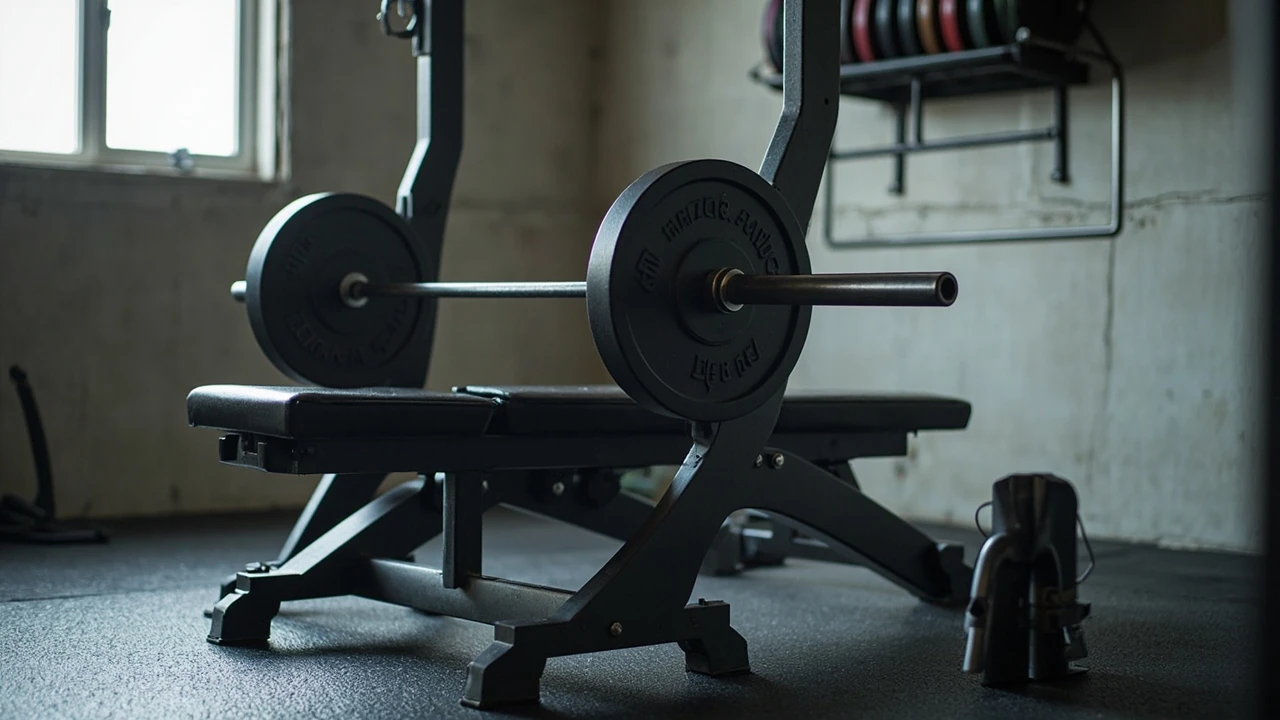
Titan fitness equipment guide for a serious home gym
A home gym is only as useful as the gear you trust to train on six days a week. When athletes and serious lifters talk about Titan fitness, they usually mean the value-oriented strength equipment line that covers power racks, barbells, benches, plate-loaded machines, and accessories, sold direct to the buyer rather than through a specialty retail markup. The question most readers actually have is narrower than the catalog: which pieces of Titan fitness equipment are worth the money, which should be skipped, and how do you set the gear up so it holds up over years of training.
This guide walks through the equipment families that matter, the build and material decisions that affect long-term ownership, the practical add-ons that make a garage gym feel like a real training space, and the maintenance habits that protect your investment. It is written for a reader who already knows the difference between a deadlift and a Romanian deadlift, but who wants a second opinion before placing a multi-thousand-dollar order. The advice is editorial and based on widely accepted strength-training principles, not on a specific invoice or promotional claim.
Where Titan fitness fits in the home gym market
The home strength equipment market breaks into three rough tiers. Boutique brands sell powder-coated rigs with welded accents, polished branding, and warranty terms that read like a small insurance policy. Mainstream sporting goods chains sell light commercial and home equipment that is fine for beginners but rarely holds up to daily serious lifting. Direct-to-consumer strength brands, of which Titan fitness is one example, sit between the two: heavier gauge steel than retail-tier equipment, fewer cosmetic frills than boutique brands, and a price that often comes in 20 to 40 percent below comparable boutique pieces.
That positioning has consequences. A buyer gets more steel per dollar, but the same equipment may arrive in a heavier box, may require a longer assembly session, and may not ship with the cosmetic touches some lifters expect. The right way to evaluate any Titan fitness item is to look at the functional specifications: steel dimensions, hole spacing, hardware grade, bar tensile strength, and warranty coverage. The look of the powder coat, the shape of the logo, and the marketing photos are secondary to whether the piece performs the movement the way the lifter needs it to.
Core equipment categories worth comparing
Most home gym buyers end up assembling the same short list of categories, even when the order varies. The categories below cover the gear that does the heavy lifting in a garage or basement gym.
Power racks and squat stands
A power rack is the centerpiece of most home strength setups. It defines how safely you can train heavy without a spotter, how many accessories you can bolt on later, and how much floor space the gym will permanently claim. Within the Titan fitness catalog, the rack tier typically starts with folding wall-mounted options and half racks, scales up to full power racks in 3×3 inch 11-gauge or 14-gauge steel, and tops out at extended-height and extra-deep commercial-leaning designs. The differences that actually matter day to day are hole spacing, foot print, weight rating, and accessory compatibility.
Hole spacing is a small detail that changes the feel of every working set. Standard 1-inch spacing through the bench and squat zone means you can always find a bar position that lines up with the height of your lifters. Westside-style 1-inch spacing through the bottom and top with 2-inch spacing in the middle is cheaper to produce and acceptable for most users. Pin-and-pipe safeties, strap safeties, and lever-arm safeties are all common, and the right pick depends on whether you train alone, share the rack, and tend to miss lifts in the middle or at lockout.
Barbells and specialty bars
A good barbell rewards good technique. A bad barbell quietly punishes wrists, elbows, and shoulders. Titan fitness offers a wide barbell range, from entry-level power bars meant for general use to competition powerlifting bars, Olympic weightlifting bars, deadlift bars, and shorter technique bars. The two specifications to weigh are tensile strength (often quoted in PSI or MPa) and whip, the amount the bar bends under load before returning energy to the lift.
For general strength training, a 190,000 to 200,000 PSI bar with moderate whip and a center knurl is a sensible default. For dedicated Olympic weightlifting, a 28 or 29 millimeter diameter bar with more whip and rotating sleeves makes a meaningful difference in the turnover of a clean or snatch. For deadlift-focused training, a stiffer bar with aggressive knurl supports the lockout phase and reduces slippage on mixed-grip pulls. Matching the bar to the main movements you actually perform is more important than chasing the highest tensile number on the spec sheet.
Plates and loading
Plates are the easiest category to get right and the easiest category to overpay for. Calibrated steel competition plates are beautiful, true to weight, and expensive. Cast iron plates are heavier per dollar, slightly less precise, and still completely serviceable for years of training. Bumper plates, made of dense rubber, are the right answer if you plan to drop loads from overhead or want a quieter floor.
Within a Titan fitness lineup, the most common mistake is mixing plate types on the same bar without thinking about loading order. A practical rule is to load the heaviest cast iron plates on the inside, lighter plates toward the outside, so the bar sleeve remains balanced. For Olympic weightlifting, all bumpers on a bar is the standard. For powerlifting, cast iron on a stiff bar is normal, and bumper plates become optional.
Benches and pressing supports
A flat or adjustable bench turns a power rack into a complete pressing station. Flat benches support heavier loads and stay rigid under a max attempt, while adjustable benches allow incline and decline work that no flat bench can match. The bench decision often matters more than the rack decision, because the bench is in contact with the lifter on every set.
Look for a pad width around 11 to 12 inches, a stable base that does not rock when set to an incline, and a weight rating that exceeds your working max by a comfortable margin. Attachment points for spotter handles, leg rollers, and wheel kits are useful, but only if you actually use the bench for the movements those accessories support. A spare pair of wheels on the back of a flat bench is one of those small quality-of-life features that quickly becomes a daily convenience when you share a garage with a car.
Plate-loaded machines and cable systems
Plate-loaded selectorized machines and cable systems have become a quiet growth area in direct-to-consumer home gym equipment. A well-designed leg press, hack squat, or pendulum squat fills a hole that a barbell cannot, especially when the lifter trains alone or is returning from a lower-body injury. Cable systems with weight stacks or plate-loaded arms fill another hole, supporting pulling movements that are difficult to load with a bar alone.
The honest tradeoff is footprint. A quality leg press can occupy as much floor space as a small car. Cable systems often require a structural frame, ceiling clearance, or both. Before adding any machine to a home gym, measure the room, the doorways, and the path the equipment will travel during delivery. Many buyers underestimate the choreography of getting a 400-pound machine from a freight truck to a basement corner.
Accessories, flooring, and storage
Accessories often cost less than the centerpiece equipment but change how pleasant the gym feels. Rubber floor tiles protect subfloors, dampen dropped plates, and define the training area. A landmine attachment, dip bars, lever arms, or a lat pulldown module add movement variety to a basic rack. Plate storage trees, bar storage, and wall attachments keep a small gym from becoming a tripping hazard.
The easy mistake is to add accessories before the foundation is in place. A tidy rule is to buy the rack, bar, bench, plates, and flooring first. Train on that setup for two to three months. Then add the accessories that match the movements you actually missed during that trial period. This sequence keeps the budget under control and keeps the gym from becoming a museum of unused attachments.
What to look for in the specifications
Specifications read like a foreign language until you learn which numbers matter. The table below summarizes the four specifications that show up most often in Titan fitness product listings, and what each one means for a buyer.
| Specification | What it measures | Why it matters | Typical range for home use |
|---|---|---|---|
| Steel gauge | Thickness of the uprights and crossmembers | Thicker steel resists flex and bolt-hole deformation over years of loading | 11 gauge for heavy use, 14 gauge for light to moderate use |
| Bar tensile strength | Maximum stress the bar steel can handle before permanent bending | Higher tensile strength allows more whip and longer fatigue life | 165,000 to 200,000 PSI for most lifters |
| Hole spacing | Vertical distance between pin holes on the rack | Tighter spacing makes it easier to find a safe bar position for every lifter | 1 inch through the bench zone, 1 or 2 inches elsewhere |
| Weight rating | Manufacturer-claimed maximum load for the equipment | Provides a safety margin over your working max | At least 1,000 pounds for a full rack, 800 pounds for a bench |
Two other specifications deserve a short note. First, hardware grade: many buyers do not realize that the bolts holding the rack together are a real failure point. Higher-grade bolts with appropriate washers and locking nuts are a quiet upgrade worth taking. Second, powder coat thickness and type. A thicker powder coat resists chipping when plates are dropped or slid against uprights. A thinner coat may look fine on day one and look tired by year three.
Comparing rack sizes and room footprints
Choosing the right rack is partly about the lifter and partly about the room. The table below lines up common rack footprints with the type of training they support and the kind of room they fit.
| Rack type | Typical footprint | Best for | Space trade-off |
|---|---|---|---|
| Folding wall-mounted rack | 24 to 30 inches deep when folded | Shared garage, small basements, lifters who need a parked car | Less stable than a freestanding rack, limited accessory mounting |
| Half rack | About 4 by 5 feet | Small dedicated rooms, lifters who want a walk-through design | No rear crossmember, requires wall or floor anchoring for safety |
| Full power rack | About 4 by 6 feet | Most home strength setups, family or shared training | Larger floor footprint, easier to add attachments and spot from inside |
| Extended-height rack | About 4 by 7 feet, 7 to 8 foot tall | Lifters who want pull-up bars, lat pulldown attachments, or taller ceilings | Requires ceiling height above 8 feet for pull-up clearance |
A useful pre-purchase step is to mark the rack footprint on the floor with painter’s tape. Live with that marked rectangle for a week. Move around it, vacuum around it, and try to enter and exit the room with a loaded bar in your hands. Many buyers discover that a 4 by 6 foot footprint is more disruptive than the catalog photo implied, and either resize the rack or resize the room.
Building a coherent training setup
Equipment is only useful when it supports an actual training plan. The combinations below match common training priorities with the equipment that supports them, so a buyer can match a Titan fitness cart to a real program rather than to a wish list.
- General strength, three days a week: full power rack, flat bench, one 20 kilogram Olympic bar, 545 pounds of cast iron plates in mixed denominations, rubber floor tiles.
- Powerlifting focus, four to five days a week: full power rack, adjustable bench, competition powerlifting bar, calibrated or cast iron plates to 700 plus pounds, lever-arm safety system, monolift attachment if available.
- Olympic weightlifting focus: full or extended rack, Olympic weightlifting bar, bumper plates to 450 pounds, wooden lifting platform, jerk blocks or box for assistance work.
- Hybrid strength and conditioning: half rack or full rack, adjustable bench, one general bar, one shorter technique bar, plate-loaded row or pulldown machine, plyo box, rower or air bike.
- Family or shared gym: full power rack, adjustable bench, multiple barbell lengths, paired safeties that can be set for shorter lifters, plate storage that lives within arm’s reach of every station.
Each of these setups can be ordered in stages. The core pieces, rack, bench, bar, and basic plates, belong in the first shipment. Plates can be added one pair at a time over several months as the budget allows. Specialty bars and machines belong in later stages once the lifter has trained on the core setup long enough to know what is missing.
Assembly, anchoring, and safety
Most Titan fitness equipment arrives boxed, and the assembly is on the buyer. A few habits make assembly safer and faster, and they also make the equipment safer to use once it is built.
- Sort hardware by size into labeled trays before starting. The factory bag will have multiple bolt lengths that look nearly identical but are not interchangeable.
- Hand-tighten every bolt first, then torque to spec. Hand-tightening lets the frame settle into square alignment before the final tightening pass.
- Use a level on the uprights and the crossmembers. A rack that looks square may be slightly twisted if the floor is uneven, and the twist will show up as racking difficulty later.
- Anchor the rack to the floor or wall where possible. A loaded rack that tips is a serious safety event. Most accidents in home gyms involve unanchored racks tipping forward during a missed lift.
- Keep a torque wrench, a rubber mallet, and a small set of Allen keys in the gym. Bolts loosen slightly with vibration and should be rechecked every two to three months.
If a piece arrives damaged or with missing hardware, document the issue with photos before assembly. Most direct-to-consumer brands replace damaged components quickly when the report is filed before the equipment is built. After the equipment is assembled, replacement requests become slower.
Maintenance that extends equipment life
Strength equipment does not need much maintenance, but the small amount it does need is non-negotiable. A few habits, applied monthly, will add years of useful life to a home gym.
- Wipe down the bars and handles with a light oil after sweaty sessions. A thin film protects the knurl and the finish without making the bar slippery.
- Brush the knurl with a wire brush every few months. Chalk, skin oils, and old grip tape build up in the knurl and reduce grip security.
- Inspect bolts for looseness on a fixed schedule. A 10-minute pass every two to three months is enough to catch bolts that have walked loose.
- Check the floor for shifted tiles or curling edges. A raised tile edge under a heavy load is a real injury risk during a clean or snatch.
- Keep the storage area dry. Even powder-coated steel will eventually pit in a consistently damp basement. A small dehumidifier often pays for itself.
For barbells, a monthly pass with a light cleaning oil and a microfiber cloth keeps the sleeves spinning freely and the bar shaft free of rust. For racks, a quarterly pass with a level and a torque wrench keeps the frame square and the hardware tight. For benches, a quick check of the pad mounting bolts and the incline mechanism is enough.
Common mistakes when buying Titan fitness equipment
Most home gym regrets come from a small set of recurring decisions. Knowing them in advance saves money and rework.
- Buying the most expensive bar before knowing the lifter’s main movements. A 29 millimeter Olympic weightlifting bar is a poor choice for a lifter who only deadlifts and benches.
- Skipping floor protection. Concrete is hard on plates, bars, and backs. Rubber tiles are cheap insurance.
- Underestimating ceiling height. A pull-up bar that brushes the ceiling is a daily annoyance and a safety issue for kipping movements.
- Buying accessories before the foundation. Lever arms, landmines, and dip stations collect dust if the lifter’s program does not call for those movements.
- Ignoring delivery logistics. A 400-pound rack that cannot get through the basement door is an expensive decoration in the garage.
How Titan fitness compares to other direct-to-consumer brands
The direct-to-consumer strength equipment space includes several brands with overlapping product lines. A useful comparison is not a winner-takes-all ranking, since each brand has a slightly different product mix and a slightly different customer base. The table below compares three common priorities a buyer weighs, using the categories that appear in most reviews and forum discussions.
| Buying priority | What a buyer is really asking | Why it matters for Titan fitness |
|---|---|---|
| Steel per dollar | How much rack, bar, and plate can I get for a given budget? | Titan fitness is consistently among the more steel-heavy options at a given price point |
| Accessory ecosystem | Can I expand the rack later without buying a new one? | The brand’s 3×3 inch bolt pattern is widely supported by third-party accessories |
| Shipping and freight | How does the gear actually get to my door? | Large items ship LTL freight, which adds lead time and delivery coordination |
| Warranty support | What happens when a bolt strips or a weld cracks? | Lifetime frame warranties on racks are common; warranty terms vary by component |
The fairest summary is that Titan fitness occupies a pragmatic middle ground. The buyer gets serious equipment without boutique pricing, in exchange for accepting some assembly work, freight coordination, and the absence of the small flourishes a specialty brand would add. For a lifter who trains often and cares more about the steel than the badge, that tradeoff is usually a good one.
A practical buying sequence
Putting all of this into a real order is easier with a defined sequence. The list below is a reasonable starting point for a first-time home gym buyer who wants to end up with a usable setup in three to six months.
- Measure the room, the doorways, and the ceiling height. Sketch the rack footprint on the floor in painter’s tape and live with it for a week.
- Choose the rack type and the bar. These two decisions drive almost every other equipment choice.
- Order the rack, one general-purpose bar, an adjustable or flat bench, and the first pair of plates in each common weight increment.
- Add rubber floor tiles and a basic plate storage tree. The gym now feels like a real training space.
- Train on the core setup for two to three months. Keep a short list of movements the equipment does not yet support.
- Order the second bar, specialty attachments, or plate-loaded machine that matches the actual gaps in the program.
- Add the small accessories: a landmine, a dip station, a pulley system, a plyo box, a rower, depending on the program.
- Set a quarterly maintenance pass on the calendar and stick to it.
Following this sequence keeps the gym functional from week one and avoids the common regret of a half-built training space. It also gives the lifter time to learn what their training actually needs, which is information no catalog can supply in advance.
Frequently asked questions
Is Titan fitness a good brand for a first home gym?
For a lifter who already knows the basic movements and wants serious equipment without boutique pricing, Titan fitness is a reasonable starting point. The core racks, bars, and benches are widely used in home gyms and are well documented in training communities. The buyer should expect to assemble the equipment themselves and to coordinate freight delivery for the larger items.
What is the first piece of Titan fitness equipment to buy?
The first piece is almost always a power rack or a half rack, since it defines the safety of every barbell movement that follows. A barbell and a flat bench are the next two priorities. Plates can be added over time as the budget allows, starting with the pairs you will load most often.
How long does Titan fitness equipment last?
With routine maintenance, a powder-coated steel rack can last for the lifetime of a serious lifter. Bars have shorter expected life because the knurl and the finish wear with use, but a 190,000 PSI bar will easily give a decade of regular training. Plates, especially cast iron, tend to outlast everything else in the gym.
Do I need to anchor a Titan fitness power rack to the floor?
Yes, in nearly every home installation. An unanchored rack can tip forward during a missed lift, which is one of the most common causes of serious home gym injuries. Floor anchoring is straightforward with a hammer drill and concrete anchors, and many racks also support wall anchoring for added stability.
What barbell should I buy first from Titan fitness?
For general strength training, a 20 kilogram Olympic bar with a tensile strength of 190,000 to 200,000 PSI and a center knurl is the most flexible starting point. Lifters who plan to focus on Olympic weightlifting should look at a 28 or 29 millimeter bar with more whip. Lifters who focus on deadlifts may prefer a stiffer, more aggressive knurl.
Can Titan fitness equipment handle daily serious training?
Yes, when the right tier of equipment is selected. An 11-gauge rack, a 190,000 PSI or higher bar, and a properly rated bench will support daily training by a single lifter or a small group. The main limits are usually floor space and ceiling height, not the equipment itself.
How much should I budget for a complete Titan fitness home gym?
A basic but fully functional home gym with a full power rack, one bar, an adjustable bench, around 500 pounds of plates, rubber flooring, and a small set of accessories typically falls in the low to mid four figures. Higher-end setups with calibrated plates, multiple bars, a cable system, and a plate-loaded machine can move into the five-figure range. The exact number depends on freight costs and how much of the equipment is bought at once.
Is Titan fitness equipment covered by a warranty?
Racks and frames are typically covered by a lifetime warranty against manufacturing defects. Bars, cables, bearings, and upholstery are usually covered for shorter terms that vary by component. Warranty terms change over time, so the exact language on the product page at the time of purchase is the document that matters.
How do I clean and care for a Titan fitness barbell?
Wipe the bar down with a light cleaning oil and a microfiber cloth after sweaty sessions. Brush the knurl with a wire brush every few months to remove chalk and skin oils. Avoid soaking the bar in solvent or storing it in a damp space, since both will attack the finish and the underlying steel.
Where should I place a Titan fitness home gym in my house?
A garage, a basement, or a dedicated outbuilding are the most common locations. The priorities are a flat, level floor, enough ceiling height for pull-ups and overhead work, good ventilation, and easy access to the room with large boxes. A small dehumidifier is often worth the investment in basements and garages that see temperature swings.