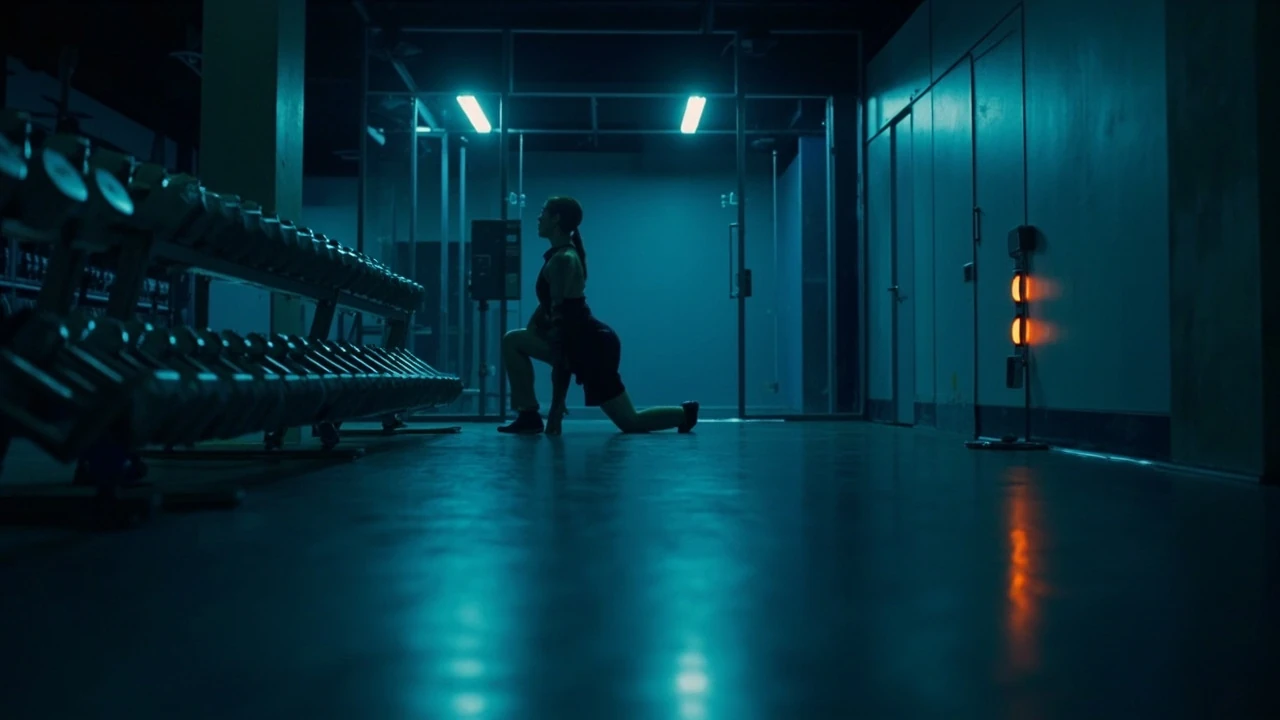
24 hour fitness: what round-the-clock gym access really means
A competitive gymnast finishes a late practice at 9:40 p.m. and still wants a strength session before bed. A nurse working a 12-hour night shift needs somewhere to lift at 3 a.m. A parent whose only free hour is 5 a.m. wants a treadmill waiting. These are the exact situations that 24 hour fitness access is built for, and the reason the round-the-clock gym model has spread from big-city franchises into mid-size suburbs, college towns, and small specialty facilities over the past decade.
This guide is a practical look at how 24 hour fitness actually works: who operates these gyms, how they staff and secure a building that never closes, what memberships and real costs look like, and how a serious athlete should think about whether this kind of access fits their training. It is not a sales pitch for any particular brand. The aim is to help you decide whether round-the-clock access is worth the trade-offs, and if so, how to use it well.
Why round-the-clock gyms exist in the first place
The fitness industry has always been shaped by when people are actually free to train. Traditional health clubs built their schedules around the morning rush, the lunch crowd, and the after-work peak between roughly 5 p.m. and 8 p.m. That model worked when most members held 9-to-5 jobs and lived within a 15-minute drive of a single club. It works less well for shift workers, students, parents of young children, traveling athletes, and anyone whose sport demands non-standard hours.
Several business models have grown around that gap. A 24 hour fitness facility is, at its core, a gym that removes the closing-time constraint. The building stays open from the moment a member signs up until they cancel, with the door opened by a keycard or mobile app instead of a staffed front desk. The shift is structural, not just marketing: a club that never closes re-organizes its staffing, its security, its cleaning, and its member support around that fact.
That distinction matters because a gym that claims to be 24/7 but is actually closed from midnight to 5 a.m. for “deep cleaning” is not what this article means. The honest version of 24 hour fitness access means a member can walk in, train, and leave at any hour, every day, including holidays, subject only to short maintenance windows that are clearly posted in advance.
How a 24 hour fitness facility is actually run
Operating a gym that never closes requires a different operating manual than a standard club. The general framework, used in different forms by large chains and independent 24/7 studios, looks roughly like this.
| Function | Traditional gym (set hours) | 24 hour fitness facility |
|---|---|---|
| Front desk | Staffed during all open hours | Staffed during peak hours; unmanned overnight with keycard or app entry |
| Cleaning | Daytime janitorial team | Rotating overnight cleaning crew between peak periods |
| Security | Visible staff plus cameras | Continuous camera monitoring, controlled single-entry points, member verification, sometimes on-site overnight attendant |
| Member support | In-person and phone | In-person during staffed hours, plus chat, app messaging, or 24/7 hotline off-hours |
| Equipment maintenance | Daytime repairs, full closure for major work | Modular repairs at low-traffic hours, spare machines pre-positioned for swaps |
The economic model is also different. Because labor is the single largest cost in a typical gym, 24 hour fitness operators shift that expense from front-desk coverage to technology: keycards, mobile-app entry, networked surveillance, and remote monitoring. That trade-off is what allows the monthly dues to stay close to what a staffed club charges, even though the building is technically accessible for 168 hours a week instead of 80 to 100.
The two main types of 24 hour fitness access
Not all round-the-clock gyms are the same. When people search for 24 hour fitness options, they usually end up choosing between two broad structures.
Large 24/7 franchise clubs
This is the most familiar version: a recognizable national brand, often 15,000 to 30,000 square feet, with a full weight room, cardio floor, group fitness studio, locker rooms, and sometimes a pool or sauna. Access is keyed to a membership that includes multiple locations. Pricing is tiered, with basic access at the low end and premium tiers adding guest passes, group classes, and recovery amenities. Readers who want more background can use the Hour overview as a reference while reviewing this point.
Strengths of this model include predictable equipment layouts, well-documented safety procedures, and the ability to keep training while traveling because your home membership works at sister clubs in other cities. The weaknesses are the things people associate with big-box gyms: crowded peak hours, machines out of service for a few days at a time, and a front desk that can feel impersonal. The 24/7 piece is genuine, but you will still see the most users between 4 p.m. and 8 p.m.
Independent 24/7 specialty studios
The other model is a smaller, often single-location facility that rents space by keycard to a defined member list. These range from serious strength gyms with squat racks and platforms to women-only studios, martial arts schools with weight rooms, and boutique recovery centers that combine cold plunge, infrared sauna, and light strength equipment. Many are built by coaches who got tired of working around another gym’s hours.
These facilities tend to have smaller equipment inventories, a tighter member community, and clearer etiquette because the owner usually trains there too. They are also the model most gymnasts and serious athletes will actually encounter, because they often share a building with a gymnastics or performance facility and extend keycard access to athletes and their parents.
| Feature | Large 24/7 franchise | Independent 24/7 studio |
|---|---|---|
| Typical size | 15,000–40,000 sq ft | 1,500–6,000 sq ft |
| Equipment variety | Broad, including selectorized machines and specialty cardio | Targeted, often strength or sport-specific |
| Staff presence overnight | Rare, usually cameras and remote support | Rare, but owner often trains late and is reachable |
| Membership cap | Often none; revenue model depends on volume | Often capped, sometimes with a waitlist |
| Pricing logic | Volume, tiered plans, annual sign-up promos | Smaller base, sometimes higher per-member cost |
| Best fit | General fitness, travel access, family memberships | Serious athletes, sport-specific training, tight communities |
What a typical 24 hour fitness membership costs
Pricing varies by city and by brand, but the structure is fairly consistent. The numbers below are general ranges you can use as a sanity check. Always confirm the current rate directly with the facility before signing anything, because gym pricing changes often and a “from” price on a website is rarely the total monthly cost once taxes and fees are included.
- Large 24/7 franchise, basic access: roughly $25 to $45 per month, with a one-time enrollment fee in the $0 to $49 range and a 12-month commitment in many cases.
- Large 24/7 franchise, premium tier: roughly $45 to $80 per month, adding guest passes, group classes, and access to specialty equipment like Olympic platforms or recovery rooms.
- Family or couple add-ons: an extra $15 to $30 per month per person on most plans, sometimes capped at two add-ons.
- Independent 24/7 studio: $60 to $150 per month, often without a long-term contract, sometimes with a punch-card or short-term options for athletes in town for a meet.
- Short-term or travel passes: $10 to $30 for a single day, $40 to $80 for a week, useful for gymnastics competitions and away meets.
The single biggest variable after base price is the contract length. Month-to-month plans usually cost more but let you leave at any time. Annual plans discount the rate but charge an early-termination fee. Read the cancellation clause carefully, especially the difference between a “cancellation fee” and a “cooling-off period” that applies only in the first few days.
Who actually benefits from 24 hour fitness access
Round-the-clock access is not a universal upgrade. For some people, it is genuinely useful. For others, it can be a cost premium for hours they will never use. The honest breakdown looks like this.
Strong fit
- Shift workers whose schedule is non-standard, including healthcare, emergency services, manufacturing, and hospitality.
- Competitive athletes who need to train at off-peak hours to avoid crowd and protect their training quality, including gymnasts, weightlifters, and combat sport athletes.
- Parents of young children whose only free window is early morning or late evening after bedtime.
- Traveling professionals and remote workers whose calendar blocks training at odd hours.
- Anyone using a small, capped studio where 24/7 access is part of the value proposition rather than a marketing add-on.
Weak fit
- Beginners who would benefit more from coached hours, group classes, and supervised form corrections than from flexible access.
- Anyone who already trains consistently within standard club hours and is unlikely to change their schedule.
- People who prefer a social training environment and find an empty 2 a.m. gym uncomfortable rather than efficient.
It is also worth being honest about a common reason people sign up: the idea that having access will itself build the habit. Research on habit formation consistently shows that convenience is necessary but not sufficient. If you do not have a clear plan for when and how you will train, a 24 hour fitness membership will not create one for you. It will, however, remove the friction of getting to the gym at the hour you actually have free.
Safety and security in a 24/7 gym
Any time a building is open without staffed front-desk coverage, safety has to be designed into the system rather than left to chance. The standard 24 hour fitness safety stack looks like this. Another relevant reference is the it's game on' for growing hour, which adds context without changing the practical guidance here.
- Single controlled entry point with a keycard or app that ties entry to a specific member account.
- Networked cameras in the entry, weight room, cardio floor, and parking area, with footage retained for a defined period.
- Panic buttons or emergency call stations on the wall, often tied directly to a 24/7 monitoring center.
- Posted emergency procedures and the address visible to first responders, since many members do not know the exact street address of the club they train in.
- Member agreement that defines acceptable behavior, including restrictions on solo training in unsafe conditions and rules about training partners for heavy lifts.
From the member’s side, a few habits matter. Tell someone when you train alone, especially overnight. Keep your phone charged. Avoid training in obvious blind spots near camera outages. If the facility has a parking lot, walk with awareness at the same time you would in any other lot at that hour. None of this is unique to 24/7 gyms, but the late-night training window is unique enough to warrant the extra attention.
How 24 hour fitness supports a gymnastics training plan
Gymnastics training is a useful case study because the sport rarely fits inside standard gym hours. Most competitive gymnasts finish apparatus work by late afternoon, do conditioning and physical therapy in the evening, and sometimes need a quiet space to drill specific weaknesses in the early morning before school. A 24 hour fitness room, especially one attached to a gymnastics facility, can fill the gap between the gym floor and bedtime in a way that a normal club cannot.
For gymnasts, the practical use of round-the-clock access usually looks like this:
- Early-morning mobility, core, and pre-hab sessions before a 6:30 a.m. warmup.
- Post-practice strength work after the gymnastics facility has closed for the day.
- Recovery days where the athlete can spend 45 minutes on a stretching block, foam rolling, and light cardio without competing for equipment.
- Travel weeks, where access to a keycard 24/7 facility near a meet hotel removes the stress of finding a drop-in gym.
If you are a gymnastics coach, parent, or club director, this is where a 24/7 room becomes a recruiting and retention tool, not just a perk. Athletes who can train the way their program needs them to, on their schedule, tend to stay with the program longer and recover from small injuries faster because the access is there when they actually need it. The article Why Gymnastics Is the Foundation for Every Sport makes the broader case for cross-training volume, and a keycard 24/7 strength room is one of the cleanest ways to deliver that volume without burning out the gymnastics floor.
How to evaluate a 24 hour fitness facility before you sign up
A good 24/7 gym is easy to recognize once you know what to look for. A short evaluation checklist helps, especially for athletes whose training depends on a few specific pieces of equipment.
- Try a guest pass at the hour you actually plan to train, including late evening or early morning, before committing to a contract.
- Check whether the equipment you need is present, in working order, and available in enough quantity to avoid 20-minute waits at peak times.
- Ask how equipment downtime is handled. A reasonable answer involves spare machines or a published maintenance schedule, not vague promises.
- Look at the entry system. Keycards and mobile credentials should be deactivated quickly when a membership ends, and lost cards should be replaceable without a long delay.
- Confirm what is actually included. “Unlimited access” sometimes excludes group classes, recovery rooms, or specific equipment areas.
- Read the cancellation clause in full, including the cooling-off period, the notice required, and any fee that applies if you cancel outside that period.
- Ask about the cleaning schedule. A 24/7 facility should be cleaned on a rotation that does not block the floor during the hours you most need.
Designing a training week around 24 hour fitness access
Once you have access, the question becomes how to use it well. The mistake most people make is treating round-the-clock access as permission to add volume, when the more useful move is to redistribute the same weekly volume into better time slots. A simple way to think about it:
- Reserve the highest-effort, most technical work for the time of day when you are mentally and physically at your best.
- Move mobility, accessory, and recovery sessions into the off-peak hours the 24/7 access unlocks, since these do not require a coach or a full social environment.
- Keep at least one session a week as a fixed appointment, even if the rest of the week flexes. A standing “Saturday 8 a.m. heavy lift” is more protective of progress than five sessions that drift around the calendar.
- Protect sleep. Late-night training is fine, but training within 90 minutes of bedtime is a common reason recovery and body composition stall.
For gymnasts specifically, a useful pattern is to keep hard gymnastics training during coached hours, move strength work to a 24/7 strength room in the early evening, and reserve a single 30-minute early morning session for mobility and pre-hab. That structure uses 24 hour fitness access as a complement to sport-specific training rather than as a replacement for it.
Common mistakes to avoid with 24 hour fitness
Round-the-clock access rewards a specific kind of discipline and punishes the opposite kind. The patterns below are the ones coaches see most often when athletes are given 24/7 access too quickly.
- Treating the membership as motivation. Access does not create training; it removes a barrier to training you would have done anyway.
- Letting the building replace a coach. A 24/7 room is a great place to do the work a coach has already programmed, and a poor place to design a program from scratch.
- Training in the same slot every day regardless of how you feel. The flexibility is the point. Use it to back off when you are tired and push when you are fresh.
- Ignoring recovery because the gym is always open. Overtraining does not require a packed schedule, just a few too many hard sessions in a row.
- Paying for premium tiers you do not use. A base plan that you actually use every week is worth more than a top-tier plan you use twice a month.
Frequently asked questions
Is 24 hour fitness access safe to use alone at night?
For most healthy adults, yes, with the usual precautions: train in a facility with cameras and a controlled entry system, let someone know you are there, keep your phone charged, and avoid training in obvious blind spots. If you are brand new to the gym, your first few late-night sessions are a good time to bring a training partner while you get a feel for the environment.
Do 24 hour fitness memberships cost more than regular gym memberships?
Usually a small premium, but the gap is smaller than most people expect because the operator is replacing staffed hours with technology. The bigger variable is contract length. A month-to-month 24/7 plan is typically more expensive than an annual plan at a traditional club, and an annual 24/7 plan is often close to a standard annual club plan at the same brand.
Can gymnasts use a 24 hour fitness room instead of a gymnastics-specific strength program?
No. A 24/7 facility is a useful complement to a gymnastics strength program, not a replacement. The space, equipment, and coaching for things like ring work, specific event conditioning, and on-floor plyometrics still belong in a gymnastics facility. The 24/7 room is best for the off-event work that supports those sessions.
How do 24/7 gyms handle cleaning and equipment maintenance?
Most 24/7 facilities clean on a rotation between peak periods rather than a single nightly block, and they keep spare machines or parts on hand so a broken cable or torn belt can be swapped quickly. A good facility publishes a maintenance schedule so you can plan around it.
What should I look for in a 24 hour fitness contract?
Three clauses matter most: the cancellation terms, the cooling-off period, and the fee structure. Look for a clear definition of what counts as cancellation notice, how much notice is required, and what fee applies if you cancel outside the cooling-off window. A short, plain-language contract is a positive sign. Long, jargon-heavy contracts with auto-renewal clauses deserve more scrutiny.
Are 24/7 gyms worth it for families?
Often yes, especially for families with one or more athletes whose schedules are not aligned. A single family membership can cover parents, gymnasts, and siblings, and the flexible hours reduce the need to coordinate one car around the entire family. The trade-off is that the family usually does not train together the way they would at a smaller, staffed club, so it depends on whether convenience or shared time is the priority.
Can I try a 24 hour fitness facility before I commit?
Most reputable 24/7 gyms offer a guest pass or a low-cost trial. The honest test is to use the pass at the hour you actually plan to train, including a late or early slot, rather than during the staffed peak. If the facility is clean, the equipment is in working order, and the entry system works smoothly at that hour, you have a good signal.
What happens if I lose my keycard or the app stops working?
The standard answer is a same-day replacement at the front desk during staffed hours, and a temporary code or override at the door if you are locked out overnight. Confirm the procedure when you sign up, because a 24/7 gym that cannot get you back inside at 2 a.m. is failing the basic promise of the model.
Is 24 hour fitness access useful for injury recovery?
It can be, mostly because it makes it easier to do the short, frequent mobility and pre-hab sessions that physical therapists usually recommend. The trade-off is that unsupervised recovery work can drift into “real” training too early, which is one of the more common ways athletes re-injure themselves. Use the access to do the work your therapist prescribed, not to expand it.
How do I know if I am overusing a 24/7 membership?
Common warning signs are persistent fatigue, declining performance, poor sleep, and irritability. The simplest test is to take a planned deload week where you cut total volume by about a third while keeping intensity high on a few key lifts. If your numbers come back up after the deload, you were overreaching and the schedule needs to ease back. If they do not, the issue is elsewhere and is worth raising with a coach or sports medicine professional.
Putting it into practice
The decision to pay for 24 hour fitness access is not really about the building. It is about whether your actual schedule, your training plan, and your discipline can use the extra hours well. For competitive gymnasts, shift workers, parents with tight windows, and athletes whose sport already lives outside the 9-to-5 rhythm, the answer is often a clear yes. For everyone else, the right move is usually to use a guest pass at the hour you would actually train, then decide with real information rather than with the marketing pitch.
If you do sign up, treat the access as a tool, not a destination. Pick one or two windows a week to anchor your hardest work, let the rest of the week flex around them, and protect the recovery habits that made the training worth doing in the first place. Used that way, a 24 hour fitness facility is one of the cleanest ways to add training quality without adding training chaos. For a closer look at how the strength work in a 24/7 room supports the rest of an athlete’s development, the article Beam drills that build confidence and clean lines on the artistic beam is a useful example of how targeted, well-timed work shows up in the final routine, and the same principle applies to off-floor training.