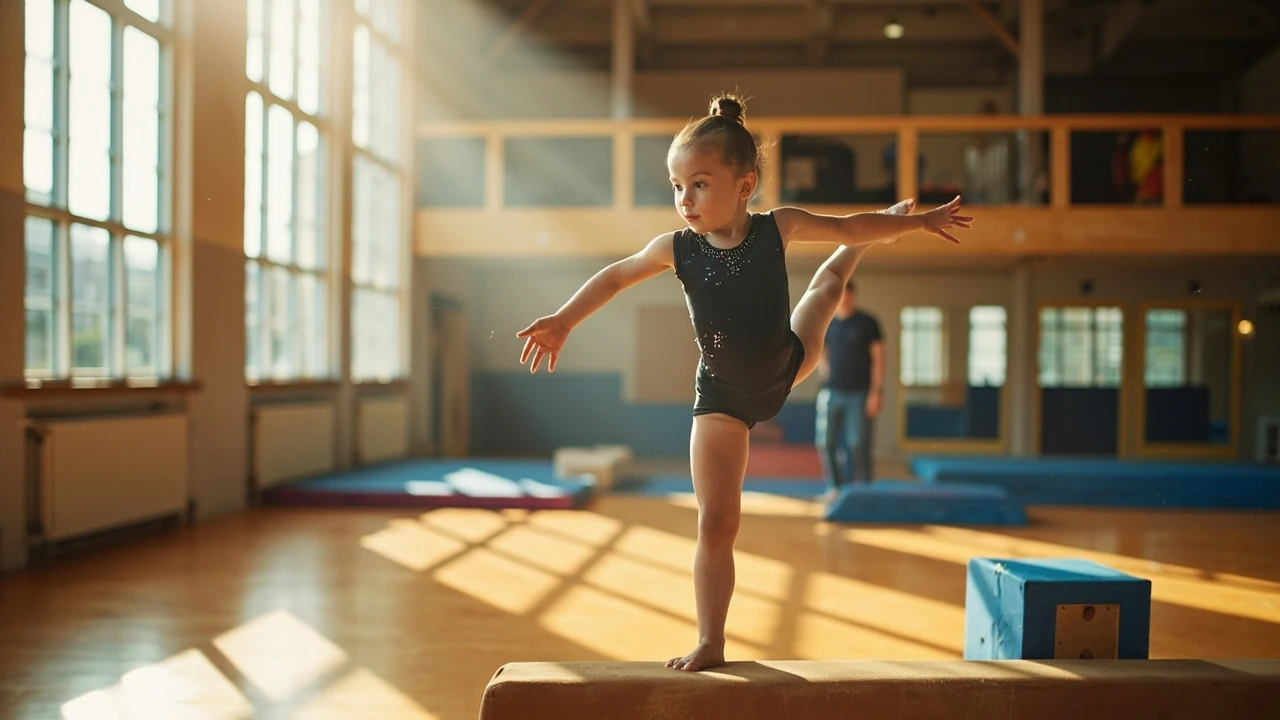
Beam drills that build balance, body lines, and reliable routines
A gymnast steps onto the four-inch surface and the room narrows to a strip of wood. Parents watch from the lobby. Coaches count silently. The next thirty or ninety seconds decide whether hours of training turn into a clean routine or a wobble that costs a tenth. The work that decides those seconds happens long before the meet, in the repetitive, unglamorous minutes of beam drills on a floor line, a low beam, and finally the competition apparatus itself.
This guide is for gymnasts, coaches, and parents who want a clear, practical plan for training on the balance beam. It focuses on the drills that actually transfer to a routine, the progressions that keep athletes safe, and the simple weekly structure that turns scattered practice into measurable progress. Whether the goal is a confident compulsory routine or a clean optional pass, the same logic applies: isolate one skill, repeat it until the body learns it, then stitch it into a series that looks effortless on the beam.
Why beam drills deserve their own block in the training plan
The beam is the most unforgiving event in artistic gymnastics. There is no second chance to plant a foot, and a one-degree lean in the air looks like a fall under judges’ eyes. Drills matter here more than on floor or vault because every skill must be executed in a narrow spatial corridor, often while the gymnast is already fatigued from earlier events. Drills teach the nervous system to find the center line automatically, so conscious effort can go to performance instead of survival.
Beam work also has a strong psychological layer. Many gymnasts train every skill on the floor, then tighten up the moment the height changes. Repetition on a raised surface builds the kind of calm that no amount of visualization can replace. The drills below start low and move high for that reason, and they progress from static positions to dynamic skills before the athlete ever attempts a connected series.
For a wider view of how each apparatus shapes training, the overview in artistic gymnastics apparatus explained gives useful context for why the beam demands a different approach than floor, vault, or bars.
The skills a beam routine has to cover
Before designing drills, it helps to know what a complete routine actually needs. Across compulsory and optional levels, every beam pass includes the same building blocks. Drills should train each block separately before combining them, because mixing too many new elements at once is the fastest way to create habits that look unsafe and score poorly.
| Block | What it includes | Why it matters on the beam | Common deductions if missing |
|---|---|---|---|
| Mount | Jump onto the beam, press handstand mount, or round-off entry | Sets rhythm and gives the first impression score | Wobble on landing, bent knees, extra support |
| Acrobatic series | Back handspring, layout step-out, aerial, or connected saltos | Core of the difficulty score at optional levels | Hesitation, bent arms, low chest position |
| Leap and jump series | Split leap, straddle jump, side aerial, switch leap | Combines artistry with difficulty | Insufficient split, flexed feet, bent knees |
| Turn | Full turn on one or two feet, illusion | Core of beam artistry | Wobble out of turn, heel drop, bent supporting leg |
| Dismount | Aerial dismount, round-off into back handspring, or salto | Final impression and last difficulty chance | Low height, step on landing, chest down |
| Connection and choreography | Dance elements, poses, and transitions between skills | Drives the composition and artistry scores | Visible preparation, pauses, dead arms |
Drills work best when they map directly to one of these blocks. If a gymnast is fighting wobbles in turns, the right drill is turn-specific, not a generic balance exercise. If the back handspring is the weak link, the drill should isolate the snap-down and rebound, not the whole series.
Setting up a safe beam training environment
Beam drills are only useful when the athlete can focus on the skill instead of the fear of falling. A few setup choices make a meaningful difference, especially for gymnasts still building trust in the apparatus.
- Use a low practice beam, suede mat, or floor line for every new drill. Height can be added once the pattern feels automatic.
- Lay a panel mat, sting mat, or folded gymnastics mat alongside the beam so a missed element turns into a soft landing, not a hard lesson.
- Keep a spotting block or spotting belt available for back handsprings, aerials, and dismounts. Coaches should be close enough to assist before the gymnast lands off line.
- Chalk the beam lightly before drills, then re-chalk before connections. Slippery feet cause more falls than weak technique.
- Train turns and leaps in front of a mirror when possible. Visual feedback is faster than verbal cues for body line issues.
For families scheduling training around school and meets, the practical checklist in how to prepare for a gymnastics meet helps connect weekly beam work to the rhythm of competition week, including when to drop difficulty and when to keep pushing.
Balance and shape drills: the foundation of every other skill
Every beam skill, from a simple pose to a back handspring series, starts with a balanced center of mass over a four-inch beam. Balance drills are unglamorous and easy to skip, which is exactly why they separate consistent beam workers from gymnasts who fight their own bodies under pressure.
- Relevé holds: rise to high relevé on one foot, arms in a chosen position, and hold for thirty seconds. Switch feet, then repeat with eyes closed for three seconds at a time to build ankle proprioception.
- Passe walks: walk the length of the beam in passé, knee turned out and toe at the supporting knee. Slow tempo trains control; faster tempo trains rhythm.
- Lever walks: walk heel-to-toe with the free leg extended forward at a fixed angle, then backward at the same angle. This trains hip stability and a quiet upper body.
- Straight-arm swings: hold the beam with one hand at low or middle height, then swing the free leg in straight swings front and back. The arm absorbs small wobbles, training the body to find center without a coach’s hand.
- Arabesque and scale holds: hold the shape for five to eight seconds, then close. Focus on square hips, lifted ribs, and a long line from fingertips to toes.
These drills look simple, but they build the small adjustments that decide whether a leap sticks or a turn stays on line. Coaches should look for unnecessary arm movement, gripping toes, and a hip that drops on the supporting side. Those three details cause most balance breaks on the beam, and they are easiest to fix in slow drills before the speed comes up.
Turn drills that stay centered under pressure
Turns look effortless on television and feel impossible the first hundred times in the gym. The secret is that turns are a series of small balance corrections, not a single dramatic motion. Drills should train those corrections, then let the body string them together.
- Spot drills on the floor: mark a taped X on the floor, stand with feet together on the X, and practice spotting the wall in front, then the back wall, on every quarter turn. The head leads, the body follows.
- Slow-motion turns: rise to relevé, turn in a controlled half turn, hold, then finish the second half. Coaches watch for the heel dropping before the turn finishes.
- Heel-down turns: practice the same turn with the heel down between turns, then gradually reduce the pause. This trains the supporting leg to stay strong through the entire revolution.
- Passé passé drills: alternate a half turn in passé with a small step in fourth position, repeating across the length of the beam. This builds the rhythm used in connected turns and dance elements.
| Drill | Focus | Common mistake to cue | When to add difficulty |
|---|---|---|---|
| Spot wall on floor | Head position | Eyes wandering before the head arrives | Move to low beam |
| Slow half turns | Heel control | Heel drops before turn completes | Add full turn on beam |
| Heel-down turns | Supporting leg strength | Knee wobbles or hip tucks under | Add faster tempo |
| Passé passé across beam | Rhythm and connection | Arms swing instead of stay framed | Add second connected element |
For gymnasts who want to see how turn work fits into a broader artistic plan, the same logic shows up in the why gymnastics is the foundation for every sport article, which explains how body control on a narrow surface transfers directly to other sports that demand balance under pressure.
Leap and jump drills for height and clean lines
Leaps and jumps score on two things at once: height and shape. Judges look for a clean split angle, pointed feet, and a return to the beam that does not bounce. Drills should train the jump, the air position, and the landing as three separate events, because the brain can only focus on one new feeling at a time.
- Tuck jump stick: on a low beam, do a tucked jump, stick the landing, and hold for three seconds. The point is not height but a quiet landing with no arm flailing.
- Straddle stretch on floor: hold a full straddle stretch for thirty seconds, then jump immediately into a straddle jump on the floor. The stretch primes the hips for better split angle in the air.
- Split leap to landing mat: set a landing mat just off the end of the beam and leap into it. A safe landing mat lets the gymnast chase a bigger split without fear of under-rotating on the beam itself.
- Hurdle and hold: step into a hurdle, freeze in the lunge position, and have a coach check the back leg, front leg, and arms. Once the position is clean, add the jump.
For optional-level gymnasts working on switch leaps or side aerials, the same progression applies but with more emphasis on the back leg position. Coaches should watch the back leg’s height and the chest staying lifted. A switch leap with a low back leg can lose a full tenth in artistry even with a clean landing.
Acrobatic drills: back handsprings, aerials, and connections
Acrobatic series are the highest-difficulty part of a beam routine and the place where confidence is won or lost. Drills should isolate the takeoff, the flight, and the rebound in a way that lets the gymnast feel each part before the brain is asked to chain them together.
- Back handspring over a panel mat: stack two panel mats over the beam so the back handspring is performed over a forgiving surface. The athlete learns the snap and rebound without the fear of a hard beam under the hands.
- Handstand on a low beam: kick to handstand, hold for two seconds, then snap down to the beam. This trains the shoulder angle and the timing of the rebound.
- Round-off back handspring on the floor: the round-off still needs to land near the line of the beam. Use a line on the floor to mark the imaginary beam and practice the entry and exit on that line.
- Aerial drills on a tumble track: set a tumble track beside the beam and practice the aerial with a soft, forgiving surface. Move to the beam only when the rotation feels automatic.
| Acrobatic skill | Best entry drill | Best rebound drill | Beam addition |
|---|---|---|---|
| Back handspring | Handstand snap-down on floor | Rebound jump to stick | Single back handspring on low beam |
| Layout step-out | Layout on tumble track | Stick on a landing mat | Layout step-out with spotting block |
| Aerial | Aerial on floor line | Single-leg landing on mat | Aerial on beam with panel mat beside |
| Back tuck dismount | Back tuck on trampoline | Tuck stick on eight-inch mat | Dismount to sting mat, then floor |
Coaches should keep in mind that the beam’s height amplifies fear. A back handspring that feels easy on the floor can feel like a giant leap on a four-inch surface. The drills above give the body a memory of the skill before the height is added, which is the most reliable way to keep the series from turning into a long pause and a wobble.
Mount and dismount drills that start and end the routine cleanly
Judges see the mount and dismount most clearly because the body is fresh at the start and the audience is paying attention at the end. A shaky mount sets the tone, and a low dismount is the lasting image. Drills should protect both ends of the routine with the same care given to the middle.
- Jump mount stick: practice a simple squat-on or straddle-on mount with a hold of three seconds on the beam. Once the hold is solid, add a small pose to begin the choreography.
- Press handstand mount: kick to handstand against a wall, then against a spotting block, then on the beam. The wall teaches the line, the block teaches the confidence, the beam teaches the routine.
- Dismount to a sting mat: place a sting mat at the end of the beam and perform the dismount into it. Coaches should stand at the side and assist the rebound until the landing looks automatic.
- Run-out drills: after the dismount sticks, take three running steps and a hurdle into the corner. A clean run-out signals control and a strong final impression.
Optional-level gymnasts often struggle with dismounts because they try the full difficulty on day one. Starting in a foam pit, moving to a trampoline, then to a sting mat, then to the actual landing area is a progression that protects the body and keeps the skill reliable under pressure.
How to layer drills into a weekly training plan
Drills only work if they happen often enough to become automatic. A typical week might mix days that focus on shape, days that focus on acrobatic skills, and at least one day that combines multiple blocks in a connected series. Below is a practical example for a competitive optional-level gymnast. Rec and compulsory gymnasts can drop the highest-difficulty items and shorten the sessions.
| Day | Theme | Key beam drills | Time on beam |
|---|---|---|---|
| Monday | Shape and turns | Relevé holds, passe walks, slow turns, passé passé | 45 minutes |
| Tuesday | Acrobatics | Back handspring drills, aerial on floor line, handstand snaps | 60 minutes |
| Wednesday | Active recovery | Light stretch, balance games on floor line, mental rehearsal | 20 minutes |
| Thursday | Leaps and connections | Split leap drills, hurdle and hold, straddle jumps to stick | 45 minutes |
| Friday | Series and dismounts | Connected back handspring to leap, full routine practice, dismounts to mat | 75 minutes |
| Saturday | Full routine | Two or three complete passes, video review, coach notes | 60 minutes |
| Sunday | Off or light | Optional walk-through, visualization, gentle stretch | 0 to 15 minutes |
Volume matters less than consistency. Twenty minutes of focused beam drills four times a week will produce more progress than a single three-hour session followed by a week off. Coaches should aim for short, frequent, and progressive, with each week adding a small challenge to one element of the routine.
Spotting and safety cues for coaches and parents
Parents and beginning coaches are often unsure how close to stand or where to place their hands. The right spot depends on the skill, the gymnast’s confidence, and the size of the coach. A few general rules keep everyone safer.
- For balance drills, stand beside the gymnast on the side of the working leg. A light touch on the hip or shoulder is enough to cue the correction.
- For turns, place a hand on the gymnast’s upper back to keep the chest up. A drop in the upper back is the most common reason turns finish in a wobble.
- For back handsprings, stand to the side of the beam near the gymnast’s hips. A hand on the lower back during the snap-down teaches the timing of the rebound without slowing the rotation.
- For aerials, the standard side spot is the most effective. The coach’s hand stays near the gymnast’s waist and lifts slightly to keep the rotation going over the top.
- For dismounts, stand at the end of the beam on the side the gymnast will rotate toward. A hand near the lower back helps control the rebound and prevents a chest-down landing.
For parents who are not coaches, the right role is encouragement, observation, and the practical logistics of getting the athlete to the gym on time. The article on choosing a gymnastics program gives a clear picture of what a quality beam program looks like from the lobby, which helps families ask better questions during evaluations.
Common mistakes that quietly ruin beam progress
Even well-intentioned athletes make the same small errors week after week. Spotting them early saves months of slow progress and keeps the routine cleaner under pressure.
- Looking down at the beam: dropping the head pulls the chest forward and shifts the center of mass. The fix is a simple cue: eyes on the wall ahead, not the feet.
- Bent supporting knee: a soft knee on a relevé or turn is the fastest way to lose a tenth. Drills should include slow, intentional holds with the leg fully extended.
- Arms that swing instead of frame: arms are a counterweight on the beam. Swinging arms mean the body has lost its center, and the next skill is at risk.
- Stepping out of a leap or jump: under-rotation is the usual cause, not lack of flexibility. Hurdle drills and stretch jumps on the floor usually fix it faster than extra stretching.
- Slow preparation before a skill: visible hesitations cost composition points and create rhythm breaks. The fix is connecting elements in drill form so the transition feels natural before it is performed in a routine.
For athletes who are also competing in other sports, the same body awareness shows up in how gymnastics skills transfer to football, basketball, and hockey, where balance under sudden changes of direction follows the same rules as balance on the beam.
Mental training that makes beam drills stick
The beam has a reputation for being the event where the head matters most, and that reputation is accurate. Mental training is not a separate category from beam drills; it is part of every repetition. A few practical habits reinforce the physical work.
- Visualization before the skill: close the eyes for ten seconds and picture the skill from start to finish. Gymnasts who visualize before a difficult beam series report more consistent performance than those who only visualize after.
- Pre-beam routine: a small, repeatable action before stepping on the beam, like a deep breath and a hand on the beam, helps the brain shift from chaotic to focused.
- Cue words: each skill should have a single short cue, such as “snap” for back handsprings or “spot” for turns. The word becomes a mental trigger for the timing the drill is trying to build.
- Reset rituals after a fall: instead of walking away or starting over, take a deep breath, return to the start, and complete the next attempt. A consistent reset teaches the brain that one mistake does not define the routine.
Coaches should remember that fear is a normal response to height and a narrow surface. The job of a good drill is not to remove fear but to build enough competence that the fear becomes manageable. Most beam confidence is built one quiet repetition at a time, not in a single breakthrough.
A simple four-week progression for an intermediate beam worker
The plan below assumes a gymnast who is comfortable on a low beam, can perform a back walkover and a split leap, and is working toward a clean optional-level series. The four weeks focus on different goals and add a small challenge each week. Volume can be adjusted for younger or older athletes.
- Week 1: focus on shape. Train relevés, passé walks, slow turns, and split leap drills. Aim for clean positions rather than new skills. Five sessions, twenty to thirty minutes on the beam each.
- Week 2: introduce one new acrobatic element. Practice a back handspring on a low beam, then a single back handspring on the competition beam with a spotting block. Continue turn and leap drills for ten minutes at the start of each session.
- Week 3: connect elements. Stitch a back handspring to a split leap, then a turn to a jump. Practice the connection on a low beam before moving it to the competition beam. Maintain shape drills at the start of every session.
- Week 4: integrate the dismount. Add the dismount to a sting mat, then to the floor. Run the full routine at half speed, then at full speed by the end of the week. Review video with the coach and pick one small target for the next cycle.
For families considering the broader picture of how training time, coaching quality, and competition schedule interact, the same logic shows up in the article on choosing a gymnastics program, which offers a useful lens on what kind of weekly structure supports long-term beam progress.
How to measure progress beyond scores and medals
Scores are a useful feedback tool, but they lag behind the actual training changes that produce a clean beam routine. A few simple measures help gymnasts and coaches see growth even when the scoreboard does not move.
- Stick percentage: count how many attempts of a skill finish in a clear stick. Aim for a slow but steady rise over a four-week cycle.
- Wobble count: during full routine practice, count visible wobbles. The goal is a lower wobble count at the same difficulty, not more difficulty at the same wobble count.
- Connection smoothness: rate each connection on a simple scale, from a noticeable pause to a clean flow. Improve the scale one step at a time.
- Comfort on a high beam: track the number of beam sessions that feel calm versus stressful. Confidence is a real measure of progress even when the score is unchanged.
These measures also help with the broader question of how much sport-specific training a young athlete should do. The piece on why gymnastics is the foundation for every sport offers a useful framework for how beam skills in particular translate into other athletic contexts, which can help families prioritize when the season gets crowded.
Frequently asked questions
How often should a gymnast train beam drills each week?
For most competitive gymnasts, three to five focused beam sessions per week produce the best results, with at least two of those sessions dedicated to drills rather than full routines. Younger or recreational gymnasts can build the same habits with two to three short sessions of twenty to thirty minutes.
What is the best drill for a gymnast who is afraid of the beam?
The most reliable drill is walking in passé across a low beam with a coach standing beside the gymnast. The slow, controlled repetition builds balance and trust at the same time, and the height can be increased only after the movement feels automatic.
How long does it take to learn a back handspring on the beam?
Most gymnasts who already have a clean back handspring on the floor can build a reliable beam back handspring in four to twelve weeks of focused drills, depending on confidence and the quality of the floor skill. A solid back walkover, a strong handstand, and consistent spotting speed the process up.
Should beam drills be done on a floor line or the real beam?
Both are useful, and a smart program uses both. Drills on a floor line teach the skill without fear, and drills on the real beam teach the skill under realistic conditions. Most coaches recommend starting on a low practice beam or floor line and moving to the competition beam only when the pattern is automatic.
How can I improve my turns on the beam?
Focus on three things in this order: spotting a fixed point on the wall, keeping the heel down until the turn finishes, and rising to a high relevé as the heel lifts. Slow-motion turns on the floor are the best drill for beginners, and passé passé across the beam is the best drill for gymnasts working on connection.
What equipment is most helpful for at-home beam practice?
A four-inch wide practice beam, a panel or sting mat, and a mirror are enough for most at-home drills. A foldable suede beam is portable and easier to store, but the height should stay low until the athlete is comfortable. Coaches should supervise any drill that involves rotation or significant height.
Can beam drills help reduce competition anxiety?
Yes. Repeated exposure to beam skills in a low-stress setting builds the muscle memory that lets the brain focus on artistry under pressure. Visualization, pre-beam breathing, and small consistent cues make the routine feel familiar even when the venue is new.
When should a gymnast add a new skill to the beam routine?
A new skill belongs in the routine when it can be performed with a stick on the competition beam at least eight out of ten times in practice. Until then, the skill should stay in drills. Adding a skill before it is consistent is the most common cause of large deductions in competition.
Are there beam drills that can be done without a coach?
Shape drills like relevé holds, passé walks, and straight-leg swings can be done on a low practice beam with a mirror and a panel mat for safety. Anything involving rotation, height, or dismounts should be supervised by a qualified coach or spotter.
How do I know if a beam drill program is working?
Look for small, consistent signs: a higher stick percentage, fewer visible wobbles, smoother connections, and a calmer demeanor on the beam. Scores may not change for a few weeks, but the underlying mechanics will. If those metrics stall for a full month, the program probably needs a small adjustment, not a complete overhaul.