When should a gymnast start using grips: a practical guide for coaches and parents
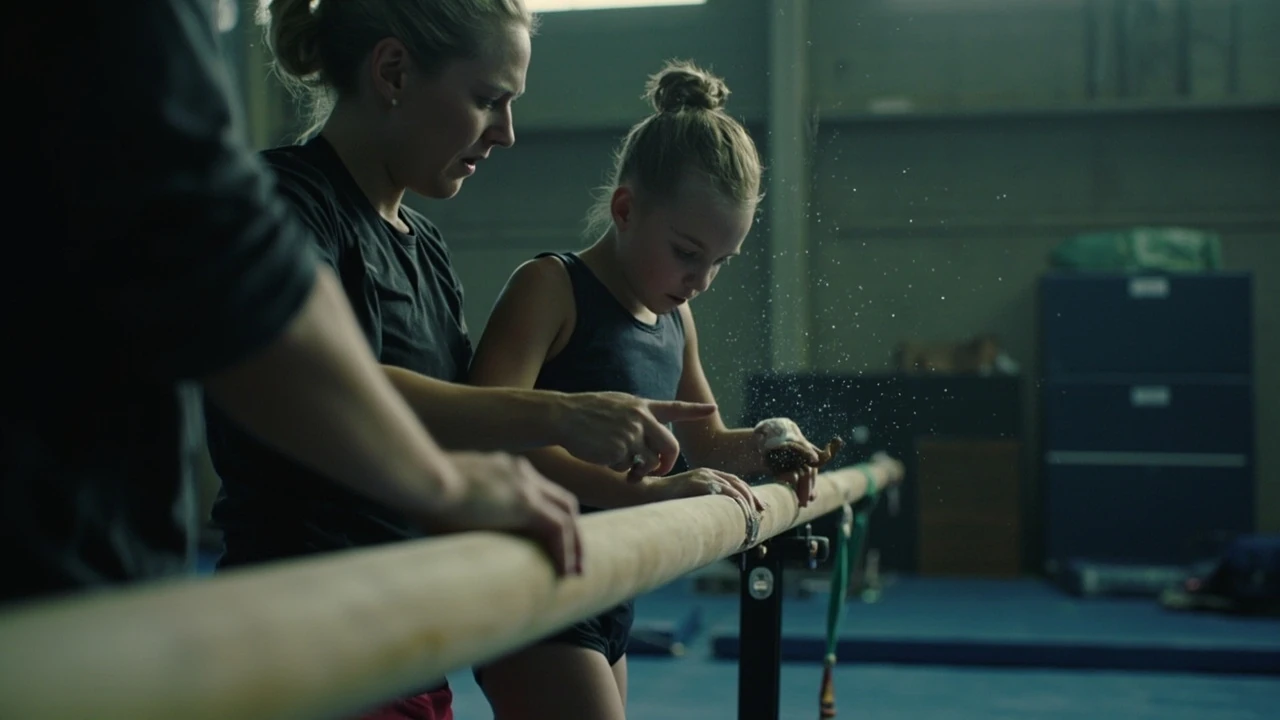
A young gymnast stands at the chalk bin, rubbing a thin leather strip between her palms. She has just landed her first clean kip on the low bar and her hands are already pink and stinging. The question her coach asks is one every gym faces sooner or later: when should a gymnast start using grips, and how do you know the answer is yes rather than simply “because her hands hurt today”? This guide walks through the practical signals, the equipment options, and the common mistakes clubs make when introducing grips to developing gymnasts.
Why this question matters more than it looks
Hand grips are a piece of protective equipment, but they are also a technical tool. The wrong grip at the wrong time can mask weak hand position, encourage a gymnast to swing through pain rather than solve it, or create a false sense of security on a release skill. The right grip at the right time, on the other hand, lets a young athlete train more swings, more giants, and more releases without tearing skin or developing fear of the bar. Coaches and parents are usually asking two questions at once: when is my gymnast ready, and which grip is the right one for the level she is actually training?
Because the answer depends on the gymnast rather than the calendar, this article organizes the decision around the observable signals that show up in the gym, the age and stage cues most programs use, and the equipment progression that matches a bar routine’s difficulty. By the end, you should be able to look at a gymnast’s training week, her hand health, and her bar work and decide whether grips are the next right step.
The three signs a gymnast is ready for grips
Most clubs do not introduce grips based on age alone. They look for a cluster of signals that together suggest a gymnast can use the equipment safely and benefit from it. The table below summarizes the most reliable indicators and what each one actually means in a training environment.
| Signal | What to look for in training | Why it matters for grips |
|---|---|---|
| Consistent bar work | Multiple sessions a week on bars with repeated swings, casts, and circles | Grips are useful when hand friction starts limiting volume, not for one-off practice rounds |
| Clean hand position | Wrapping the bar with the fingers and a neutral, non-cocked wrist on a kip or pull-over | A poor hook or bent wrist will be reinforced, not corrected, by a leather grip |
| Recurring rips and blisters | Open skin or persistent hot spots that interrupt training for several days in a row | Skin damage is a safety and consistency issue, not a badge of toughness to train through |
| Release or giant progression | Working clear-hip circles, tap swings, or first giants with a spot | Higher swing speeds and centrifugal force change the hand-bar equation entirely |
| Coach-athlete buy-in | The gymnast can put the grip on, position the dowel, and adjust it between turns | If a child cannot manage the equipment, it becomes a distraction instead of a tool |
When at least three of these signals show up together, grips usually start to make sense. None of them is a hard rule on its own, and a strong signal in one column can be offset by a weakness in another. A gymnast who trains five days a week but rips every other session, for example, is closer to ready than a gymnast who trains twice a week and feels fine.
How training age and level shape the decision
Skill level and training hours give the answer some boundaries. A gymnast doing a single weekly recreational class with no plan to add bar-specific drills will not get the same benefit from grips as a competitive optionals athlete training 15 hours a week. The table below sketches a rough map of when grips tend to enter the picture at common levels. Treat it as a starting point, not a prescription.
| Pathway | Typical bar work | Typical training volume | When grips usually enter |
|---|---|---|---|
| Recreational and pre-team | Pull-overs, low bar basics, beginner cast shapes | 1-3 sessions per week | Usually not yet; focus on hand strength and taping if rips appear |
| Compulsories (USAG levels 1-3 or equivalent) | First giants spotted, free hip work, kip series | 4-6 sessions per week | Common at this stage, often for higher volume training and to protect skin during giants |
| Compulsories (USAG levels 4-5) | Solid giants, tap swings, first release skills spotted | 5-8 sessions per week | Standard, with a transition to a stiffer dowel grip and a personal break-in period |
| Optionals and Xcel | Giants with releases, inbars, Tkatchev entries | 6-10 sessions per week | Expected; grip choice becomes a personal decision with coach input |
| Elite and pre-elite | High-difficulty combinations, multiple release skills per routine | 10+ sessions per week | Custom grips are common, with leather thickness and dowel shape matched to event and athlete |
Notice that the entries above track difficulty and volume, not birthdays. A 12-year-old compulsory gymnast training 15 hours a week has a stronger case for grips than a 15-year-old recreational gymnast training 4. The decision lives at the intersection of skill, volume, and hand health, and that is exactly why the question of when should a gymnast start using grips has to be answered per athlete.
Reading the bar work: hand cues coaches actually use
Coaches tend to make the grips call based on a few very specific movements. If a gymnast cannot perform these movements consistently, grips will not save her, and they can hide problems she needs to learn to fix.
- The kip with a long cast: A kip that finishes in a strong cast position, with the wrists neutral and the fingers visibly wrapped over the bar, suggests the hand is working in the way a grip is designed to support. A kip that lands with bent wrists and the thumb sliding under the bar is a hand-position problem first.
- The tap swing: A controlled tap swing that returns to a clear front support with the same hollow shape on the way back is a sign the gymnast understands how to absorb and redirect the bar. This is the swing where a grip starts to earn its keep.
- The spotted giant: Once a gymnast can hold a straight-body giant with a spot and keep her toes pointed, the swing is long enough and fast enough that skin and friction become real issues. This is often the moment grips are introduced.
- First release skills: The first time a gymnast is asked to let go of the bar and catch it, the swing speed changes dramatically. A grip with a properly positioned dowel is what makes that catch reliable.
These cues are useful because they are observable. A coach does not have to guess whether a gymnast is “ready” in some abstract sense. The kip, the tap swing, the giant, and the first release each have a clear, trainable shape. If the shape is there, grips are an upgrade. If the shape is not there, grips are a band-aid.
What grips actually do to a swing
Hand grips change the way a gymnast interacts with the bar in two ways that are easy to miss if you have only ever used bare hands. First, they add a layer of material between the skin and the bar, which means the friction profile is different. A leather grip on a properly chalked bar holds with less hand force than bare skin in many cases, but only if the dowel is positioned so the bar sits in the natural crease of the fingers.
Second, grips add a structural element to the hand: the dowel. The dowel is a stiff ridge, usually about a finger’s width, that sits across the palm near the base of the fingers. When a gymnast reaches the bottom of a swing and starts to pull up, the dowel bends slightly and then pops back, giving the hand a small mechanical assist at exactly the moment the swing changes direction. That is why coaches care so much about dowel placement. A dowel that is too close to the wrist acts too early and stalls the swing. A dowel that is too close to the fingers acts too late and gives nothing at the bottom.
This is also why a gymnast cannot simply be handed a grip and told to use it. The dowel has to be adjusted for her hand, the leather has to be broken in around her bar routine, and the wrist strap has to be tight enough to keep the grip from sliding but not so tight that it changes the shape of her cast or handstand. The first few weeks of using grips are an adjustment period, and they should be treated like any other equipment change.
Choosing the right grip type for the level
Not all grips are the same, and the right one for a compulsory-level gymnast is rarely the right one for an optionals athlete working release skills. The list below describes the most common types and where each one tends to fit in the progression.
- Palm guards: Soft leather shells that cover the palm and a portion of the fingers, with a small buckle at the wrist. These do not have a dowel. They protect skin but offer almost no mechanical assist. They are most often used as a stepping stone before a full dowel grip, or by recreational gymnasts who simply need to manage rips.
- Beginner dowel grips: A thin dowel, often 1 to 1.5 fingers wide, set into a softer leather palm. The leather wraps the lower fingers and the wrist. These are common at the compulsory levels because the dowel gives a clear cue for hand position without overpowering a smaller hand.
- Standard dowel grips: A wider and slightly stiffer dowel, usually 1.5 to 2 fingers, in a more substantial leather palm. These are the workhorse grips for optional-level training on bars and for most ring work on high bar.
- Custom or competition grips: Cut and shaped by a grip maker to the individual athlete, often with a specific leather thickness, a wider or narrower dowel, and a custom wrist strap. These appear at the optionals and elite levels when a gymnast’s swing style benefits from a specific geometry.
The natural question after a list like this is whether a gymnast should start in palm guards and work up, or jump straight to a beginner dowel grip. The honest answer is that it depends on the bar work. A gymnast whose only event work is pullover and cast drills will not benefit from a stiff dowel. A gymnast whose only event work is a giant and a release had better have a dowel, because that is what the skill is designed around.
Breaking in new grips without losing training time
A new pair of grips is stiff, and a stiff grip can be harder to use than no grip at all. Coaches who handle this well tend to use a deliberate break-in process rather than expecting a gymnast to perform in fresh leather for an entire training week. The sequence below is a common shape for that process.
- Day 1, 15-20 minutes on bars: Put the grips on for a small block of easy swings and casts to let the leather warm and form to the hand. Remove the grips for the rest of the session and finish with bare hands if skin allows.
- Day 2, half the bar session: Use the grips for the swing and giant blocks. Switch to bare hands or palm guards for skill drills where the dowel is not needed, such as low-bar connection work.
- Day 3 onward, full bar session: Wear the grips for the full bar block, with breaks only for routines or where rips are healing.
- After one to two weeks: The leather has usually softened enough to shape the dowel. A coach or grip maker can then adjust dowel placement if the swing is being slowed or the bar is sitting in the wrong crease.
This kind of progression is a good answer to a related question parents often ask: will grips make my gymnast sore while she is adjusting them? Almost certainly yes, in the sense that the palm will be a little tender from a new pressure point. That tenderness is different from a rip, and it tends to settle within a week or two.
Common mistakes when introducing grips
Most problems with grips show up in the first few months of use, and they are almost always the result of one of four patterns. Coaches and parents who know what to watch for can correct these early.
- Putting the grip on too early: If a gymnast is still learning to keep a neutral wrist and wrap the bar, a grip will lock in whatever bad habit she already has. A grip should be an upgrade to a working hand, not a cover for a hand that is not yet working.
- Choosing a dowel that is too stiff: A heavy dowel in a small hand can pull the bar into the wrong part of the palm, change the cast shape, and slow the swing. The rule of thumb is to start with the softest dowel the level requires, not the stiffest the athlete can tolerate.
- Ignoring the wrist strap: A loose wrist strap turns the grip into a small leather flag flapping at the bottom of the swing. A tight strap pulls the heel of the hand out of shape. The strap should be snug enough that the grip does not shift when the hand opens.
- Skipping the break-in period: Training a full week of giants and releases in brand-new leather often leads to blisters exactly where the new seam or edge is sitting. The break-in sequence above is a small amount of patience that prevents a week of missed bar time.
One pattern that deserves its own mention: using grips as a way to avoid dealing with a rip. If a gymnast has an open rip and the coach tapes over it and then puts a grip on, the wound is being held against a piece of leather for an entire bar session. That is a fast path to a worse rip and possibly an infection. The correct response to an open rip is rest, skin care, and a return to grips only when the rip is closed.
What about grips for boys on high bar, rings, and parallel bars?
Most of the discussion above assumes the uneven bars, but the underlying logic applies to men’s events as well. The question of when should a gymnast start using grips shows up in slightly different forms on high bar, rings, and parallel bars, and the level at which grips enter each event is its own small decision.
- High bar: Boys typically begin with dowel grips once they start training giants and release skills. The mechanical demands on the hand are similar to the women’s uneven bars, and the same dowel-placement logic applies.
- Still rings: Most men’s ring routines do not use grips at all. The swing on rings is different enough that grips can interfere with the specific hand pressure the event requires. Leather ring “grips” exist but are a minority choice and are usually a personal decision by the athlete.
- Parallel bars: Grips are uncommon on parallel bars for the same reason. The skill set is based on pressing, swinging, and bailing, and bare hands or tape are the standard approach.
The general principle is the same as on the women’s events: the equipment should match the swing. Where the swing is fast and the bar is round, a dowel grip earns its place. Where the swing is slower or the apparatus asks for a different hand position, bare hands and chalk are usually enough.
How to talk to a parent about introducing grips
Parents often have a strong opinion on grips, sometimes because they remember their own gymnastics experience, sometimes because they read something on a forum. A coach who walks the parent through the decision step by step is much more likely to get a comfortable yes. The script does not have to be long. It usually has three moves.
- Name the specific signal that prompted the conversation, such as repeated rips at the bottom of giants, or the upcoming release-skill progression.
- Explain the equipment in plain language: a dowel grip is a tool that helps the hand hold the bar at the bottom of a swing, not a way to skip technique.
- Set the break-in plan and the review date, so the parent knows the grips will be checked and adjusted rather than handed over and forgotten.
For a parent who is unsure whether their child needs grips yet, it is worth pointing them to a broader piece on gymnastics flexibility and hand care so they can see how hand health fits into the larger training picture. The decision to use grips is rarely the only hand-care decision the family will make that year.
What to do if a gymnast resists using grips
Some gymnasts, especially younger ones, dislike the way a new grip feels and resist wearing them. The resistance is usually about one of three things, and each has its own response.
- The grip feels awkward in the hand: This is normal in the first few sessions. Encourage the gymnast to use the break-in sequence and not to judge the equipment on day one.
- The grip is hurting at a new pressure point: The dowel may be the wrong size, or the leather may need a small adjustment. A coach or grip maker can usually fix this with a minor reshape.
- The gymnast is afraid of losing her “feel” for the bar: This is more common in older athletes who are attached to a particular hand-bar relationship. A short block of training with the new grips, framed as an experiment with a clear end date, usually resolves the fear.
For a more general view of how equipment choices fit into a season, a resource like a guide to artistic gymnastics apparatus can help a parent or coach see how each event’s equipment interacts with the rest of the training plan. Grips are one piece of a much larger puzzle, and they make the most sense when the rest of the puzzle is already being worked on.
A simple checklist for the next training week
If you are trying to settle this question for a specific gymnast this week, the checklist below turns the whole article into a quick decision tool. Run through it with the athlete’s training plan in front of you, and the answer usually becomes obvious.
- How many bar sessions are in the training week, and how long is each one?
- Is the gymnast currently in a kip, giant, or release-skill progression?
- How is the hand health: any open rips, or a pattern of rips after the second or third bar session of the week?
- Can the gymnast keep a neutral wrist and a wrapped-hand position on a cast and a tap swing?
- Is there a specific event or routine element coming up that would benefit from a more secure grip on the bar?
- Has the gymnast tried grips before, and if so, what went well or poorly?
If most of the answers point toward a higher volume, harder bar program, and the hand work is already in a reasonable shape, grips are almost certainly the next right step. If the training week is light and the bar work is still at the kip and cast level, the answer can usually wait a few months. The point of the checklist is to make the decision a conversation about the athlete’s actual week, not about the calendar.
Putting it together: a coach’s short answer
So when should a gymnast start using grips? The short version is that grips usually enter the picture when a gymnast is doing enough bar work that hand skin becomes a training limiter, when her swing is fast enough that a dowel can actually do something, and when her hand position is clean enough that the grip will reinforce good habits instead of hiding bad ones. That is most often somewhere in the compulsory-to-optionals transition, but the exact moment depends on the athlete’s volume, her swing, and her hand health.
The longer version is that grips are a piece of protective equipment with a real mechanical purpose, and they deserve the same attention as a new bar or a new handguard. A gymnast who uses grips she has broken in, with a dowel that matches her hand, on a swing she is technically ready for, will get more out of every bar session. A gymnast who is handed a stiff grip too early will spend a few months relearning hand position. The decision is small, but the difference between a good answer and a bad one shows up in the way the next season feels.
Frequently asked questions
At what age do most gymnasts start using grips?
There is no single age. Most competitive gymnasts start using grips in the compulsory or early optional years, often between roughly 8 and 12, but the decision is based on training volume, bar work, and hand health, not on age. Some gymnasts start earlier in a high-volume program, and some start later in a recreational program, and both can be correct.
Do recreational gymnasts ever need grips?
Rarely. Recreational classes usually do not include the swing volume or release work that grips are designed for. If a recreational gymnast is getting frequent rips, the first response is usually chalk, taping, and technique work on hand position, with palm guards as a possible stepping stone. A dowel grip is more than the situation usually requires.
Should a gymnast start with palm guards or dowel grips?
Palm guards are a good choice when the only problem is skin protection and the bar work is at the kip and cast level. Dowel grips become the right choice once the swing is fast enough that the dowel can help at the bottom of the giant. Many compulsory-level gymnasts move directly to a beginner dowel grip because by the time they need skin protection, their swing is also ready for a dowel.
How do I know if the dowel is in the right place?
When a gymnast hangs from the bar with the grip on, the bar should sit in the natural crease of the fingers, just below the second knuckle. If the bar is closer to the palm, the dowel is acting too early and slowing the swing. If the bar is closer to the fingertips, the dowel is acting too late and giving no real help. A coach or grip maker can reshape the leather to move the dowel.
Can grips cause blisters instead of preventing them?
Yes, especially in the first few weeks of use. The most common cause is a new seam or edge sitting against the hand during long bar sessions. The fix is a slower break-in period, a chalk check to make sure the bar is not too dry, and a check of the wrist strap so the grip is not sliding across the palm.
How long does a good pair of grips last?
For a training pair, a well-cared-for set of leather grips usually lasts one to two seasons of regular use, depending on volume. Competition pairs are often broken in slowly and used only for routines, so they can last longer. Most grip makers will reshape an old pair rather than require a brand-new one if the leather is still sound.
Are fingerless grips better for beginners?
Some beginner grips cover the lower fingers and some leave them free. The covering is more about keeping the fingers wrapped around the dowel than about the grip itself. For a younger compulsory-level gymnast, a covered lower finger is often a small help, because it encourages the hand to stay closed at the bottom of the swing.
Should grips be used on every event?
No. Grips are designed for the round, swinging events: uneven bars and high bar. They are uncommon on beam, floor, vault, rings, parallel bars, and pommel horse. A gymnast who only trains non-swing events will not get any benefit from grips, and on beam a grip can actually get in the way of a clean hand placement on a leap or turn.
What if a gymnast’s hands still hurt after switching to grips?
Hand pain after a switch to grips usually has one of three causes: the dowel is in the wrong place, the leather is still stiff, or the bar session is longer than the equipment can handle. A short conversation with the coach about dowel placement, plus a check of the chalk and the break-in schedule, will usually find the cause. If the pain is from an open rip, the right response is rest and skin care, not more grip time.
Is it ever too late to start using grips?
No. Grips are a tool, and an older gymnast can still benefit from them if the swing and the bar work call for one. The break-in period may be a little longer because the hands are already used to bare-bar feel, but the equipment itself is the same. The decision to use grips is about the work the gymnast is doing, not about how long she has been doing it without them.