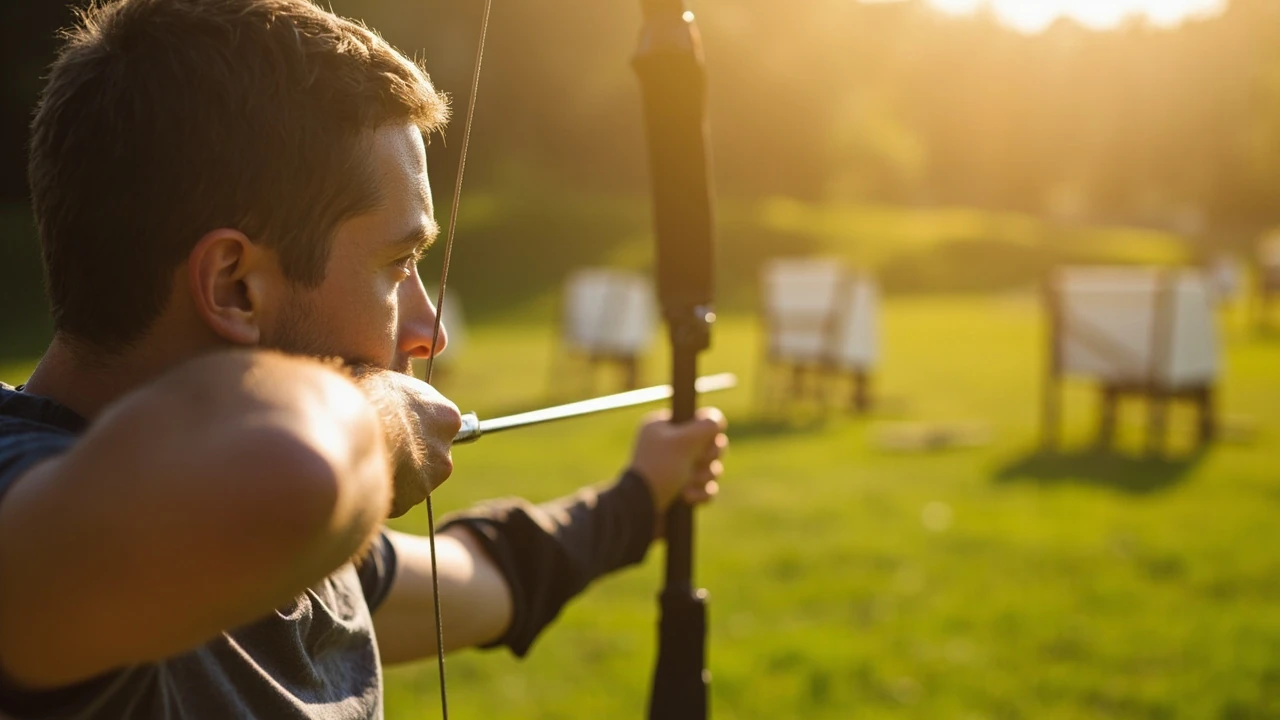
A high school sophomore in Ohio watches her older brother send a string of arrows into a paper target at a backyard range. He has been training for a Junior Olympic Archery Development (JOAD) pin for two years, and his coach keeps a small notebook of group scores, distances, and wind conditions. The family is not unusual: across the United States, the same pattern repeats at rifle clubs, shotgun ranges, and archery fields, where athletes, parents, and volunteers organize what the broader sports world calls target sports. This guide is built for readers who want a clear, practical picture of target sports USA: what the discipline includes, how it is organized, who governs it, how athletes progress, and what families and clubs should weigh before getting involved.
Target sports USA at a glance
The phrase target sports USA covers a wide family of precision disciplines in which an athlete aims a projectile, a projectile launcher, or a body movement at a defined mark and is scored on accuracy, consistency, and under increasing conditions of difficulty. In American usage, target sports usually include archery (recurve, compound, and barebow), rifle and pistol shooting (air and smallbore, plus high-power disciplines), shotgun sports such as trap, skeet, and sporting clays, and crossbow competition. In Olympic and multi-sport context, the International Shooting Sport Federation (ISSF) governs rifle, pistol, and shotgun events, while World Archery oversees international archery competition. The United States has its own national federations that affiliate with those international bodies and run domestic programs.
Target sports in the United States are not a single league. They are an ecosystem of national governing bodies, state associations, local clubs, certified coaches, sanctioned match series, and youth-development pathways. A reader who is new to the discipline will often hear several acronyms in the same conversation: USA Archery, the National Rifle Association (which runs much of domestic competitive shooting through its competitive shooting division), the Amateur Trapshooting Association (ATA), the National Skeet Shooting Association (NSSA), the National Sporting Clays Association (NSCA), and USA Shooting. Each of these organizations runs its own events, certification programs, and records. Understanding that structure is the first practical step for any athlete or family.
Why target sports draw a wide range of participants
Target sports USA attract an unusually broad demographic profile for a precision discipline. Elementary schoolers as young as eight or nine can shoot compound bow at a USA Archery sanctioned event with appropriate supervision, and the same clubs regularly host adults well into their 70s and 80s. Several features make the discipline accessible:
- Equipment can be rented or borrowed at most clubs, so families do not have to commit to a full kit before trying the sport.
- Outdoor ranges in temperate parts of the country operate nearly year-round, and indoor ranges with climate control keep the off-season productive.
- Competition formats scale with the athlete. Beginners can shoot at 10 or 18 meters, while advanced archers and shooters operate at 50, 70, and 90 meters, or at long rifle distances up to 1,000 yards.
- Para divisions are well established, and major federations classify athletes by functional ability rather than diagnosis.
- Many events are family-friendly, with parent-and-child divisions, family relays, and shared practice lanes.
Cost is often the first practical question. A new archer can enter a beginner JOAD class with club loaner equipment for a modest seasonal fee, then progress to a starter recurve for a few hundred dollars. A new competitive rifle shooter will usually buy or use a club .22 rifle and ammunition, which is consistently among the most affordable precision disciplines to maintain. Shotgun sports are more expensive to enter because of clay-target costs and the price of a reliable over-and-under or semi-automatic shotgun, but the per-round cost of practice is reasonable once the initial investment is made.
The main disciplines inside target sports USA
While every club has its own personality, most target sports USA activity clusters into a handful of disciplines. The list below describes the structure of each at a high level. Specific equipment brands, models, and prices change frequently, so this section focuses on the rules, distances, and the way each discipline is scored rather than on any current catalog.
Archery
Archery in the United States is governed domestically by USA Archery, which is also the national federation affiliated with World Archery. Three main formats matter at the club and competitive level:
- Recurve: the Olympic recurve is the only bow style used in Olympic target archery, with 70-meter competition on a 122-centimeter face for senior athletes. Recurve is the most common entry point for athletes with Olympic ambitions.
- Compound: compound bows use a cam-and-pulley system and shoot a shorter arrow. The format is dominant in the United States at the club level, with indoor 18-meter rounds and outdoor 50-meter rounds on smaller faces.
- Barebow and traditional: barebow is shot without sights or releases, and traditional divisions include longbow and horsebow. These are popular in the heritage and 3D archery communities.
Scoring in target archery uses a 10-ring target with concentric zones. The X-ring, the centermost dot, is used as a tiebreaker in many formats. Indoor rounds typically run 18 or 25 meters, while outdoor target rounds run 50, 60, 70, and 90 meters depending on the age and bow category. 3D archery uses foam animal targets set at unmarked distances and is often a first competition experience for young archers because the scoring is intuitive: where the arrow hits the animal decides the score.
Rifle and pistol shooting
USA Shooting governs the Olympic and international disciplines of rifle, pistol, and shotgun, and is the U.S. member of the ISSF. Domestic competitive shooting, particularly in the United States, is significantly shaped by the NRA Competitive Shooting Division, which sanctions thousands of high-power rifle, smallbore rifle, and pistol matches each year. Two practical distinctions are useful for new athletes:
- Air rifle and air pistol are shot at 10 meters and are the dominant entry-level disciplines in schools and colleges, largely because they can be run safely in a school cafeteria-sized room with proper backstops and pellet containment.
- Smallbore (.22 rimfire) and high-power rifle are the traditional disciplines at the club level. High-power service rifle competition, conducted at 200, 300, and 600 yards, is closely associated with the National Matches at Camp Perry, Ohio, which have run almost every summer since 1907.
Pistol disciplines include air pistol at 10 meters, sport pistol at 25 meters (rapid fire), and standard and center-fire pistol at 25 and 50 yards. The recoil and ammunition costs are higher than for air, which is why many families start a child on air rifle or air pistol before transitioning to smallbore or centerfire disciplines.
Shotgun sports
Shotgun target sports in the United States are organized into three main formats:
- Trap: targets are launched away from the shooter at varying angles. Olympic trap runs a 15-machine range at the international level; American trap typically uses a 16-yard line with five traps and targets thrown at varied angles.
- Skeet: targets are launched from two fixed houses on a semicircle, with eight shooting stations. NSSA governs most skeet competition in the country.
- Sporting clays: often described as “golf with a shotgun,” sporting clays simulates hunting scenarios with targets thrown from a wide variety of stations. The NSCA oversees most U.S. competition.
Each of these formats has its own national championship, classification system, and average-based handicap tables that allow shooters of different skill levels to compete against each other. The Amateur Trapshooting Association’s Grand American Trapshoot, held annually since 1900, is one of the largest target sports gatherings in the world.
Crossbow
Crossbow competition sits between archery and rifle. Indoor crossbow rounds are 18 meters, while outdoor target rounds include 30, 50, and 65 meters. Crossbow is the only bow style included in certain multi-sport events such as the World Games and is a popular off-season discipline for compound archers looking to maintain muscle memory. State and federal regulations on crossbow hunting do not always match competition rules, so athletes and parents should confirm that any equipment is legal for the format in which they want to compete.
How athletes progress through target sports USA
Every major target sport uses a layered system that lets an athlete move from casual participation to high-level national and international competition without changing organizations. Three of the most common progression paths are worth understanding in detail because they show how the system rewards consistent practice over single big performances.
The Junior Olympic Archery Development pathway
JOAD is the youth development program run by USA Archery. It is built around colored pins awarded at progressively harder distances and round types. The sequence below is a simplified overview; the official program updates distances and round requirements regularly, so coaches and parents should always consult the current USA Archery handbook for the exact award criteria.
| Pin color | Typical distance | Format | Skill focus |
|---|---|---|---|
| White (entry) | 9 m indoor | 3-spot or single-spot | Stance, hook, follow-through |
| Yellow and beyond | 15-25 m indoor | Single-spot 40 cm face | Anchor consistency, clicker timing |
| Blue, red, and black | 30-50 m outdoor | 122 cm face | Wind reading, group tightening |
| Junior Olympic level | 50-70 m | Full Olympic round | Match play, mental routine |
The practical value of the pin system is that it gives a young athlete a series of attainable, measurable goals. Coaches report that athletes who progress through the pin sequence tend to develop stronger mental routines than peers who skip directly to open competition, because the system requires consistent practice over years rather than peak performance at a single event.
NRA classification and classification cards
Competitive shooters in NRA-sanctioned events are classified by their average scores over a rolling window of matches. Classifications run from a low Master through High Master and are updated several times each year. The card is portable across most sanctioned clubs, which means that a shooter who earns a Marksman classification in air rifle at one club can show up at a match in another state and be slotted into the correct division. The classification system is the closest thing the U.S. shooting sports have to a single national rating, and parents who want to track their child’s growth typically focus on the trend in classification rather than on the score of any single match. A useful background reference is the High School Clay Target League, which places this part of the discussion in context.
ATA and NSSA averages
Shotgun sports use an average-based handicap system rather than a classification card. A shooter’s average is calculated from a defined number of recent registered targets, and that average determines the yardage at which they shoot in American trap. This handicap system allows a parent and a teenager to compete on the same field meaningfully. It also means that the path to higher competition is largely a function of consistent practice and registered targets rather than of access to a particular coach or range.
Where to train and compete in target sports USA
One of the most practical questions families ask is where they can actually shoot. The answer depends heavily on the discipline, but several general patterns are worth describing because they shape the day-to-day experience of the sport.
Archery ranges
Archery is the most easily accessible of the target sports USA family. Dedicated archery ranges exist in most metropolitan areas and operate as indoor 18-meter facilities in winter and outdoor 50-, 60-, 70-, or 90-meter fields in summer. Many are run by independent clubs, while others are operated by retailers who also sell equipment. A useful first step is to look for a JOAD or Adult Achievement Program (AAP) certified coach, because certified coaches must meet minimum safety and instructional standards that are documented by USA Archery.
Shooting clubs and ranges
Rifle and pistol shooting in the United States is largely organized through private clubs that lease or own ranges. Public ranges operated by state fish and wildlife agencies often accommodate informal target practice, but registered competition usually takes place on club ranges with certified range officers. Membership often comes with lane fees and annual dues, and the waiting list for a new membership can stretch from weeks to years at oversubscribed urban clubs. A practical workaround for new shooters is to start at a public range or a commercial indoor range for skills practice and then target a few specific competition clubs that allow guest shooting at scheduled events.
Shotgun clubs
Shotgun clubs tend to be larger and located in more rural or suburban areas, partly because of the space needed for trap and skeet fields and partly because of the noise footprint. Many clubs offer introductory lessons that include the use of a club shotgun, eye and ear protection, and a box of shells. Sporting clays courses often double as corporate event venues, which is why many of the most architecturally interesting shotgun facilities in the country were built in the 1990s and 2000s.
How a parent can evaluate a target sports program
Parents often compare target sports USA programs the same way they compare gymnastics or martial arts programs. The comparison is fair because the same safety, coaching, and value questions apply. The list below is a practical starting point that has been useful for families approaching the sport for the first time.
- Confirm the coach’s certification through the relevant national federation. USA Archery Level 1, 2, or 3; USA Shooting coach certification; and NRA coach credentials are the most common.
- Ask how the club handles equipment fitting, especially for children. A well-run junior program fits draw weight, draw length, and arrow spine to the athlete, not the other way around.
- Look at the ratio of coaches to athletes on the line. Most national federations publish a recommended ratio, and clubs that run outside that ratio should be prepared to explain why.
- Check whether the club’s range is indoors, outdoors, or both, and what the seasonal plan looks like. Consistency of training matters more than peak facility quality.
- Ask about the cost of the first year in detail, including membership, lessons, equipment if purchased, and ammunition or arrow costs.
- Observe a session before enrolling. Pay attention to how coaches correct mistakes, how athletes wait their turn, and how the safety briefing is conducted.
These checks are similar to the ones a parent would use when choosing a gymnastics program: the goal is to find a club that builds fundamentals, communicates clearly, and is structured for the long arc of a youth athlete’s development rather than for short-term results.
Coaching, training load, and athletic development
Target sports look quiet from the outside, but they are physically and cognitively demanding. A recurve archer at full draw is loading the back, shoulder, and core through a movement that takes a trained athlete between four and eight seconds per arrow. A high-power rifle shooter lying in the prone position for 20 minutes at a time is managing heart rate, breath control, and skeletal alignment at the same time. Even shotgun sports, which look casual, require intense focus and a deliberate mount-and-swing movement that depends on a stable core and shoulders.
Most competitive target sports USA programs structure training around the same broad components:
- Technical work: shot-by-shot breakdown of the action sequence. Coaches often use mirrors, video, or a “clicker” on a recurve to time the release to a repeatable anchor point.
- Mental routine: pre-shot routine, performance cues, and post-shot reset. Mental skills are as trainable as physical skills and are often the difference between athletes at the same technical level.
- Physical preparation: core stability, scapular control, grip strength, and for archers, posterior chain endurance. Bodyweight training is usually sufficient at the youth level.
- Equipment management: bow tuning, arrow selection, rifle zeroing, and shotgun pattern checks. A well-maintained kit removes a major source of mid-season performance loss.
Coaches at the highest levels in target sports USA typically ask their athletes to log every session. The log records distance, score, conditions, and a short mental note. Over time, the log is the single most useful tool for spotting patterns. A few common patterns that surface in those logs are worth mentioning because they tend to appear regardless of discipline:
| Pattern observed in training log | Likely cause | Useful first check |
|---|---|---|
| Grouping opens up at the end of a session | Fatigue, loss of back tension, or grip creep | Shorten the session, add core work, recheck grip |
| Consistent low-left or low-right bias | Plunger tension, anchor drift, or trigger squeeze timing | Filming or coached dry-fire |
| Score varies sharply with weather | Wind reading or sight tape calibration | Add a wind log, recheck sight marks at known distances |
| Sudden drop in performance over three sessions | Mental fatigue, life stress, or equipment drift | Take a recovery day, check the kit end-to-end |
None of these patterns is unique to one discipline, which is why cross-discipline coaches often notice that archers and shooters have more in common with each other than they do with athletes in purely anaerobic sports. The mental model is the same: small adjustments, repeatable routines, and honest feedback from a training log.
Equipment: a practical map for new athletes
Equipment marketing in target sports can be overwhelming. Most beginners are best served by starting with a coach’s recommendation and a small, focused kit. The categories below describe the typical decision points an athlete or family will face in the first two years. Specific brands, models, and prices are not listed because they change frequently, and brand recommendations in any article age quickly.
Archery equipment
- Riser and limbs (recurve): the riser is the metal handle, the limbs are the wooden or composite springs. Most clubs start beginners on a take-down recurve in the 14- to 20-pound draw weight range for youth athletes and 20- to 26-pound for adult women.
- Compound bow: a single rigid bow with a let-off cam system. Compound kits for new archers usually include sights, rests, and stabilizers; bare-bones starter kits are also available for cost-conscious families.
- Arrows: aluminum or carbon, matched to the bow’s draw weight and the athlete’s draw length. Spine selection matters: a mismatched arrow will fly unpredictably no matter how good the form is.
- Accessories: finger tab or release aid, arm guard, chest guard, sight, and clicker (recurve). Most coaches recommend adding accessories one at a time, not all at once.
Rifle and pistol equipment
- Air rifle or air pistol: PCP (pre-charged pneumatic) or spring-piston, in .177 caliber. Youth programs overwhelmingly use PCP because of the lower recoil and easier shot-to-shot consistency.
- Smallbore (.22) rifle: the standard discipline in U.S. junior shooting, often shot from a position-specific stock and prone stand at 50 feet indoors or 50 meters outdoors.
- Centerfire and high-power service rifle: for older athletes and adult competitors; ranges and clubs that support these disciplines are less common in dense urban areas.
Shotgun equipment
- Over-and-under: the most versatile and competition-friendly shotgun for trap, skeet, and sporting clays. Most new competitors start with a 12-gauge in the 7.5- to 8.5-pound range.
- Semi-automatic: lighter recoil and faster second shot, widely used in sporting clays and increasingly in trap.
- Chokes and shells: shot size and choke choice are surprisingly important. A coach or experienced club member should walk a new shooter through the trade-offs before any major purchase.
Rules, age categories, and progression in competition
Target sports USA competition is structured by age and skill. The age divisions below are typical for the major federations, but exact cutoffs and distances are updated regularly, so this list is a starting orientation rather than a substitute for the current rulebook.
| Discipline | Youth entry age | Common youth divisions | Senior age |
|---|---|---|---|
| Recurve archery | 8-9 (with supervision) | Bowman, Cub, Cadet | 18+ |
| Compound archery | 8-9 | Cub, Cadet, Junior | 18+ |
| Air rifle and air pistol | 10 (some clubs 8) | Junior, Intermediate, Senior | 21+ at the international level |
| Smallbore rifle | 12 (varies by event) | Junior, Intermediate, Senior | 21+ at the international level |
| Trap, skeet, sporting clays | 10-12 for sub-gauge | Sub-junior, Junior, Sub-senior, Senior, Veteran | Senior (no upper age limit) |
A few practical points about how these divisions operate in real competition:
- Age divisions are usually calculated by the calendar year of birth, not the day, which means that athletes often move up a division on January 1 and not on their birthday.
- Equipment divisions in archery are strict at the higher levels. A recurve athlete cannot shoot a compound in an Olympic format event, and vice versa. The rule exists to keep equipment parity in each division.
- Para athletes compete in their own divisions at sanctioned events and may use assistive devices that are otherwise restricted. Classification is done by trained classifiers at the event.
- Most sanctioned matches at the state and national level are open to athletes from any state, and travel is often a significant cost for serious competitors.
Safety and the legal environment around target sports USA
Safety in target sports is built into both the facility design and the rulebook. Most clubs require a safety briefing before any new athlete steps onto the line, and most federations require a verbal acknowledgment of the four cardinal rules of firearm safety at every session. In archery, the equivalent is the range command system: a single range officer controls when archers can approach the line, when they can shoot, and when they must retrieve arrows. Another relevant reference is the clay target league releases impact report, which adds context without changing the practical guidance here.
The legal environment for target sports in the United States is more complicated than the safety environment. Several practical points are worth flagging because they regularly surprise families new to the discipline:
- Age and supervision rules for shooters are set by state law, not by the national federation. A range officer or coach at a club will typically know the local rules, but parents should ask.
- Air guns and air rifles are subject to state and local regulations, including minimum age for unsupervised possession. Some cities regulate air guns the same way they regulate firearms, others do not.
- Crossbow regulations vary by state for both hunting and target shooting. Athletes and parents should check the specific state fish and wildlife agency rules before transporting a crossbow across state lines.
- Range access on public land is governed by the managing agency, often the U.S. Forest Service or the Bureau of Land Management. Some national forests allow dispersed target shooting, others restrict it to designated sites.
This is one of the few areas where a new athlete should not rely on internet advice alone. A short call to the club or to the relevant state agency will usually answer the practical question in five minutes.
Target sports USA in the school and collegiate system
High school target sports have grown significantly over the past decade, largely through school-based air rifle programs supported by the Civilian Marksmanship Program (CMP) and by state athletic associations that recognize precision air rifle as an emerging high school sport. The practical preparation logic is similar to that of any precision sport: equipment check, mental routine, and pre-competition scoring rounds.
On the collegiate side, NCAA rifle is the most visible target sports program in U.S. higher education. Schools that compete in NCAA rifle typically field teams of around 15-25 athletes, train year-round, and recruit both domestic and international talent. Outside the NCAA, several universities and colleges field club teams in archery, air pistol, and sporting clays. These club programs are a good option for students at schools that do not offer varsity precision sports, and many are affiliated with national bodies like USA Archery or the ACUI (Association of College Unions International) for club-level competition.
A few notes about the practical side of school-based target sports:
- Most high school air rifle teams practice in school-owned facilities, but competitions are typically held at partner clubs with full 10-meter ranges and electronic targets.
- Equipment loans are common in school programs, so a family can try the sport without an immediate equipment purchase.
- Collegiate scholarship opportunities in target sports are limited but real, and they are concentrated in NCAA rifle programs.
How target sports compare to other precision disciplines
Readers who arrive at target sports USA from a background in gymnastics, figure skating, or other technical disciplines often ask how the experience compares. The honest answer is that target sports share the same fundamentals as those disciplines but layer in a unique equipment and conditions challenge.
| Feature | Target archery | Competitive rifle | Shotgun |
|---|---|---|---|
| Average session length | 1.5-2.5 hours | 1-2 hours | 2-4 hours |
| Time to first score | Same day | Same day | Same day with instruction |
| Time to first sanctioned match | 2-4 months | 1-3 months | 1-2 months |
| Major equipment variables | Draw weight, arrow spine, sight marks | Rifle zero, sling fit, ammunition lot | Choke, shot size, mount consistency |
| Main mental skill | Pre-shot routine and reset | Heart rate and breath control | Visual focus and target acquisition |
| Peak competitive age | 25-40 | 25-45 | 35-60 |
One thing this table makes clear is that target sports are unusually age-friendly at the top of the range. Many national champions in trap and sporting clays are over 50, and senior air rifle categories extend to age 70 and beyond. The data is consistent with what coaches report informally: the discipline rewards patience, repeatable mechanics, and the ability to learn from a log, all of which improve with age and structured practice.
Common mistakes new athletes make in target sports USA
Most errors in target sports fall into predictable categories. Coaches often describe them as “rookie patterns” because the same mistakes show up regardless of the athlete’s age or background. Naming them here helps families avoid the most common ones.
- Upgrading equipment before upgrading technique. A more expensive bow or rifle will not fix a fundamental anchor or trigger control problem. Most coaches recommend staying with beginner-tier equipment for at least the first year.
- Skipping the mental routine. The athlete who steps to the line, looks at the target, and pulls the trigger or releases the string is the athlete who plateaus. A repeatable pre-shot routine is the single most reliable differentiator between athletes of the same technical level.
- Practicing without logging. Without a log, an athlete cannot tell the difference between a bad day and a trend. The log is the only way to identify the real cause of a slump.
- Chasing a perfect session instead of a perfect arrow. Olympic shooters and archers almost never have perfect sessions. They aim for one good arrow at a time, and the cumulative score takes care of itself.
- Skipping physical preparation. The back, shoulders, and core carry the load in target sports. A 15-minute mobility and stability routine two or three times a week is enough to prevent the overuse injuries that derail many intermediate athletes.
The list above is intentionally similar to the kind of preparation advice athletes in other precision disciplines receive. A reader who has worked through drills for the artistic beam will recognize the same underlying idea: small, repeatable habits build the kind of consistency that competition rewards.
Where target sports USA is heading
A few trends are worth describing because they shape the choices a new family or club will make over the next few years. None of them is speculative, and all of them are based on the published programs of the major U.S. federations and on widely reported participation trends.
School and youth growth
Air rifle is one of the fastest growing high school precision sports, with state associations in more than 30 states now sanctioning championships. The CMP has supported the growth with equipment grants and a national tournament structure that allows school teams to compete without a long travel commitment. Archery in The Schools, supported by the National Archery in the Schools Program (NASP), has introduced well over a million students to recurve archery since its founding, and many of those students graduate into JOAD programs and club teams.
Para and adaptive growth
Para divisions in target sports are expanding in both archery and shooting. The Paralympic Games include recurve, W1, and compound divisions, and U.S. athletes have been consistently competitive at the international level. Adaptive shooting programs for veterans and for athletes with physical disabilities are also a growing area of club activity, often supported by joint programs between the VA, USA Archery, USA Shooting, and the NRA.
Digital scoring and electronic targets
Electronic scoring targets are now standard in air rifle and are increasingly common in archery, smallbore, and shotgun (where they are used for shot-by-shot pattern analysis). The technology has reduced the time spent scoring, lowered the cost of running a competition, and given athletes more detailed feedback. The practical effect is that a youth athlete can now train with the same feedback tools a senior national team athlete uses, which is a meaningful democratization of the sport.
Community and club capacity
The biggest constraint on target sports USA growth in the medium term is club capacity, not athlete interest. Several large urban areas have waiting lists at popular archery and shooting clubs, and the practical answer to that constraint is the same as it is in any growing discipline: more certified coaches, more accessible public ranges, and more partnerships between clubs and schools. Federations are actively investing in coach education, and that work is one of the more reliable signs that the discipline is on a healthy trajectory.
A practical first-90-days plan for a new target sports family
The plan below is what many coaches would suggest if they had an unhurried conversation with a new family. It assumes the family has chosen one discipline to focus on for the first year, which is the most reliable way to develop a foundation.
- Days 1-14: Visit two or three local clubs in the chosen discipline. Watch a session, take an intro lesson, and compare the experience.
- Days 15-30: Enroll in a beginner program. Use club or borrowed equipment. Begin a training log on day one.
- Days 31-60: Add a second weekly session. Discuss equipment purchase with the coach only after a clear sense of the athlete’s draw length, draw weight, or rifle fit.
- Days 61-90: Enter the first sanctioned match in the lowest division. Treat the match as a learning event, not a result event.
After 90 days, the family will have a real basis for the next decision: continue at the same club, add a second discipline, or move toward a higher training volume. The discipline rewards patience, and a measured start is the most reliable path to a long career in the sport.
Frequently asked questions
What counts as a target sport in the United States?
Target sports in the U.S. generally include archery (recurve, compound, and barebow), rifle shooting (air, smallbore, and high-power), pistol shooting (air, sport, and centerfire), shotgun sports (trap, skeet, and sporting clays), and crossbow. Each discipline has its own national federation and rulebook.
What is the best age to start target sports?
Most clubs accept youth athletes between 8 and 10 years old for archery and air rifle, depending on the program. Air rifle, in particular, is widely used in middle school programs because it can be run safely in a school setting. Trap and skeet typically start a little later, around 10-12, due to the physical handling of a 12-gauge shotgun.
How much does it cost to start in target sports USA?
Costs vary widely. An air rifle program can be entered for a few hundred dollars in the first year if the family joins a club that provides equipment. A competitive compound archery setup usually runs from $800 to $2,000 for a complete starter kit, with arrows replaced every 1-2 seasons. Shotgun sports have a higher initial cost for the gun itself, but the per-round practice cost is reasonable.
Do target sports require a lot of travel?
Local and regional matches usually do not. State championships, regional qualifiers, and national championships will require travel, and serious competitors in target sports USA often plan a season around 6-10 sanctioned events. Many national-level events are hosted at well-known venues like Camp Perry, the Olympic Training Center, and Ben Avery Shooting Facility.
How does a young archer earn an Olympic spot?
The path runs from JOAD and AAP rankings, through USA Archery’s national events, into the U.S. Archery Team trials, and finally into the Olympic Trials. A recurve athlete who reaches the senior national team can be selected for the Olympic team through the published USA Archery selection procedures. The qualification system is updated for each Olympic cycle, and parents should always check the current selection criteria.
Are target sports safe for children?
Yes, when run by certified coaches on a properly designed range. The safety record of organized target sports in the United States is strong, and major injuries at the youth level are rare. The four cardinal rules of firearm safety and the equivalent range command system for archery are enforced at every sanctioned event.
Can a target sports athlete compete in college?
Yes. NCAA rifle is the most visible collegiate path, and club archery and air pistol are growing rapidly at the collegiate club level. College recruiting for target sports happens earlier than for many team sports, often starting in the sophomore year of high school for serious prospects.
Is para shooting and para archery part of target sports USA?
Yes. Both USA Archery and USA Shooting run dedicated para programs, and the U.S. has produced multiple Paralympic medalists in both archery and shooting. Classification is done at the event by trained classifiers and is based on functional ability.
What is the most affordable way to try target sports?
Most clubs offer a single introductory session for a small fee, and many public libraries and parks departments partner with clubs for free intro days. Air rifle in a school-based program is among the most accessible entry points because the equipment is usually provided.
How long does it take to become competitive in target sports?
Most athletes see real measurable progress in 6-12 months of consistent weekly practice, and they can be competitive at the local level within the first year. Reaching a national-level classification typically takes 3-5 years of structured training, and reaching an elite international level is a multi-year project that requires a high volume of practice, a qualified coach, and consistent competition experience.