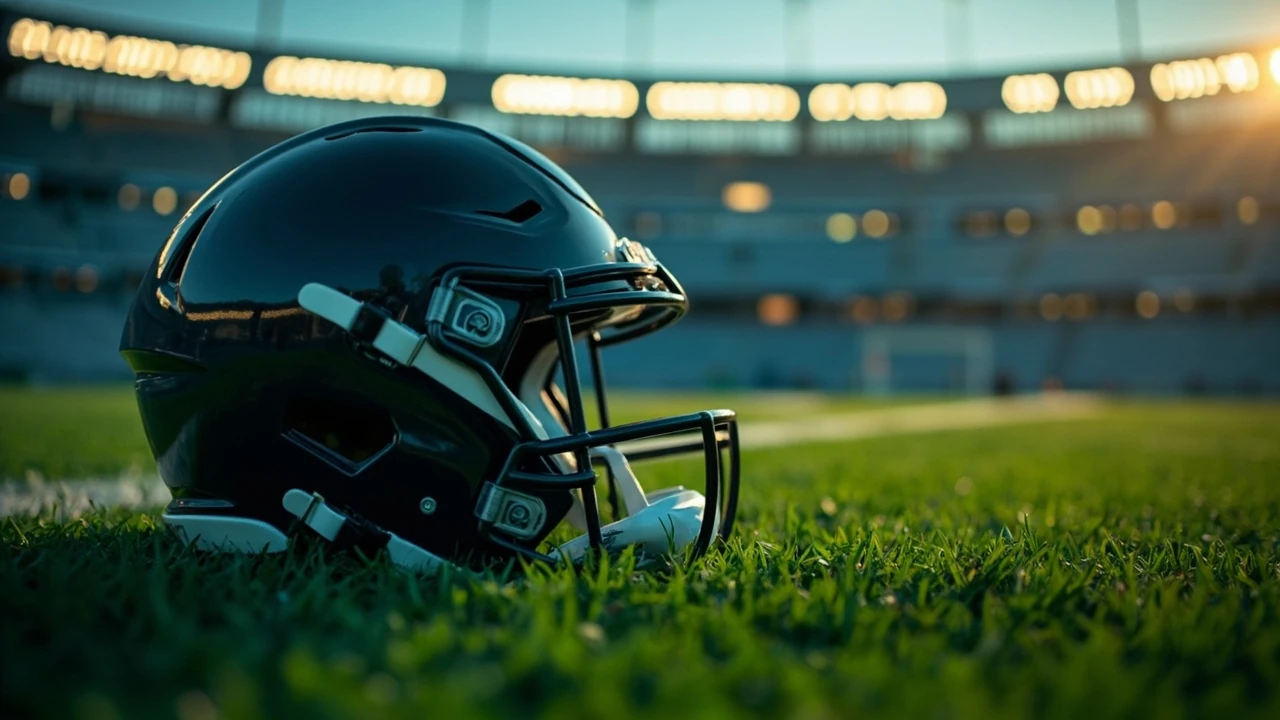
A football helmet is the single most visible piece of protective equipment in the sport, and it is also the one players, parents, and coaches tend to misunderstand the most. Marketing images show a glossy shell and a fierce facemask, but the work of protecting the head happens inside a layered system of foam, air, plastic, and careful fit. A helmet that looks the part on the field can still fail the player if the chin strap is loose, the padding is aged, or the shell sits too high on the forehead. Understanding the basic anatomy of a football helmet helps anyone buying, fitting, or evaluating one to ask better questions before the season starts.
The current generation of helmets grew out of decades of biomechanics research, and the safety conversation has shifted from whether a helmet can prevent every concussion to how the design reduces and distributes the forces that the head experiences during contact. The National Operating Committee on Standards for Athletic Equipment publishes the performance standard that any football helmet worn in sanctioned play must meet. That standard, paired with how the helmet is fitted and maintained, determines how well it actually protects a player in practice and on game day.
What a football helmet is designed to do
A football helmet has three jobs, and a good design addresses all of them at once. First, it spreads the energy of an impact across a wider area of the head and the helmet shell. Second, it slows the deceleration of the skull, so the brain inside the skull experiences a smaller change in velocity. Third, it prevents objects such as a facemask bar, a shoulder pad, or a stray hand from penetrating the shell and contacting the skull directly.
These jobs are not achieved by the hard outer shell alone. The shell is a hard polycarbonate or ABS plastic that resists penetration and spreads impact energy. The soft inner layers absorb and disperse that energy. The facemask, chin strap, and jaw pads hold the helmet in place so it does not slide off or rotate during contact, which would expose the head to a glancing blow it was never designed to absorb.
Two related terms appear in almost every equipment discussion. Impact attenuation refers to how much the helmet slows the head down during a hit. Load distribution refers to how widely the force of the impact is spread across the head and the padding. A well-designed football helmet manages both at the same time.
The main parts of a football helmet and what each one does
Each part of a football helmet contributes to one of the three protective jobs above. Looking at the helmet as a system, rather than a hard hat, is the first step toward understanding fit, care, and replacement.
Outer shell
The shell is the smooth, often glossy exterior. It is usually made from polycarbonate, a tough plastic that resists cracking on impact. The shell has two important qualities: it does not dent inward, and it spreads the energy of a single-point blow across a wider area of the helmet. A dented shell is a sign that the helmet has absorbed a serious impact and should be inspected before it is used again.
Inner padding system
Inside the shell sits a layered padding system that has changed more than any other part of the helmet over the past twenty years. Older helmets used a simple layer of foam glued to the shell. Modern helmets combine several materials, including expanded polypropylene, vinyl nitrile foam, and air-filled bladders. Each material responds differently to a hit. A hard foam slows a fast impact, while a softer foam manages a slower, glancing impact. Air pads add a third response: they compress and push back, giving the player a small amount of controlled movement instead of a hard stop.
Facemask
The facemask is the steel, titanium, or composite cage in front of the face. It protects the eyes, nose, and mouth, and it also gives the player something to grab when blocking and tackling. Facemasks come in different bar patterns. A wide-receiver cage exposes more of the face for vision. A lineman cage leaves fewer openings so fingers cannot reach the eyes. Choosing the right pattern is a position-specific decision the coach and player make together.
Chin strap and jaw pads
The chin strap and the jaw pads are the parts that keep the helmet in position. A chin strap that is too loose lets the helmet slide back on impact, exposing the forehead. A chin strap that is too tight can irritate the jaw and limit breathing. Most modern straps use a four-point system that connects to the shell at four separate points around the jaw and crown. Jaw pads sit between the inner padding and the jaw, filling the space so the helmet cannot shift side to side.
Crown and occipital padding
The padding at the crown of the head and at the back of the skull is often overlooked. The occipital area, the bony bump at the base of the skull, takes a great deal of force in a rear fall. Crown padding determines how the helmet sits on top of the head and affects the field of vision. A helmet that sits too high can block sightlines; one that sits too low can press on the eyebrows and shift vision downward.
How the safety standard shapes every football helmet
Every football helmet worn in a sanctioned high school or college game in the United States must meet a performance standard set by the NOCSAE. The standard, known as ND002, tests how much force a helmet passes to a headform during a series of drop and impact tests. Helmets that fail the test cannot be recertified for use.
The standard does not say that a helmet will prevent every concussion. It sets a maximum amount of force that can pass through the helmet under defined test conditions. Real impacts vary in angle, speed, and surface, and two helmets that pass the same test can still feel very different in a player’s hand. Equipment managers and medical staff treat the standard as a baseline, not a guarantee.
A related test, often called the STAR rating, comes from the Virginia Tech Helmet Lab. The lab drops helmets onto multiple surfaces and rates them against each other on a five-star scale. The rating is widely used by schools and parents because it allows a side-by-side comparison of helmets that all pass the same NOCSAE standard. A higher STAR rating does not mean a helmet is concussion-proof, but it does mean that, in a controlled test environment, it reduced the headform’s acceleration more effectively than its peers.
How to fit a football helmet correctly
A correct fit is just as important as the model. A top-tier helmet that sits crookedly on a head offers far less protection than a mid-range helmet that is fitted carefully. The steps below describe the way athletic trainers and equipment managers typically fit a player before the season.
- Measure the head circumference. Use a soft measuring tape just above the eyebrows and around the widest part of the back of the head. The number, in centimeters or inches, gives a starting helmet size. Never choose a helmet based on age alone; two players of the same age can have very different head sizes.
- Set the helmet on the head. The front edge of the shell should sit roughly a finger’s width above the eyebrows. The helmet should not press on the eyebrows, and it should not float above them. If the rim sits on the brow, the player cannot see the full field of play, and the helmet can slide back on impact.
- Check the crown fit. The crown padding should make full contact with the top of the head. A gap at the crown means the helmet is too large. Use thicker crown pads before sizing up.
- Check the occipital fit. The back of the helmet should cradle the base of the skull without pressing on the neck. If the helmet rocks forward and back, the occipital pad is too thin.
- Set the jaw pads. The jaw pads should fill the space between the cheek and the inner shell so the helmet cannot shift side to side when the player shakes the head. If the pads are too thick, the helmet rides up. Too thin, and it slides.
- Fasten the chin strap.
- Perform the movement test. Have the player turn the head left and right, look up and down, and shake the head from side to side. The helmet should move with the head, not slide on the head. The facemask should not contact the chest when the player looks down.
Use a four-point strap and tighten it so that when the player opens the mouth wide, the chin cup pulls down firmly. About one finger of slack under the strap is usually correct.
Two practical rules of thumb matter most. A football helmet that is fitted correctly should not rotate on the head when the chin strap is fastened, and it should not slide forward or backward when the player tilts the head. If either movement happens, the fit is wrong, and the padding or the size needs to be changed before the player takes the field.
Common signs that a football helmet no longer fits or should be replaced
Helmets do not last forever, and a fit that was correct at the start of a season can drift as padding compresses, hair grows or is cut, and the shell takes small hits that the player may not even notice. The signs below are useful red flags to watch for between fittings.
| Sign | What it usually means | Action to take |
|---|---|---|
| Helmet slides forward or backward with the chin strap fastened | Inner padding has compressed, often at the crown or occipital pads | Replace or thicken the affected pads before the next practice |
| Visible crack in the shell, even a small one | Shell has absorbed an impact beyond its design limit | Remove the helmet from use and have the equipment manager inspect it |
| Dented shell that does not pop back into shape | Plastic has deformed under a heavy impact | Replace the helmet; a dented shell cannot spread energy correctly |
| Foam that feels hard, brittle, or crumbly | Padding has aged out of its useful life | Re-pad or replace the helmet; most manufacturers recommend a re-pad every one to two seasons |
| Rusted or bent facemask bars | Facemask has taken a hard impact and lost its shape | Replace the facemask; bent bars can press into the face during the next hit |
| Loose chin strap hardware or torn strap webbing | Hardware has stretched or been damaged | Replace the strap and the hardware; never use a strap with a damaged buckle |
| Helmet sits too low on the eyebrows after a re-pad | New padding is the wrong thickness for the player’s head | Re-fit with a different pad combination before the next practice |
The two questions equipment managers ask most often are how often to re-pad and when to retire a helmet altogether. A common rule is to re-pad the interior every one to two seasons, even if the shell looks fine, and to retire any helmet that has taken a direct blow severe enough to crack the shell, that has been in a collision involving a diagnosed concussion, or that is older than ten years regardless of appearance.
Position-specific choices for the facemask and shell
Not every player on the field needs the same helmet configuration. The choice of facemask and, in some programs, the choice of shell profile is a position-specific decision that balances visibility against protection.
| Position group | Typical facemask style | Reason for the choice |
|---|---|---|
| Quarterback, wide receiver, defensive back | Open cage with two or three horizontal bars | Wider field of vision for tracking the ball and reading the field |
| Running back, linebacker, tight end | Mid-range cage with a combination of horizontal and vertical bars | Balanced visibility with extra jaw and mouth protection during tackles |
| Offensive and defensive lineman | Dense cage with more bars and a larger jaw region | Maximum protection against fingers, knees, and shoulder pads in the trenches |
| Kicker, punter, long snapper | Lightweight open cage | Specialists take fewer contact plays and benefit from a clearer sightline |
Facemask bars are typically made from carbon steel for standard cages and from titanium or composite materials for lightweight cages. A lighter facemask reduces neck fatigue over a long practice, but it also costs more. Most programs standardize on a single facemask style across a position group so that replacement parts are easier to manage.
How to care for a football helmet between practices and games
A football helmet needs more than a wipe-down after practice. Bacteria, sweat, and minor impacts all add up over a season, and a few minutes of care each day extends the life of the helmet and protects the player who wears it.
- Wipe the interior of the helmet with an antibacterial wipe or a cloth dampened with a mild disinfectant after every use. Allow the helmet to dry fully before storing it in a bag.
- Check the chin strap and the jaw pads for moisture. A damp chin strap can irritate the skin and stretch the webbing faster than a dry one.
- Store the helmet in a cool, dry place. A closed equipment bag left in the sun can push the internal temperature past the working range of the foam and warp the shell over time.
- Inspect the shell for hairline cracks under good lighting at least once a week. A small crack can be hard to see in a dim locker room.
- Re-torque the facemask screws to the manufacturer’s specification if the helmet has been dropped or has taken a direct blow. Loose screws let the facemask move during contact.
- Replace the mouth tie or the mouth guard hardware when the player reports discomfort. A mouth guard that does not sit correctly often signals that the strap or hardware has loosened.
A clean, dry helmet also keeps the team’s equipment manager sane. Football helmets stored wet develop mildew inside the padding, and the smell is almost impossible to remove. A few minutes of drying time after practice saves hours of work later in the season.
Special considerations for youth and first-time players
Youth players grow quickly, and a football helmet that fit in August may not fit in October. Athletic trainers usually re-check the fit of a youth helmet every two to three weeks during the season. Parents can help by watching for the warning signs at home: the player tugging at the helmet during breaks, red marks above the eyebrows after practice, or complaints that the facemask sits too close to the nose.
For first-time players, the chin strap is the part that takes the longest to get used to. A strap that is too tight can feel like it is choking the player, especially during running drills. Coaches can help by showing the player how to fasten the strap in stages, and by reminding the player that the strap should feel snug without pressing into the throat.
Another common issue with younger players is the assumption that a heavier helmet is a safer helmet. The opposite is closer to the truth for most positions. A well-designed football helmet uses a thin shell and modern foams to manage energy without adding weight to the head and neck. Adding a heavier helmet to a young neck can increase the risk of neck strain without raising the level of head protection.
How a football helmet compares to helmets in other sports
Different sports ask different things of a helmet, and a football helmet is not interchangeable with a cycling, skiing, or baseball helmet. The table below summarizes the main differences. The list is not exhaustive, but it shows why a football helmet should not be used for another sport and vice versa.
| Sport | Typical impact | Helmet priority | Football helmet suitable? |
|---|---|---|---|
| American football | Repeated high-energy collisions between players | Spread and absorb impact across a hard, well-padded shell with a facemask | Yes, this is the intended use |
| Cycling | Single high-energy fall onto pavement at speed | Lightweight shell designed for a one-time, angled impact | No, too heavy and not designed for glancing falls |
| Skiing or snowboarding | Variable falls onto snow and ice, often at speed | Warm, ventilated shell with ear coverage and a brim | No, football helmets lack ear and insulation coverage |
| Baseball (batter) | Ball impact at high speed, single direction | Lightweight shell with ear flaps and a short bill | No, baseball helmets have specific ball-impact testing |
| Ice hockey | Repeated collisions with ice, boards, sticks, and pucks | Hard shell with full ear coverage and a visor or cage | No, hockey helmets are tested for puck and stick impacts |
| Motorcycling | Single high-energy fall at road speed | Full-face shell certified to a road safety standard | No, motorcycle helmets meet a different legal standard |
Each of these helmets is built around the kind of impact its sport produces most often. Football helmets are designed for repeated, high-energy collisions between players, with a facemask to keep hands and equipment away from the face. The other sports need different shapes, weights, and test profiles. Using a football helmet for cycling, or a baseball helmet for football, leaves the player under-protected in the exact way the original design did not address.
How a football helmet fits into a complete protection plan
A football helmet cannot do its job in isolation. It is one part of a layered system that includes the mouth guard, the shoulder pads, the neck strengthening program, the practice plan, and the rules of play. A good equipment plan addresses all of them, not just the helmet.
The mouth guard is a useful example. A properly fitted mouth guard keeps the jaw aligned with the skull, which reduces the rotational forces that pass from the jaw to the base of the brain during a hit. A mouth guard that hangs out of the mouth, or that the player chews through, offers almost none of that benefit. Coaches who insist on a fitted mouth guard for every drill, not just game day, get more from their equipment budget.
The shoulder pads shape the way the head experiences contact. A tackler whose shoulder pads are too small will lead with the head, because the shoulders cannot absorb the hit. A tackler whose shoulder pads fit correctly will lead with the shoulders, and the head will be exposed to far less force. Equipment managers and coaches who coordinate helmet and pad fit together see fewer head and neck injuries than those who treat the helmet as a standalone purchase.
The neck strengthening program is the third layer. A strong neck resists the rotation of the head on the shoulders, which reduces the angular acceleration of the brain during an off-center hit. The exercises involved are simple: manual resistance, sled pushes, and bridge work. They do not need a separate facility or expensive equipment, and they pay off in every practice and game.
The final layer is the practice plan itself. A team that runs full-speed tackling drills in every practice exposes the head to more total impact than a team that uses controlled contact drills for most of the week and reserves full-speed work for the game. Equipment, no matter how well designed, cannot offset a practice plan that ignores head impact exposure.
Common questions about football helmets for parents and first-time coaches
Parents and first-time coaches ask many of the same questions about football helmets. The answers below are based on standard equipment-room practice and the published guidance from the NOCSAE, the NCAA, and the major helmet manufacturers. They are not medical advice and should not replace the opinion of a qualified athletic trainer or physician.
How long does a football helmet last?
Most manufacturers recommend re-padding the interior every one to two seasons and replacing the entire helmet no later than ten years from the date of manufacture, even if the shell looks fine. The interior foams lose their ability to recover from compression as they age, and a shell that has been in use for a decade has likely absorbed many small impacts that the player never noticed.
What is the safest football helmet on the market?
The “safest” helmet changes from year to year as new models are released. The Virginia Tech Helmet Lab publishes a five-star rating list, and the helmets at the top of the list in the most recent test cycle are the safest options available at the time of testing. Parents and coaches should pair the rating list with a correct fit and a proper re-pad schedule, because even a top-rated helmet protects poorly if it does not fit.
Can a football helmet be reused after a hard hit?
Yes, if the shell and the padding are inspected and pass the inspection. The NOCSAE standard requires that any helmet involved in an impact that causes the player to show signs of a head injury be removed from play and examined before being returned to use. A cracked shell or a dented shell that does not return to its original shape should be removed from service entirely.
How much should a football helmet cost?
New football helmets for high school and youth use range from roughly one hundred and fifty to six hundred dollars, with the top-rated models at the upper end of the range. A used or reconditioned helmet from a reputable reconditioner is a common option for youth programs, but the buyer should always check the recertification date and the re-padding history. The most expensive helmet is not always the best fit, and a mid-range helmet that fits correctly is safer than a top-of-the-line helmet that does not.
Do football helmets prevent concussions?
No helmet can prevent every concussion, and any equipment salesperson or manufacturer who claims otherwise is overstating the science. A football helmet reduces the force that reaches the head, slows the head’s deceleration, and prevents penetrating injuries. Concussion risk depends on the player’s technique, the position played, the practice plan, and the rules of the game, as well as the helmet. The helmet is one of several tools, not a complete solution.
What is a football helmet made of?
The shell is typically polycarbonate or ABS plastic. The interior padding is a layered combination of expanded polypropylene foam, vinyl nitrile foam, and air-filled bladders. The facemask is usually carbon steel, with titanium and composite options in lighter models. The chin strap is a woven nylon or polyester webbing, with high-strength plastic or metal hardware. None of the materials are exotic; what matters is how they are layered and how the helmet is fitted.
What is the difference between a youth and an adult football helmet?
Youth helmets use the same general construction as adult helmets, but the interior padding is sized for smaller head circumferences and the shell is usually slightly smaller and lighter. A young player should not wear an adult helmet with extra padding jammed inside; the proportions of the shell and the facemask are designed for the head size the helmet was built for. Most manufacturers publish sizing charts by head circumference, and a fitting session before the season is the easiest way to choose the right one.
How should a football helmet be stored during the off-season?
Clean the helmet, dry it fully, and store it in a cool, dry place away from direct sunlight. A climate-controlled equipment room is ideal. A garage or attic that gets hot in the summer can warp the shell and degrade the foam. The chin strap should be unbuckled and the facemask should not be resting on a hard surface that could press the bars out of alignment.
How does a football helmet get recertified?
Recertification is the process that a certified reconditioner uses to inspect, re-pad, and re-test a helmet. The reconditioner checks the shell for cracks, replaces the interior padding, re-tensions the facemask hardware, and runs the helmet through the NOCSAE drop test again. Helmets that pass the recertification are stamped with a recertification date and returned to the program. Helmets that fail are retired. The recertification cycle is usually annual for high school and college programs.
What is the most important thing to check on a football helmet before each game?
Fit. A pre-game check that confirms the helmet does not rotate on the head, that the chin strap is tight, and that the facemask is solidly attached catches more issues than a detailed inspection of the shell. A player who reports that the helmet feels different than it did in practice should be re-fitted before taking the field, even if the equipment manager has already cleared the helmet for use.
A football helmet is a remarkable piece of equipment, but it is also a simple one in many ways. A hard shell, a layered interior, a facemask, and a chin strap do the work. The skill comes in choosing the right helmet, fitting it carefully, and maintaining it through the season. Coaches, parents, and players who treat the helmet as part of a broader protection plan, rather than as a stand-alone answer to head injuries, get the most from their equipment and give the player the best chance of finishing the season healthy.
If you are putting together a football program for the first time, a useful first step is to schedule a fitting day with a certified equipment manager before the season opens. A one-hour session with a knowledgeable fitter will surface more issues than several rounds of online research, and it will give every player on the roster a helmet that fits from the first practice.
Frequently asked questions
What does a football helmet actually protect against?
A football helmet is designed to reduce the force of an impact, spread the energy across a wider area of the head, and prevent penetration injuries from facemasks, shoulder pads, and other equipment. It is not designed to prevent every concussion, and it is one of several tools that work together to protect the head and neck.
How often should a football helmet be re-padded?
Most manufacturers and equipment managers recommend re-padding the interior every one to two seasons, or sooner if the helmet has taken a hard impact. The interior foam compresses with use and loses its ability to recover between hits. A re-pad is much cheaper than a new helmet and keeps the fit correct.
Can a football helmet be used for other sports?
No. Football helmets are designed and tested for the repeated, high-energy collisions of football. They do not meet the test standards for cycling, skiing, baseball batting, ice hockey, or motorcycling, and they are not designed for the falls, balls, or pucks those sports produce. Each sport has its own helmet, and they should not be swapped.
How do I know if a football helmet fits correctly?
The front edge should sit a finger’s width above the eyebrows. The helmet should not rotate on the head when the chin strap is fastened, and it should not slide forward or backward when the player tilts the head. The facemask should not touch the chest when the player looks down. If any of these checks fail, the fit needs to be adjusted before the player takes the field.
What is the difference between a NOCSAE certification and a STAR rating?
A NOCSAE certification is a pass-or-fail performance test that every football helmet must clear before it can be worn in sanctioned play. A STAR rating is a five-star comparison score published by the Virginia Tech Helmet Lab, based on repeated drop tests. A high STAR rating is a useful tiebreaker between helmets that have all passed the NOCSAE test.
Should a youth player use the same football helmet as a high school player?
No. Youth helmets are built for smaller head circumferences and lighter neck muscles, with proportionally smaller shells and facemasks. A youth player should always use a youth helmet that has been fitted by an experienced equipment manager.
What should I do if a football helmet cracks during a game?
Remove the helmet from play immediately. A cracked shell cannot spread impact energy correctly, and the helmet should be inspected by a qualified equipment manager. In most cases, a cracked shell means the helmet is retired from use.
Is a more expensive football helmet always safer?
Not always. A higher price often reflects lighter materials, more advanced padding systems, and a higher STAR rating, but a mid-range helmet that fits the player correctly is safer than a top-of-the-line helmet that does not. Fit matters more than the model number on the back of the shell.
What is the best way to clean a football helmet?
Wipe the interior with an antibacterial wipe or a cloth dampened with a mild disinfectant after every use, and let the helmet dry fully before storing it. Avoid soaking the padding or using harsh chemicals that can break down the foam. The shell can be cleaned with a mild soap and water solution.
When should a football helmet be replaced completely?
A football helmet should be replaced when the shell is cracked, dented, or otherwise damaged, when the interior padding no longer fits the player, or when the helmet is more than ten years old from the date of manufacture. A helmet that has been in a collision involving a diagnosed head injury should also be replaced or recertified before it is used again.