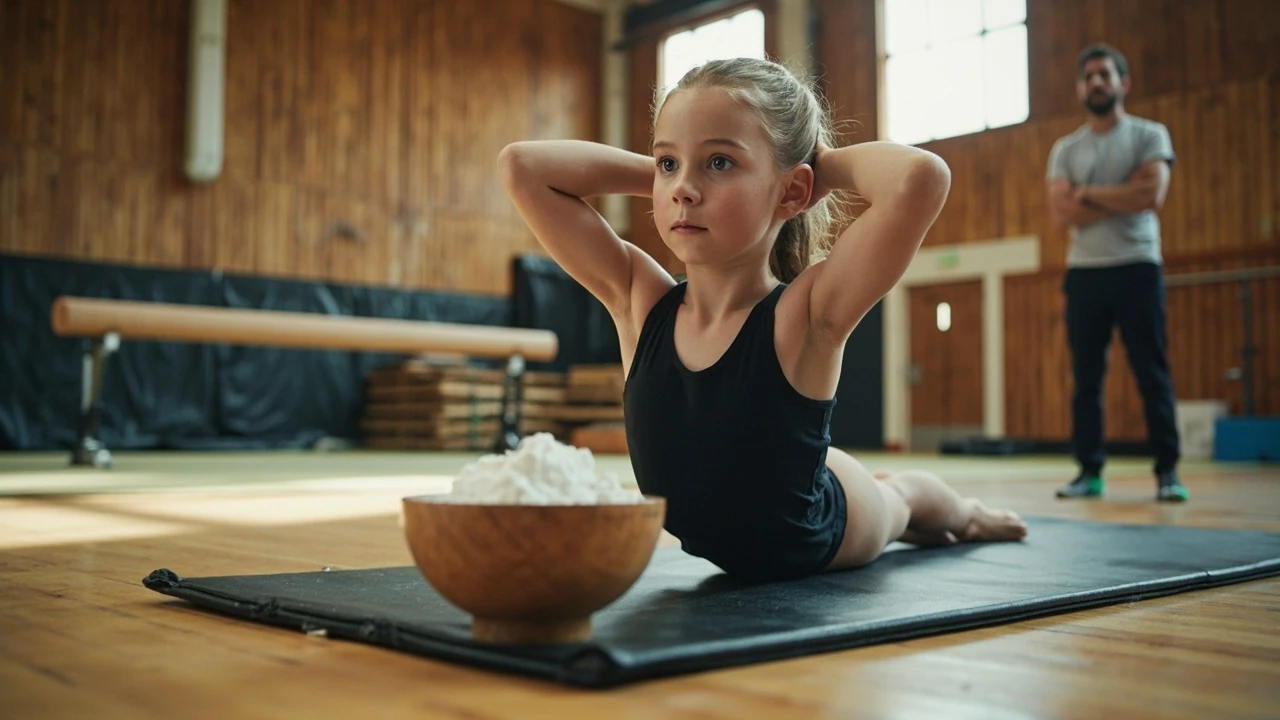
Crunch fitness and the core demands of artistic gymnastics
A gymnast cannot stick a double back on floor or hold a tight handstand on beam without a midsection that works like a coil. Crunch fitness routines, when programmed with that demand in mind, give gymnasts one of the most efficient tools for building the kind of midline control that judges reward on every apparatus. The idea is simple: short-range spinal flexion under load, repeated in sets that build endurance rather than bulk. The execution is harder than it looks, because artistic work asks the core to hold position as the limbs move through space, and that is where a basic sit-up stops being enough.
This article looks at how crunch fitness can be translated into gymnastics-friendly core work, what progressions and regressions actually transfer to apparatus, and where the limits of crunch-based training sit for athletes under 18. The aim is practical: a coach, parent, or older gymnast should finish reading with a clearer plan and a sharper set of safety checks than a stock gym poster offers.
Why core work matters more in gymnastics than in most gym settings
Most general-population clients use a crunch to chase a visible six-pack or to warm up the trunk before a machine circuit. Gymnasts use the same movement as a building block for skills that load the spine in compression, rotation, and extension at the same time. A tucked handstand puts the pelvis over the shoulders and asks the abs to stop the lower back from arching. A Yurchenko entry takes the same trunk and rotates it around a fixed takeoff leg. Even a round-off, the first skill most gymnasts ever learn, is really a core sequencing problem with a run-up.
This is also why so many gymnastics strength programs now borrow movements from general fitness rooms. The original science behind crunch training is short, and the core endurance of trained gymnasts is well documented in the research literature. A controlled crunch performed to fatigue gives coaches a measurable target, which is rare in youth strength work, where progress can feel invisible until it suddenly shows up in a routine.
The biomechanics of a clean crunch
A well-coached crunch is not a sit-up. The sit-up swings the torso up from the hips using momentum and hip flexors. The crunch keeps the lumbar spine closer to the mat and bends the thoracic spine around a stable pelvis. For a gymnast, that distinction matters because almost every apparatus skill is built from a stable pelvis. If the hip flexors dominate, the gymnast learns to lead with the front of the hips and the lower back eventually pays the price.
The standard coaching cues translate directly from general fitness rooms into a gymnastics warm-up. Feet stay flat on the floor and hip-width apart so the pelvis cannot tilt back. The lower back presses into the mat before the head lifts, so the abdominal wall contracts before the neck flexors take over. Hands rest lightly behind the head or across the chest. The lift is small, about 30 degrees of shoulder travel off the floor, and the return is slow so the eccentric phase does the work. Breath out on the way up, in on the way down, in a rhythm that matches the tempo rather than the count.
Crunch fitness for gymnastics: where it fits in the weekly plan
Crunch fitness is best treated as accessory work, not as a stand-alone session. Most competitive programs already include 20 to 40 minutes of strength and conditioning two or three times a week, and the core block usually sits at the end of the session when the nervous system is already warm. Adding a separate “core day” can crowd out flexibility, dance, and recovery, and it can quietly push weekly training volume into the over-training range for younger athletes.
| Session type | Where crunch fitness fits | Typical volume | What to skip |
|---|---|---|---|
| Light technique day | Warm-up or finisher only | 2 to 3 sets of 15 to 20 reps | Weighted crunches, long holds |
| Standard training day | Finisher after strength block | 3 to 4 sets, varied tempo | Crunches to failure |
| Strength day | After heavy lower-body work | 3 sets, slow eccentric focus | Replacing posterior chain work |
| Recovery or active rest | Optional, low volume | 1 to 2 easy sets | Anything that spikes heart rate into the next session |
| Taper or pre-competition | Reduce or replace with breath drills | Drop sets by 30 to 50 percent | New progressions or added load |
Volume should be measured in clean reps, not in the time the gymnast spends bent over her knees. A set of 25 crunches performed with sloppy form teaches the body to compensate, and those compensations show up later as an arched handstand or a stuttering beam series.
Progression ladder for gymnasts
Progressions in core work should follow the same logic as progressions on beam or floor: a new variation only enters the program when the previous variation is clean. The order below is a working template, not a rule, and coaches will adjust it for individual athletes, growth spurts, and injury history.
- Floor crunch with tempo. Three sets of 12 to 15 reps at a two-second lift, three-second lower. Used as the baseline during the first six to eight weeks of a strength cycle.
- Reverse crunch. Pelvis tucks toward the ribcage rather than the ribcage rising toward the pelvis. This adds lower abdominal control that protects beam landings.
- Dead bug crunch variation. Combines a crunch with a slow opposite arm and leg extension. The leg movement adds a stability demand that mirrors the uneven bar swing.
- Hollow body hold with small crunch pulses. The gymnast holds the iconic hollow shape and adds a small curl at the top of each breath. This is the bridge between basic crunch fitness and the static holds used in advanced tumbling.
- Weighted or banded crunch. Only after a clean baseline of three sets of 15 is reached. Load should stay light, often a 2 to 4 kilogram medicine ball, and reps drop into the 8 to 12 range.
Regressions work the other direction. A gymnast returning from a lower back strain, a growth-spurt awkwardness, or a period of missed training can drop back to a tempo crunch on the floor with a smaller range. The aim is to keep the nervous system engaged with the movement pattern without loading the tissues faster than they can adapt.
Common mistakes when lifting crunch fitness into a gymnastics plan
Most problems come from importing general-fitness habits without translation. The first mistake is chasing a target rep count that was designed for adult clients. A 13-year-old in the middle of a growth spurt does not need 50 crunches per session. She needs 15 crisp reps and a coach who notices when form slips on rep 12. The second mistake is doing crunches at the start of the session, when the spine is still cold and the nervous system is not ready to brace. The third is using a crunch to fix a problem that the crunch cannot fix, such as a weak posterior chain or a hip flexor that is already over-dominant.
A useful internal checklist for the coach standing at the end of the mat:
- Lower back stayed in contact with the floor for every rep.
- Neck stayed long, no chin tuck or head pull.
- Breath stayed rhythmic, no Valsalva bracing through the whole set.
- Pelvis did not rock side to side, which would mean the obliques were taking over.
- Reps ended one or two short of failure, not at failure.
If two or more of those points are failing on most reps, the set was too long, too fast, or too loaded. The fix is to reduce the volume and rebuild from there.
Crunch fitness, age, and the growth-spurt question
Artistic gymnasts are usually training seriously between ages 6 and 18, and the load on the spine changes as the skeleton grows. The international consensus in pediatric sports medicine is that well-supervised core work is safe for school-age athletes, but that progression should respect skeletal age rather than chronological age. A tall 12-year-old who has hit puberty early needs a different plan from a 12-year-old who has not, even if they train in the same group.
Crunch fitness sits comfortably inside the safe range when it is used as bodyweight or very lightly loaded work, with a tempo that keeps compression low. It is not a substitute for posterior chain work. The spinal extensors, glutes, and hamstrings do the opposite job and are usually weaker than the abdominals in young gymnasts, partly because training emphasises flexion-heavy skills. A balanced plan keeps crunch fitness in its lane and gives the back of the body equal attention.
How crunch fitness connects to specific apparatus
The cleanest way to make crunch training feel relevant to a gymnast is to link it to the apparatus she actually trains on. The link is not symbolic, it is mechanical, because each piece of equipment loads the trunk in a slightly different way.
| Apparatus | Core demand during a typical skill | Crunch fitness transfer | Programming note |
|---|---|---|---|
| Floor | Maintains a tight shape through multiple rotations | Hollow holds, tempo crunches, reverse crunches | Add a core block after tumbling sets, not before |
| Balance beam | Stabilises the trunk during leaps and acro series | Dead bug crunches, side-lying variations | Keep reps low to avoid a fatigue-driven wobble |
| Uneven bars | Holds a tight body line through giant swings | Hollow rocks, weighted crunches | Schedule core work on bar days, not on rest days |
| Vault | Pre-takes the body into a fast block and rotation | Reverse crunches, hollow pulses | Focus on speed of contraction, not load |
| Pommel horse and rings | Steadies the body while the shoulders and arms travel | Slow tempo crunches, weighted crunches | Use as accessory on strength days, not as a warm-up |
For pommel horse and rings, the upper body does most of the visible work, but the gymnast still needs a trunk that does not collapse as the arms swing. Crunch fitness supports that stability from the front of the core, while back extensions and hip lifts support it from behind. The two together create a cylinder, not a single muscle.
Programming the week around crunch fitness
A typical week for a competitive Level 7 to 10 gymnast training 18 to 24 hours already includes a lot of volume, and the role of the conditioning coach is to add value without crowding the program. A workable template looks like this:
- Monday: Hard floor and beam day. Core block at the end, tempo crunches plus hollow holds.
- Tuesday: Bars and strength day. Core block after heavy lower-body work, with reverse crunches and dead bugs added.
- Wednesday: Light technique or dance day. Optional short core circuit, no more than two exercises.
- Thursday: Conditioning day. Crunch fitness can appear as a station inside a circuit, with reps capped to avoid fatigue.
- Friday: Vault and tumble track. Core block in the warm-up, kept under ten minutes.
- Saturday: Optional simulation or rest. Most programs keep core work off simulation days to leave room for mental preparation.
- Sunday: Off. No crunch fitness on full rest days, even if the gymnast feels fresh.
The numbers behind this kind of week are not magic. They reflect the fact that a gymnast’s spine absorbs impact from tumbling, beats from repetitive drills, and stress from growth, and a well-placed core block supports recovery between those loads rather than adding to them.
Crunch fitness outside the gym: what parents and athletes should watch for
Crunch fitness is simple enough that it often leaks outside the gym. Teenage gymnasts copy routines from social media, use a resistance band at home, or join a general fitness class on a day off. Most of the time this is fine. Occasionally it creates problems that the coach finds out about only after a small injury.
Three practical checks help parents keep the home work safe:
- No crunch work before a competition day, because the deep core muscles are part of the warm-up chain and a fatigued core hurts scores on beam and floor.
- No weighted crunches using household objects, because the load cannot be calibrated and a heavy backpack on the chest is a real injury risk for a growing spine.
- No crunches first thing in the morning on a full spine, because the intervertebral discs are more hydrated after sleep and compression should be introduced gradually.
Coaches who want to support home work usually write a short, simple list of three or four exercises and ask the athlete to log them in the same training diary she uses for apparatus work. The diary turns invisible core work into a record that the coach can review once a week.
Reading the research with care
The published evidence on core training in young athletes is mostly about endurance, not about specific skills. Studies in the field tend to compare a 6 to 12 week program of crunch-style work against a control group and measure changes in trunk endurance, balance, or a simple sport-specific test such as a vertical jump. The findings are usually positive but small, and the programs vary widely in how they define a crunch. For an editor, the honest summary is that crunch fitness is a useful and well-supported tool within a broader conditioning plan, not a magic fix for any single gymnastics weakness.
This is also why this article has not leaned on dramatic claims. The first Wikipedia entry on abdominal exercise is a useful orientation point for the history and the variety of movements that share the crunch name, and a practical core training resource for young athletes from the American College of Sports Medicine gives a clear view of the safety framework that most physiotherapists apply in real life. Both are reasonable starting points, but neither is a substitute for a coach who has seen the athlete move.
Crunch fitness in a long-term athletic plan
Artistic gymnastics is an early specialisation sport, and most gymnasts will leave the sport by the time they reach university. The conditioning work they do between ages 8 and 18 shapes how their bodies move for the rest of their lives, which is one of the reasons coaches and parents take it so seriously. Crunch fitness, used thoughtfully, contributes to that long arc. It builds a trunk that protects the spine during impact, supports posture during long school days, and gives the athlete a movement she can keep using long after she has hung up the grips.
Two of the site’s own pages sit naturally next to this one. The guide to preparing for a gymnastics meet covers the 24 to 48 hours before competition, which is when crunch fitness should be dialled back rather than pushed. The piece on why gymnastics builds a foundation for other sports makes a related point: a strong core is one of the main reasons gymnastics transfers into football, basketball, or hockey, and crunch fitness is a small, dependable part of that transfer.
Building a simple, sustainable crunch fitness habit
If a coach or athlete takes only one thing from this article, it should be the idea of a small, sustainable habit. Three sets of tempo crunches, twice a week, performed with a steady breath and a pressed lower back, is enough to maintain midline endurance for most gymnasts. That habit can grow into more complex work as the athlete gets stronger, and it can shrink back to a maintenance level during injury or taper. The constant is quality of movement, not the number printed on a whiteboard.
A short closing checklist for the next training session:
- Plan where crunch fitness fits in the session before the warm-up starts.
- Set a rep target that is honest about the athlete’s current level.
- Watch the lower back and the neck, not the head going up.
- Log the work in the training diary.
- Reassess the plan in two to three weeks, not after every session.
Crunch fitness will not turn a Level 4 into a Level 10, and it should not be sold that way. It is one of many small tools that, used well and used often, help a gymnast train harder, recover faster, and trust the body that carries her through the routine.
Frequently asked questions
What does crunch fitness actually mean for a gymnast?
Crunch fitness refers to short-range spinal flexion work that trains the front of the core, usually as bodyweight sets, sometimes with light load or a band. For a gymnast, the aim is trunk endurance and midline control rather than visible muscle, and the work usually sits at the end of a strength session as a finisher.
How many crunches should a gymnast do in a session?
For most school-age gymnasts, two to four sets of 10 to 20 clean reps is plenty. Volume above that tends to push form out of the safe range and adds little to trunk endurance, which is the actual goal.
Are weighted crunches safe for young athletes?
Lightly weighted crunches are usually fine for athletes who can already perform three sets of 15 bodyweight crunches with clean form. Load should stay small, often 2 to 4 kilograms, and reps should drop into the 8 to 12 range. Anything heavier needs a qualified coach watching the spine.
Can crunch fitness replace hollow body holds?
No. Crunches and hollow holds are different tools. Crunches build the contraction through a small range. Hollow holds build endurance in a fixed shape. Most gymnastics programs use both, with hollow work taking priority for shaping skills and crunch fitness supporting endurance.
How does crunch fitness connect to beam work?
Beam work demands a stable trunk during leaps, turns, and acro series. Crunch fitness builds the front-of-core endurance that keeps the pelvis level during those skills, especially when fatigue sets in late in a routine.
Should crunches be done on competition day?
No. On competition day the priority is a calm warm-up and skill rehearsal, and a fresh core is part of that. Heavy core work the day before is fine, but crunches on the day of the meet usually trade a small amount of endurance for a noticeable loss of sharpness.
What is the difference between a crunch and a sit-up?
A crunch keeps the lower back close to the floor and bends mainly the upper spine. A sit-up lifts the whole torso from the hips and uses the hip flexors heavily. For gymnastics, the crunch is the safer and more useful version because it builds trunk control without overloading the hip flexors.
Can crunch fitness help with back pain in gymnasts?
It can play a small role, but only as part of a balanced plan that also includes back extensions, glute work, and hip mobility. Front-of-core work on its own can sometimes make existing back problems worse, which is why coaches usually ask a physiotherapist to sign off on a new program for an athlete with a history of lower back pain.
Is it okay to do crunches every day?
Daily crunches are usually unnecessary and can crowd out recovery. Two to four well-programmed sessions a week is enough for most gymnasts, and the off days let the connective tissue adapt to the work that has already been done.
Where can a coach or parent learn more about core work for young gymnasts?
A practical starting point is the safety guidance from a recognised sports medicine body, paired with a coach who can watch the athlete move in person. The site’s own pages on preparing for a gymnastics meet and on gymnastics as a foundation for other sports add context for how core work fits into the wider training picture.