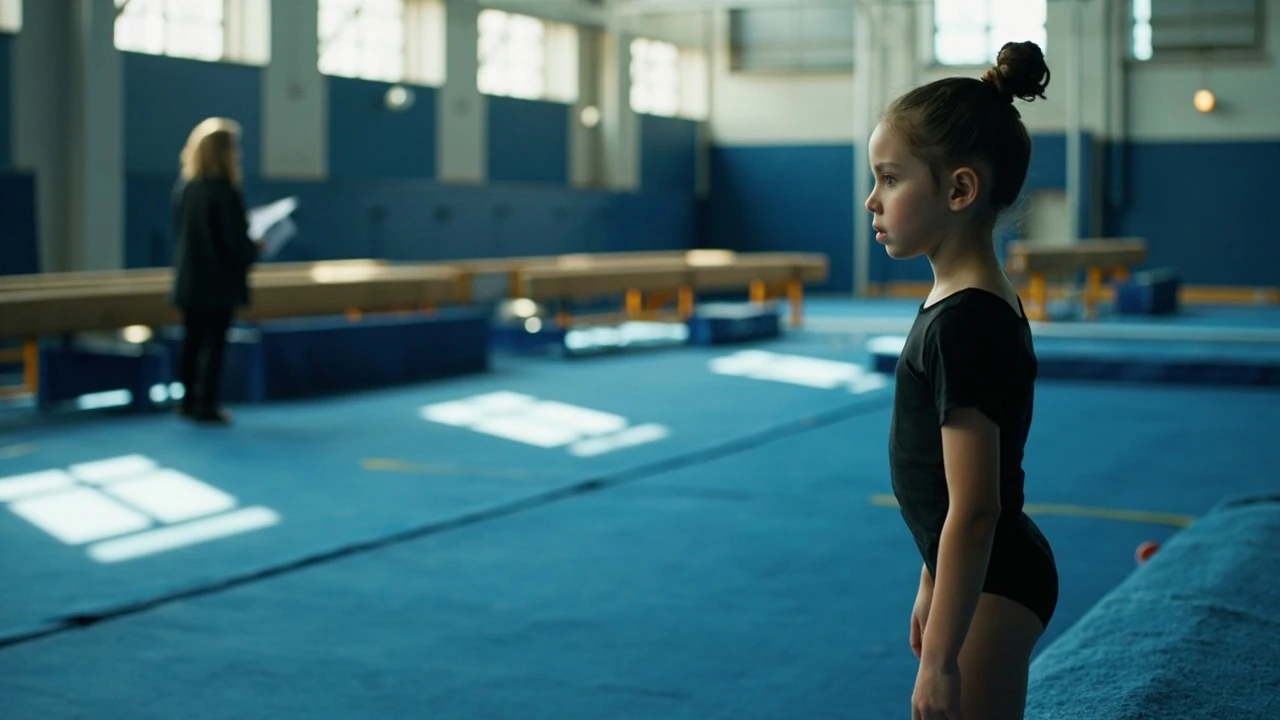
What to expect at a first gymnastics team tryout
A first gymnastics team tryout is a structured evaluation, not an open practice. Coaches are watching specific qualities from the moment an athlete walks in, and the day is usually planned around a tight rotation of stations, timed warm-ups, and short skill tests on each apparatus. The athletes who tend to perform best are rarely the ones with the flashiest skills; they are usually the ones who arrive prepared, listen carefully, and treat every drill as if it counts, because in a tryout, every drill does count.
Most competitive clubs run tryouts once or twice a year for their pre-team, developmental, or Xcel levels, and many also hold them for entry into their Level 3 or Level 4 compulsory groups. The format varies by club, but the underlying goals are similar: coaches want to see whether a child has the foundational strength, body awareness, and coachability to progress safely in a team environment. Understanding how that evaluation works takes a lot of the mystery out of the day and helps families walk in with a calmer mindset.
How gymnastics team tryouts are usually organized
Clubs design tryouts to test a wide range of athletes in a short window. The schedule is often compressed into two to four hours, with groups rotating through stations on a whistle or a coach’s cue. Most clubs publish the general format ahead of time, even if they keep the specific scoring rubric private.
Group sizes, timing, and rotation blocks
Typical tryout groups run between 8 and 20 athletes, split by age or by the level the club expects the athlete to be placed in. Younger groups (usually ages 5 to 7) tend to have shorter, more playful rotations with an emphasis on movement quality, while older groups run longer blocks that more closely resemble a real team practice.
A common structure looks like this:
- A 15 to 20 minute general warm-up led by a coach, including light cardio, dynamic stretching, and basic shapes such as hollow holds and arch holds.
- Three or four timed stations, each lasting roughly 20 to 30 minutes, covering floor, beam or vault, bars or trampoline, and a strength and flexibility station.
- A short group cool-down and a brief Q&A with coaches or the club director.
Parents are usually asked to stay in a waiting area, both to keep the gym floor calm and to give coaches a clearer read on how the athletes behave without a parent nearby. That separation is itself part of the evaluation; coaches want to see how children respond to instruction from adults other than their own family.
What coaches actually want to learn in one session
Coaches are realistic about what a tryout can show. A two-hour session cannot reveal how a child will perform in a year of training, and most evaluators know it. The realistic goals of a tryout are narrower:
- Does the athlete have an appropriate strength-to-bodyweight ratio for their age and proposed level?
- Is the athlete willing to listen, try new skills, and recover quickly from a mistake?
- Are basic shapes, landings, and body lines already developing, or do they need significant foundational work first?
- Does the athlete’s attitude fit the team culture of the club?
Many clubs use a simple scoring sheet that combines objective checkpoints (such as a stuck landing or a chin-up hold) with subjective notes on focus, coachability, and fearlessness. The exact rubric is usually not shared, but the categories on it are almost always drawn from the same pool of qualities listed above.
Skills and drills coaches typically test
Skill content at a tryout depends heavily on the level being tried out for. A pre-team tryout for 5 to 7 year olds will look very different from a Level 4 compulsory tryout for 9 to 11 year olds. The table below shows what is generally expected at each stage, based on standard USA Gymnastics progressions.
| Tryout level | Typical age range | Floor and body shapes | Vault expectations | Beam or bars expectations |
|---|---|---|---|---|
| Pre-team / Hot Shots | 5 to 7 | Forward and backward rolls, handstand against wall, cartwheel attempt, straight jump with tight body | Straight jump onto a stacked mat, focus on landing shape | Beam: straight jump, relevé walks; Bars: pull-over attempt, skin the cat on low bar |
| Developmental / Level 3 | 7 to 9 | Round-off rebound, bridge kickover, handstand flat back, split leaps with measured split | Running onto a springboard with straight jump or front handspring over a low mat | Beam: handstand against wall, small turns; Bars: pullover, back hip circle on low bar |
| Level 4 compulsory tryout | 8 to 11 | All Level 3 skills plus back walkover, back handspring drills, split leap with 120 degree split | Front handspring over a properly shaped vault table or mat stack | Beam: full turns, small leaps, back walkover; Bars: kip, clear hip circle, cast to horizontal |
| Level 5 and above tryout | 10 and up | Back handspring series, front tuck drills, dance elements with strong amplitude | Front handspring with full repulsion, or Yurchenko entry for advanced groups | Beam: back handspring, leap series; Bars: giants, release skills in higher levels |
It is important to remember that not every athlete will be tested on every skill. Coaches usually scale the difficulty based on what they see in the first few minutes of warm-up, and a younger or newer athlete may be asked to perform a modified version of a drill rather than the full version.
The strength and flexibility station
Most clubs now include a short strength and flexibility station in their tryout, because those qualities are some of the strongest predictors of how quickly a gymnast will safely learn new skills. Expect to see some combination of the following:
- A timed hollow body hold or arch hold, usually 20 to 30 seconds, with elbows and knees locked.
- Pull-ups or chin-ups on a low bar, often 3 to 5 in a row.
- Leg lifts or V-ups on a floor mat.
- Active and passive splits measured by how close the legs come to the floor.
- Bridge depth and shoulder flexibility, tested with a coach-assisted press.
For a deeper look at flexibility work that supports these tests, the practical guide on gymnastics flexibility explains how clubs typically build that capacity over a season. None of these tests require a perfect score; coaches are looking for an age-appropriate baseline that they can build on.
How to read the gym, the coaches, and the other athletes
Beyond the formal skills, a tryout has a strong cultural component. Coaches are reading group dynamics all day, and so are the athletes, often without realizing it. A few patterns are worth knowing in advance.
Coach behavior cues that matter
Coaches are usually intentionally neutral during tryouts, but there are small signals that families can pick up on. A coach who nods, makes eye contact, and gives quick corrections is engaged and interested. A coach who quietly writes on a clipboard after a rep is recording something specific, which is normal and not a negative sign. What coaches tend to react to most is recovery: an athlete who falls, resets, and immediately tries the skill again with the same focus tends to leave a stronger impression than an athlete who nails a skill once and then coasts.
Coaches also watch warm-up habits. Arriving already in shape, hydrating, and using downtime to stretch or ask focused questions are small signals of maturity that add up across a two-hour session.
How to think about other athletes in the room
It is normal for both parents and children to compare themselves to other athletes in the tryout. The reality is that the field is usually mixed, and coaches are not ranking athletes against each other in a single line. They are comparing each athlete against the rubric for the level that athlete is trying out for. A child who has been training at a different club for two years will naturally look different from a child who is brand new, and coaches adjust their expectations accordingly.
That said, a few signals are worth watching for in the other athletes. A group that warms up carefully, listens when a coach talks, and supports each other through falls usually indicates a healthy club culture. A group that is loud, dismissive, or visibly cliquey can still produce strong gymnasts, but it is worth factoring into the family decision later.
What to wear, bring, and prepare the night before
Tryout logistics are simple but easy to get wrong, especially for first-time families. A short checklist tends to prevent most of the common day-of stress.
Clothing and grooming
Coaches need to see body lines, and they need to see them clearly. That means a fitted leotard or a tight-fitting athletic top and shorts, with no baggy t-shirts, no socks on the floor, and hair pulled fully back from the face. Long hair should be in a tight bun, and small stud earrings are usually fine, but most clubs ask athletes to remove other jewelry, including watches and bracelets. Bare feet are standard for most events, and grips are almost never used at a tryout.
What to pack in the gym bag
- A labeled water bottle, filled, because gyms run warm and athletes dehydrate faster than they realize.
- Hair ties, bobby pins, and a small brush, in case the bun needs to be redone.
- A light snack such as a banana, a granola bar, or a few crackers for after the session, since most athletes come out hungry.
- Pre-wrap and athletic tape if the athlete has a known skin issue, though coaches usually prefer to apply tape themselves.
- A small towel, especially in warmer gyms.
What not to bring: a phone for the athlete, large jewelry, and any kind of heavy meal eaten right before warm-up. Most clubs also ask that athletes not chew gum on the floor, both for safety and for coach focus.
The night before
The single biggest predictor of how a child feels at a tryout is sleep. Two nights before matters more than one, because the night immediately before is often disrupted by nerves. A regular dinner, a familiar bedtime, and a quiet morning with a real breakfast go a long way.
It also helps to walk through the schedule once with the athlete, so the rotation is not a surprise. The same idea shows up in the broader checklist for preparing for a gymnastics meet; familiar routines reduce the cognitive load on the day, which frees up attention for skills.
How results and team placement decisions actually work
Most clubs do not announce placements on the spot. Coaches usually need a few days to compare notes, reconcile the rubric, and check available spots in each training group. The communication window varies, but a week is a common range, and a few clubs take up to two weeks during busy seasons.
Possible outcomes after a first tryout
- Offered a spot on the team at the level the athlete tried out for, sometimes with a trial period of one to two weeks before the placement becomes permanent.
- Offered a spot at a lower level, which is not a rejection but an honest read of where the athlete will learn best in the next training cycle.
- Invited to a second tryout, sometimes because the coach needs to see a specific skill again or because the tryout group was too large to evaluate everyone carefully.
- Recommended for recreational or pre-team classes first, which usually means the club sees potential but wants a few months of foundational work before a formal team placement.
- Not offered a spot, which most experienced coaches will explain briefly. Lack of available space is a common reason and is not a judgment of the athlete.
How to ask good follow-up questions
When the club calls with a decision, it is reasonable to ask what level the placement is for, how many training hours per week the group attends, what the season competition plan looks like, and whether the coach sees any specific areas to focus on first. Coaches at reputable clubs will answer these directly. If a club cannot or will not explain the reasoning behind a placement, that is useful information in itself when comparing programs.
For families still deciding between clubs, the broader parent’s guide to choosing a gymnastics program walks through how to weigh training hours, coaching style, and competition expectations side by side.
Common mistakes that quietly hurt a tryout performance
Most tryout mistakes are not about skill level. They are about habits, attention, and energy management. A few patterns come up over and over across clubs.
Arriving under-recovered
Travel, late nights, and skipped meals all show up in a tryout. The first 15 minutes of any evaluation are the most forgiving because everyone is rusty; the middle hour is where conditioning and clarity are tested. Athletes who arrive tired often look like they lack the strength to progress, when in reality they just need a normal week of sleep.
Overdressing or underdressing for the work
Bulky sweatpants hide body lines and force a coach to evaluate blind. A leotard that is too tight restricts the shoulders and hip flexors and changes the look of a leap or a stretch jump. The goal is fitted, plain, and easy to move in.
Performing only the best skills
Athletes sometimes try to show off their strongest event and coast through the rest. Coaches notice. A balanced evaluation, even if some events are clearly ahead of others, almost always scores better than one polished event and three neglected ones.
Ignoring corrections
One of the most predictive behaviors at a tryout is how an athlete responds to a correction. Trying the correction immediately, even imperfectly, is a strong signal. Arguing with the coach, ignoring the cue, or repeating the same mistake four times in a row is the kind of thing that drops an athlete down a level, even if their raw skills are at the higher one.
How parents can support without coaching from the sideline
Most clubs ask parents to stay off the floor during tryouts, and that boundary exists for a reason. Coaches are reading how athletes respond when their parents are not next to them, which is a meaningful predictor of how they will respond during a long meet or a tough training block.
That does not mean parents have no role. The most useful things a parent can do in the hours before and after a tryout are:
- Keep the morning routine calm, including a real breakfast and a normal arrival time rather than a rushed one.
- Avoid last-minute coaching from the sideline or the waiting area, even well-meaning comments about “point your toes.”
- Ask the athlete how it felt rather than how it looked, because how it felt is what the coach was actually evaluating.
- Hold off on detailed debriefs in the car, and let the athlete bring it up when ready.
A practical, low-pressure conversation the next day tends to get more honest information than a replay in the parking lot. It also keeps tryout stress from bleeding into the rest of the week.
Red flags and green flags when choosing a club after the tryout
A tryout is a two-way evaluation. The club is assessing the athlete, and the family is assessing the club. A few markers tend to separate clubs that produce healthy, long-term athletes from those that burn through gymnasts quickly.
| Area | Green flag | Red flag |
|---|---|---|
| Communication after the tryout | A clear timeline, a specific level, and a coach willing to explain the reasoning | Vague answers, pressure to commit and pay the same day, or silence for more than two weeks |
| Coaching style observed during the session | Calm corrections, age-appropriate drills, encouragement after falls | Yelling, public shaming, or drills that look painful or unsafe for the level |
| Training plan shared with families | A documented season plan with meet schedule, hours per week, and fees | No written plan, surprise fees, or last-minute changes to the schedule |
| Group size and rotation | A workable athlete-to-coach ratio and visible coach attention | Very large groups with one coach and athletes sitting out most rotations |
| Post-tryout treatment of athletes who were not selected | An honest explanation and a path forward, such as a recreational class | No response, or an implicit message that the athlete is not welcome at the club |
None of these markers is a deal-breaker on its own. A single rushed email or a slightly large group can be a sign of a growing club, not a problematic one. The pattern across all five areas is what tends to matter.
What the week after a first tryout should look like
Whether the athlete is offered a spot or not, the week after a tryout is a good moment to reset routines. For athletes who are placed, the next training cycle usually starts within one to two weeks, and a few simple habits help them arrive ready:
- Keep moving. Light stretching, walks, and basic bodyweight strength work maintain the conditioning built up for the tryout.
- Log what the coach said. Even a few notes in a phone help athletes remember the corrections they will see in the first week of team training.
- Buy a second leotard and a backup hair kit, so a missing item never becomes a missed practice.
- Re-check the season calendar so school, family, and meet dates are visible early.
For athletes who are not placed, the week after is a good moment to ask for feedback, choose a complementary class such as a recreational or pre-team program, and revisit the goal in three to six months. Most late-starting gymnasts who develop the foundational strength and flexibility end up placing well on a second attempt.
Frequently asked questions
How long does a first gymnastics team tryout usually last?
Most first gymnastics team tryouts run between two and four hours, including warm-up, three or four event stations, and a short cool-down. Younger groups tend to be on the shorter end, while older competitive-level tryouts can run a full half day if the club includes a strength and conditioning block.
Do coaches expect perfect routines at a first gymnastics team tryout?
No. Coaches expect age-appropriate skills, clean body lines, and a willingness to try. A child who attempts every drill with focus and good posture will leave a stronger impression than a child who performs one polished skill and avoids the rest. The evaluation is built to read effort and coachability, not perfection.
What should my child wear to a gymnastics team tryout?
A fitted leotard is standard, with hair pulled back in a tight bun. If the athlete does not yet own a leotard, a tight athletic top and shorts work, as long as the coach can see body position. Jewelry, baggy clothing, and socks on the floor are not allowed at most clubs.
How are scores and placements decided after a gymnastics team tryout?
Coaches usually score each athlete against a rubric that combines objective checkpoints (such as a stuck landing or a held hollow body) with subjective notes on coachability, focus, and fearlessness. Placements are made by matching the total read against the available spots in each training group, and most clubs take a few days to finalize decisions.
Can a child try out for a gymnastics team with no experience?
Yes, though the level offered will reflect the starting point. Many clubs run pre-team or Hot Shots tryouts specifically for athletes with little or no formal training, and the expectations are focused on strength, body awareness, and attitude rather than on specific skills. A second tryout three to six months later is common for late starters who build a foundation in the meantime.
Should parents stay and watch the gymnastics team tryout?
Most clubs ask parents to wait in a separate area, partly to keep the floor calm and partly to see how the athlete responds to instruction without a parent nearby. Families can usually observe from a viewing window if the facility has one, but coaches generally prefer that the floor stays adult-free during the actual evaluation.
What if my child is nervous or freezes during the gymnastics team tryout?
Nerves are normal and coaches expect them. Athletes who recover quickly from a mistake tend to be remembered more for the recovery than for the mistake itself. A calm morning, a real breakfast, and a familiar warm-up routine help most. If a child truly freezes, the coach will usually scale the drill down and try again rather than push through.
Is it worth trying out at more than one gymnastics club?
Yes, especially if the family is still deciding between programs. Each club has a slightly different rubric, culture, and training plan, and the same athlete can be placed at different levels at different gyms. Trying out at two or three clubs gives a more honest read on where the athlete fits and what the family’s options look like for the next training cycle.
What happens if my child is not selected at a first gymnastics team tryout?
Most clubs will offer a brief explanation, often a recommendation to spend a few months in a recreational or pre-team class and try again. Lack of available space is a common reason, and is not a judgment of the athlete. A second tryout after a focused training block usually produces a different result, especially if the athlete worked on the specific areas the coach mentioned.
How soon after a first tryout does team practice begin?
Most clubs start new team athletes within one to two weeks of the placement call, sometimes with a short trial period to confirm the fit. The exact start date depends on the season calendar and on whether the placement is into a group that is already mid-cycle or one that is restarting for a new season.