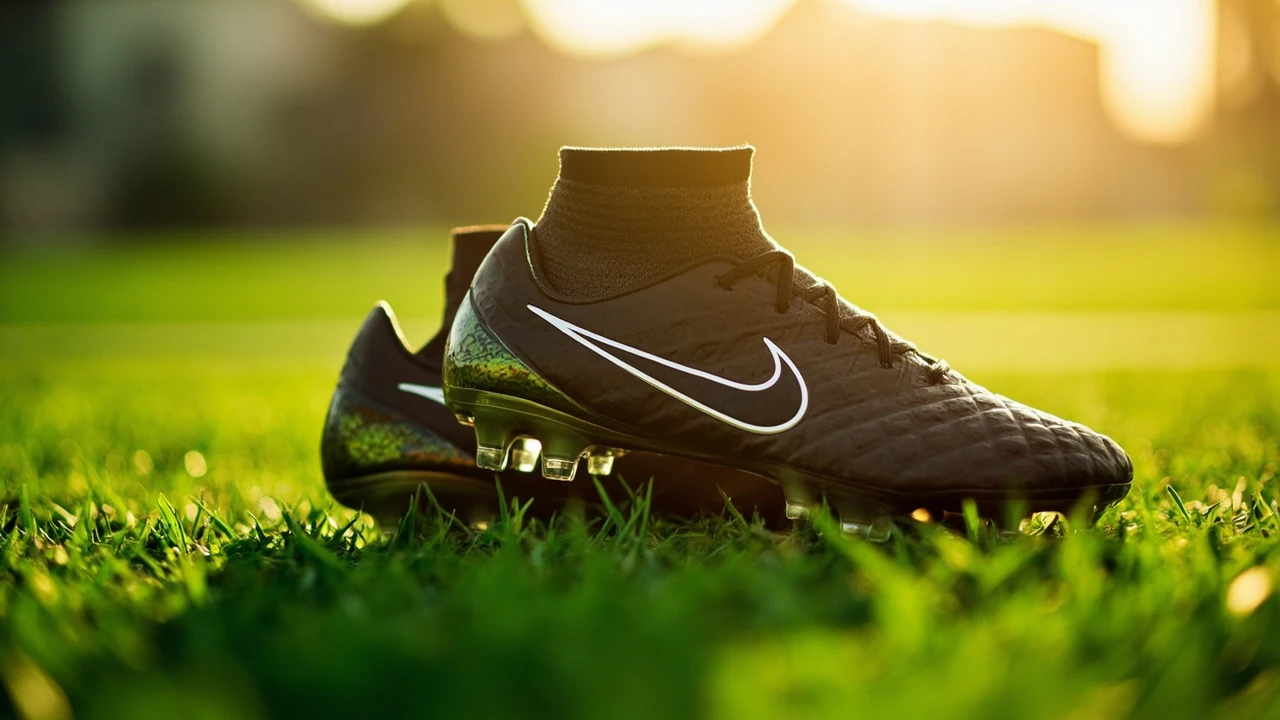
A player steps onto the field in the wrong pair of football boots and feels it within ten minutes. The studs bite too deep on firm ground, the upper feels stiff across the bridge of the foot, or the heel slips every time they push off the outside leg. The right pair disappears under the foot and lets the athlete think only about the next play. Choosing Nike football cleats is largely about matching the shoe to the surface, the position, and the shape of the foot, then trusting the fit on a real practice rather than a store wall.
The notes below work through the questions buyers usually ask first: how the brand structures its football line, which silhouettes suit which players, what plate and stud configurations change in practice, how to read fit, and how to break a new pair in without blisters. They are written for players, parents buying for a young athlete, and coaches outfitting a squad on a budget.
Nike football cleats: how the range is organised
The football line is not a single model. It is a set of families built around different play styles, surfaces, and price tiers. Once the families are clear, the difference between two pairs sitting side by side is easier to judge, and the marketing language on the box stops doing all the work.
The main families most buyers encounter are:
- Mercurial: the speed-focused boot, built around a low, streamlined shape and a stiff soleplate for quick acceleration.
- Phantom: the control and finishing boot, designed for accurate striking and a closer feel on the ball.
- Tiempo: the classic leather boot, valued for soft touch and a traditional fit that breaks in over time.
- Vapor, Superfly, and GX are sub-silhouettes within each family, with high-cut and low-cut collar options and different upper constructions.
Each family then has variants for different playing surfaces. A model labelled FG is built for firm natural grass, AG for modern artificial grass, SG for soft ground with longer studs, and TF for hard artificial surfaces such as small-sided turf. The same name on a different plate is genuinely a different piece of footwear, not a colour swap, and the difference shows up the first time a player cuts on the wrong surface.
Choosing the right surface plate
Surface is the first decision, because the wrong studs do real damage to the foot. Studs that are too long for the surface put extra force through the knee and ankle on every cut. Studs that are too short slip on soft ground and force the calf to work harder for stability. Buying a beautiful boot on the wrong plate is the most common reason a new pair ends up in a bag after two sessions.
| Plate code | Intended surface | Stud length and shape | What to watch for |
|---|---|---|---|
| FG (firm ground) | Natural grass that is dry to slightly damp | Cone or bladed studs, moderate length | Out of pocket on soft, wet ground; studs clog in mud |
| AG (artificial ground) | Modern long-pile artificial turf | Many short, hollow studs spread across the plate | More even pressure underfoot; kinder to knee and ankle on turf |
| SG (soft ground) | Wet, muddy natural grass | Longer, often replaceable metal or hybrid studs | Studs penetrate deep; not legal on hard or artificial surfaces |
| TF (turf) | Hard artificial surfaces, indoor courts, small-sided games | Short rubber nubs across the entire sole | Less traction than studs; comfortable on hard ground |
| IC (indoor/court) | Gym floors and indoor halls | Flat, gum-rubber outsole | No studs at all; the only safe option on a true indoor court |
If a player trains and plays on long-pile artificial turf, an AG plate usually feels closer to a real grass field than a generic FG plate. A FG boot on older, shorter turf is the most common mismatch and the reason some athletes blame the brand rather than the plate. Checking the actual pile height of the home surface before buying saves a return trip.
Match the boot to the position
Surface tells the sole what to do. Position tells the upper what to do. A winger wants a different feel from a centre back, and a goalkeeper wants a different fit from a striker. None of these are rules, but they explain why players gravitate to specific families over a career.
| Position or style | Common priorities | Family that often fits |
|---|---|---|
| Winger, forward, attacker | Acceleration, light weight, secure lockdown | Mercurial Vapor or Superfly |
| Central striker, attacking midfielder | Clean striking surface, predictable swerve | Phantom GX or Phantom line |
| Central midfielder, box-to-box | Balance of touch and stability, comfort for long matches | Phantom or Tiempo, depending on touch preference |
| Centre back, holding midfielder | Stability, lockdown, reliable traction on cuts | Phantom or Tiempo with a firm heel counter |
| Goalkeeper | Comfort, ground feel when diving, predictable traction | Any family, with SG or FG plate matched to surface |
| Young or recreational player | Forgiving fit, durable upper, lower price tier | Phaser, Legend, or entry Tiempo and Mercurial models |
The table is a starting point. Two wide midfielders on the same team can prefer completely different boots because their feet are different shapes. Position tells the brand which features to prioritise; fit decides the final answer, and fit is always tested on a real foot, not on a screen.
Understanding the upper materials
The upper is where most of the comfort and touch happens. Nike uses a mix of synthetic leathers, knit constructions, and traditional leather across the range, and the differences are felt rather than seen on a product page.
- Synthetic leather (such as Kanga-Lite or FlyTouch): a coated or microfibre material that holds shape, stays light in rain, and offers a consistent striking surface. Most modern football cleats use some form of synthetic because genuine leather is heavier and absorbs water over a long match.
- Engineered knit (such as Flyknit or similar): a woven, sock-like upper that stretches and conforms to the foot. It is breathable, light, and forgiving on width, but the surface against the ball is softer than a synthetic leather.
- Full-grain leather (Tiempo line): traditional leather treated to shed water. It feels soft out of the box and softens further with use, which is the appeal for players who want a classic touch on the ball and do not mind a longer break-in.
Knit uppers feel the most comfortable on the first wear. Synthetic leather uppers usually feel stiffer but settle in after a handful of sessions. Leather is a long-term relationship; the boot is at its best after a few weeks of break-in rather than on day one, and forcing a full match in a brand new Tiempo is how blisters start.
Fit: the single most important decision
Two identical pairs in the same size can feel completely different on the same foot. Brand sizing is not standard across the industry, and the shape of the last (the mould around which a shoe is built) changes the way a boot sits on a wide or narrow foot. A player who tries on a boot with the laces left loose will end up blaming the brand for blisters the laces caused.
A useful fit check before buying Nike football cleats:
- Wear the football socks you actually play in, not thin dress socks.
- Pull the laces tight from the bottom up, in the same way you lace before a match.
- Stand on a hard floor and press the big toe gently into the upper. There should be roughly a thumb width of space between the longest toe and the end of the boot.
- Walk a few steps, then walk on tiptoes and back on the heels. The heel should not lift more than a fraction.
- Test a cutting motion. If the foot slides inside the boot during a planted turn, the width or the lacing pattern is wrong, not the size.
For wide feet, the Tiempo and some Phantom silhouettes usually feel roomier through the forefoot. The Mercurial tends to run narrower with a low, locked-in feel. Trying both Mercurial and Phantom in the same session is a fast way to learn the difference, and most good football shops will let a player walk a few steps in each pair before deciding.
Weight, stack, and the feel underfoot
Weight is often the first number buyers compare, and it matters, but not always in the way people think. A lighter boot can feel faster on straight sprints, but the boot that wins on comfort over ninety minutes is the one with the right balance of stack height and plate stiffness, not the lowest number on a scale.
The stack is the distance from the ground to where the foot sits inside the boot. A higher stack puts the foot further from the studs and can feel more cushioned, but it raises the centre of mass slightly. A lower stack gives a closer feel to the ground, which many goalkeepers and defenders prefer for stability on cuts and for reading the ball off the bounce.
The plate is the structural layer between the upper and the studs. A stiffer plate transfers more energy on sprints and feels responsive on push-off, but it can feel harsh over a full match on hard ground. A more flexible plate is kinder on the foot but feels less springy. Most modern Nike football cleats sit in a middle range, with stiffer plates on Mercurial and more forgiving plates on Tiempo.
Care, break-in, and when to replace
Football cleats take more punishment than almost any other piece of sporting equipment. Mud, rain, repeated stud pressure, and tight turns on hard turf shorten their life compared to running shoes. A small amount of care extends that life noticeably and keeps the upper from breaking down before the studs wear out.
- After every session: knock the studs together to dislodge mud, wipe the upper with a damp cloth, and remove the insoles to dry separately. Stuffing the toes with newspaper pulls moisture out faster than air-drying alone and helps the boot keep its shape.
- Studs: check FG and AG studs for uneven wear after every few matches. Worn studs change traction and change the way the foot lands on cuts. SG studs can usually be unscrewed and replaced once they round off, which is one of the better features of the soft-ground plate.
- Insoles: swap the stock insole for an aftermarket football insole if a player has any history of arch pain. The insole does more for comfort than a small change in boot model, and it is also the cheapest part of the boot to upgrade.
- Storage: keep cleats in a breathable bag, not a sealed plastic bag. A damp boot in a sealed bag develops odours and breaks down adhesives faster, especially along the toe box where the upper bends on every step.
Replacement timing depends on the player. A youth playing twice a week on abrasive turf may need new boots every season. An adult recreational player can sometimes get two or three seasons out of a pair. The honest test is the upper: once the toe box has stretched, the heel counter has collapsed, or the sole has begun to separate, the boot is no longer doing its job even if the studs look fine.
Common mistakes when buying Nike football cleats
Most regret around a new pair of football cleats comes from a small number of predictable errors. A short list of the ones that come up most often in shops and on coaching forums:
- Choosing the model a favourite professional wears, instead of the model that fits the player’s foot and surface. A boot worn on television at the highest level is often the most specialist version of that family, with a thin upper that a youth player will burn through in a month.
- Buying a half size up “to be safe.” Football cleats are designed to sit closer to the foot than trainers, and extra room at the toe is the most common cause of blisters and black toenails.
- Using FG cleats on artificial turf. The studs do not bend the right way for the surface, and the player feels every step through the knee.
- Skipping a real walk and cut test in the store. Standing still in a boot tells you almost nothing about how it will feel after twenty minutes of play.
- Ignoring the insole. A custom or aftermarket insole can turn a boot that felt average into a boot that feels excellent, especially for players with flatter feet.
Avoiding these points does not guarantee a perfect purchase, but it removes most of the reasons a new pair ends up at the back of a closet after two sessions. The single biggest change for most buyers is to test the boot in motion, not on a stand.
A short buying checklist
Before reaching for the wallet, a quick pass through this list saves time in the store and on the field.
- Confirm the surface the player trains and plays on most often, and pick the matching plate code.
- Decide which family matches the position and playing style: Mercurial for speed, Phantom for control, Tiempo for classic leather feel.
- Try the chosen model in the correct size, with the correct socks, laced properly from the bottom up.
- Walk, jog, and cut in the store. The boot should feel snug at the heel, roomy at the toes, and stable on a planted turn.
- Check the stud layout in person. A plate that looks aggressive in a marketing photo can feel punishing on hard turf.
- Plan for break-in. New synthetic uppers loosen across the forefoot after a few sessions; leather uppers soften over a longer period.
- Set a realistic replacement window based on playing time and surface, not the calendar.
Where gymnastics training meets cleated sport
This is also a useful moment to think about where football players develop the foot and ankle control that cleats serve. Gymnastics is one of the strongest foundations for proprioception, balance, and ankle stability, and a number of the same body mechanics that make a clean beam routine also make a player quick on a planted cut. A separate piece on the site covers why gymnastics is the foundation of every sport, and the related piece on how gymnastics skills transfer to football, basketball, and hockey walks through the specific movements that carry over into cleated play. A stronger foot tends to feel the difference between a good and a great boot more clearly, because the foot itself is doing more of the work.
Frequently asked questions
How should Nike football cleats fit compared to regular trainers?
They should fit closer to the foot than everyday trainers, with about a thumb width of space at the longest toe and a snug, locked-in feel at the heel. Extra room at the toe is the most common cause of blisters and black toenails on the football pitch.
What is the difference between FG, AG, SG, and TF plates?
FG is for firm natural grass, AG is for modern artificial turf with longer pile, SG is for wet and soft natural ground, and TF is for hard artificial surfaces with short rubber nubs. Each plate is built for a different surface, and using the wrong one is the most common reason a good boot feels wrong.
Are Mercurial football cleats only for fast players?
No. The Mercurial family is designed around a low, streamlined shape and a stiff soleplate, so it rewards quick acceleration, but any player whose foot shape fits a narrow last and who prefers a close feel can wear them. Speed is a play style, not a body type.
Do Nike football cleats need breaking in?
Synthetic uppers loosen across the forefoot after a few sessions and need very little break-in. Leather uppers, especially in the Tiempo line, feel stiff at first and soften over a longer period. Walking and light passing in a new pair before a competitive match is always a good idea.
Can I use FG cleats on artificial turf?
It is not recommended. FG studs are too long and too widely spaced for artificial surfaces, which puts extra force through the knee and ankle and wears the plate out faster. An AG plate is the better choice on modern turf.
How long do Nike football cleats usually last?
It depends on playing time, surface, and care. A youth playing twice a week on abrasive turf may need a new pair each season, while an adult recreational player can sometimes get two or three seasons from a pair. Replace the boot when the upper stretches, the heel counter collapses, or the studs wear unevenly.
What socks should I wear when trying on football cleats?
Wear the same football socks you will play in. Football socks are thicker than casual socks, and a boot that feels right in thin dress socks can feel tight in match-day kit. Trying on boots in thin socks is a common reason for a poor fit on the first training session.
Are higher-priced Nike football cleats worth it for a recreational player?
Often no. The top-tier models are lighter and use thinner uppers, which benefits a professional who plays multiple times a week on pristine grass. A recreational player on harder or mixed surfaces usually gets better value from a mid-tier model with a more durable upper and a sturdier plate.
Do insoles really change how a football cleat feels?
Yes, often more than the difference between two adjacent models. A football-specific or custom insole supports the arch and stabilises the heel, which can turn a boot that felt average into one that feels locked in. The stock insole is the cheapest part of the boot to improve.
How do I stop new football cleats from giving me blisters?
Lace the boots properly from the bottom up, make sure the heel is locked, and avoid playing a full match in a brand new pair. A short training session in the new boots, with tape on any known hot spots, lets the upper settle in before a competitive game.