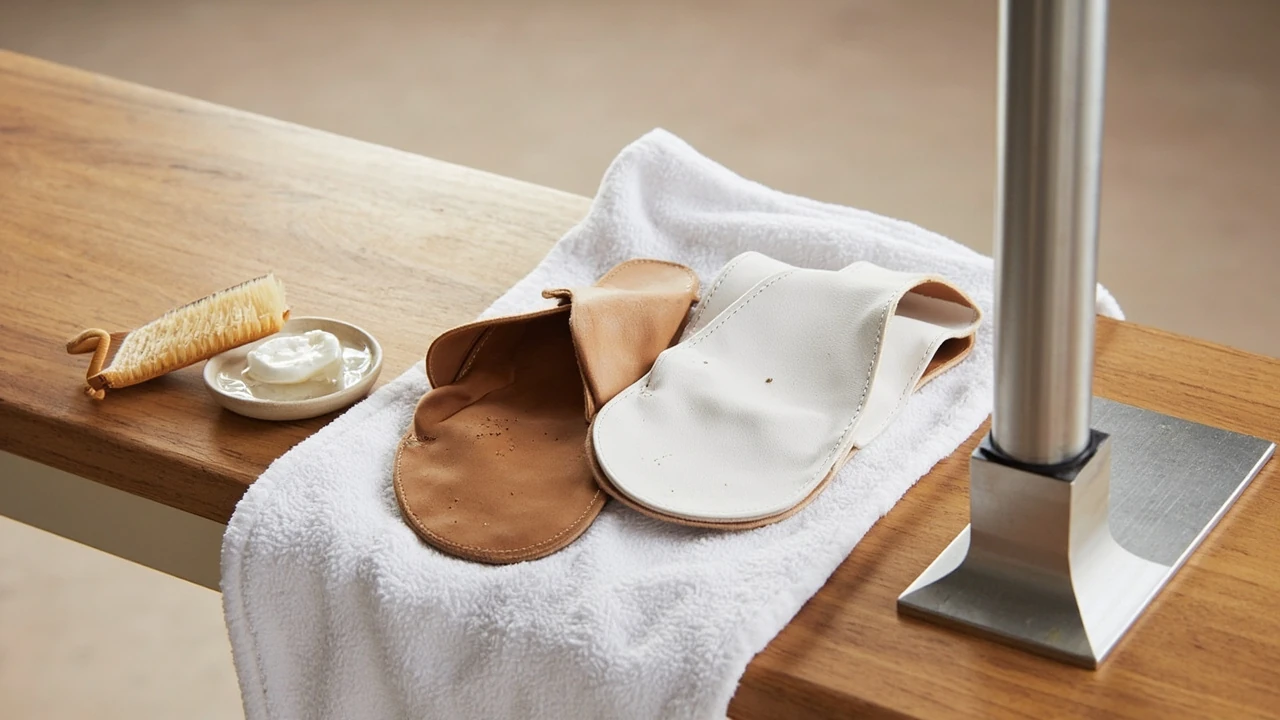
How to clean gymnastics grips without damaging leather
A chalk-dusted leather palm, a sweat-soaked wrist strap, and a single tough training session can push a pair of gymnastics grips past the point where a quick shake is enough. Most gymnasts keep their grips for one or two competitive seasons, and the difference between a pair that lasts and a pair that cracks early usually comes down to how the leather is cleaned, dried, and stored. Learning how to clean gymnastics grips without damaging leather is less about aggressive scrubbing and more about choosing the right products, working gently, and giving the leather time to recover between sessions.
This guide walks through the materials, methods, and habits that protect the leather palm, the dowel, and the wrist strap. It also covers what to avoid, how to read the warning signs of over-cleaned leather, and how a quick weekly routine can save the cost of replacing grips every few months.
Why leather gymnastics grips need careful cleaning
Gymnastics grips are working tools. The leather palm absorbs chalk, sweat, skin oils, and bar residue on every single rep. Over time that build-up stiffens the leather, fills the pores with fine powder, and can weaken both the stitching and the bonding around the dowel. A pair of grips that is never cleaned usually ends up slick, smelly, and prone to tearing along the grain.
Leather is also a natural material with a specific structure. It breathes, it absorbs, and it reacts to moisture, heat, and chemicals. Soap that is too harsh strips the natural oils and leaves the surface dry and prone to cracking. Too much water soaks the hide and warps the shape of the palm. Heat from a radiator or a hair dryer shrinks the fibers and pulls the stitching tight. The cleaning job is to remove sweat, chalk, and grime while leaving the leather’s natural flexibility alone.
What most gymnasts get wrong when cleaning grips
Most grip problems start with one of three habits:
- Washing the leather with household detergents, dish soap, or anything labeled as a degreaser.
- Soaking the grip in a sink of water to “deep clean” the palm.
- Drying grips on a radiator, in direct sun, or with a hair dryer after a wet wipe-down.
Each of these approaches can feel sensible in the moment, but they share a common result. They either strip the oils that keep the leather supple, flood the inner fibers with water, or shrink the leather faster than it can dry evenly. A pair of grips that comes out of a “deep clean” feeling stiff and tight has usually lost several months of working life.
The other common mistake is timing. Grips that get stuffed into a gym bag while still damp from sweat or cleaning rarely recover. Bacteria feed on the trapped moisture, the leather takes on a sour smell, and the strap develops a tacky surface that grips the skin in the wrong way. A few minutes of airflow after every session is a bigger factor than any cleaning product.
Materials that are safe for gymnastics leather grips
The cleaning shelf for gymnastics grips is short by design. The aim is to use the mildest product that will still lift chalk and sweat.
| Product or tool | When to use it | Why it works on leather |
|---|---|---|
| Saddle soap or pH-balanced leather cleaner | Monthly full clean | Designed for finished leather; lifts grime without stripping oils |
| Diluted castile soap (a few drops in water) | Light mid-season clean | Gentle surfactant that breaks down sweat and oils |
| Soft natural-bristle brush (old toothbrush works) | Removing chalk from the grain | Lifts powder from pores without scratching the surface |
| Clean microfiber or cotton cloths | Wiping and drying | Absorbs moisture without leaving lint in the stitching |
| Leather conditioner (sparingly) | Once a season or when dry | Replaces lost oils and keeps the palm flexible |
| Mesh or open-weave bag | Daily storage and air-drying | Allows airflow on all sides, prevents mildew |
What is not on the list matters just as much. Avoid dish detergent, laundry detergent, all-purpose household cleaners, bleach, vinegar straight from the bottle, baby wipes with fragrance, alcohol-based sanitizers, and any product marketed for “deep cleaning” of sports shoes. These either alter the pH of the leather, leave residues that affect grip on the bar, or dry the fibers out.
Step-by-step: cleaning gymnastics grips the safe way
The full process takes about twenty to thirty minutes of active time, plus a longer drying window. It is worth doing on a day off so the grips are ready for the next training session.
- Brush off loose chalk first. Hold the grip over a trash can and use a soft brush along the leather grain. Most of the chalk will fall away without any liquid at all.
- Mix a mild cleaning solution. Combine a small bowl of lukewarm water with a pea-sized amount of saddle soap or a few drops of castile soap. Stir until the water looks faintly cloudy, not foamy.
- Dampen a cloth, do not soak it. Wring a microfiber cloth until it is barely damp. The goal is to control the water that touches the leather.
- Wipe the leather palm in small circles. Work panel by panel, following the grain. Pay attention to the area where the dowel sits and any stitching lines, where chalk tends to build up.
- Spot-clean the wrist strap. The strap is usually synthetic and tolerates a little more water. Wipe it separately and avoid soaking the area where it joins the leather palm.
- Use a soft brush on stubborn areas. For chalk that has settled into the grain, dip the brush in the cleaning solution and work in short, gentle strokes. Do not press hard enough to raise a nap on the leather.
- Wipe away the soap residue. A second clean cloth, dampened with plain water, removes any leftover product. Soap left in the leather will dry it out from the inside.
- Pat dry with a towel. Press a dry cotton towel against the palm and strap to lift surface moisture. Do not rub.
- Air-dry flat in a shaded, ventilated spot. Lay the grips on a clean towel with the palms facing up. Keep them out of direct sun and away from radiators or heaters.
- Condition sparingly when fully dry. Once the leather feels room-temperature and flexible again, work a small amount of leather conditioner into the palm with a soft cloth. Less is more; a thin film is enough.
A single full clean once a month, plus a quick wipe-down after heavy training days, is a workable rhythm for most competitive gymnasts. A recreational gymnast who trains a few hours a week can usually stretch that to every six to eight weeks.
Daily and weekly care that prevents heavy cleaning
Deep cleans are only part of the picture. A short daily routine keeps leather grips in working order between washes and reduces the need for stronger products.
- Tap out chalk after every rotation. A few sharp taps against the bar or a bench dislodge most of the loose powder before it settles into the grain.
- Wipe the palm with a dry microfiber cloth. A quick rub with a dry cloth after training lifts the chalk that brushing alone misses.
- Open the wrist strap and let the grip breathe. Closed straps trap moisture against the leather. Loosening the strap at the end of the session speeds up drying.
- Store in a mesh bag, never in a sealed plastic bag. A mesh or cotton pouch allows air to circulate. Plastic creates a humid microclimate that breeds odor and weakens stitching.
These habits do not take long, but they do two important things. They keep chalk from binding with sweat into a hard layer on the leather, and they let the grip dry at a steady rate, which is the single biggest factor in preventing stiff palms and cracked grain.
How to handle sweat, smell, and strap hygiene
Leather absorbs sweat in a way that fabric does not, and the resulting smell is the most common reason gymnasts throw grips out early. The solution is not stronger soap. It is airflow, timing, and a light touch with the right products.
For routine odor control, a light sprinkle of baking soda on the palm, left for fifteen minutes and then brushed off, will neutralize much of the smell without affecting the leather. For the wrist strap, which is usually a synthetic or fabric material, a gentle hand wash with mild soap and a full air-dry works well. Avoid spraying deodorant, body spray, or sanitizing mist on the strap; the residue transfers to the skin and can affect grip on the bar.
If a grip has started to smell strongly, the cause is almost always trapped moisture. A full clean following the steps above, followed by at least 24 hours of open-air drying in a breezy room, usually resets the situation. If the smell persists after a second cleaning, the inner lining of the strap may be breaking down and the grip is probably near the end of its working life.
Reading the leather: signs you are cleaning too much or too little
Leather tells you what it needs if you know what to look for. The table below summarizes the most common warning signs and what they mean for the next cleaning cycle.
| Symptom on the grip | Most likely cause | Adjustment to make |
|---|---|---|
| White, crusty chalk film on the palm | Not cleaning often enough; chalk binding with sweat | Add a weekly light clean; brush after every session |
| Leather feels stiff and dry after cleaning | Soap too strong, too much water, or heat drying | Switch to saddle soap; air-dry only; condition lightly |
| Dark patches along the grain that do not lift | Deep-set sweat staining | Repeat gentle cleaning; do not scrub harder |
| Rough, raised nap on the palm | Over-brushing or harsh soap | Stop brushing; use a soft cloth and conditioner |
| Cracks along the bend lines | Leather dried out from heat or harsh chemicals | Condition and accept that a replacement may be needed |
| Persistent smell after drying | Moisture trapped in strap or inner lining | Extend drying time; if it returns, replace the grip |
The palm is the part to watch. A healthy leather palm should feel smooth, slightly grippy, and a little tacky. If it feels glassy and slippery, chalk and body oils have built a film on top. If it feels dry and rough, the natural oils have been stripped and the leather is starting to fatigue.
Storage habits that extend the life of leather grips
How a grip is stored between sessions has a bigger effect on its lifespan than the cleaning itself. Three small habits make a real difference.
- Keep grips out of the gym bag when still warm. A gym bag is a closed humid space. Let the grips cool and dry for ten to fifteen minutes before putting them away.
- Store flat or hanging open. Folding a grip in half to fit it into a small pocket creases the leather along the same line every time. Laying it flat or clipping it to a bag loop keeps the shape.
- Avoid car trunks and direct sun. Heat is the single fastest way to dry out leather. A trunk in summer can reach temperatures that harden the palm in a single afternoon.
For gymnasts who train twice a day, rotating between two pairs of grips is a useful strategy. Each pair gets a full day to air out, which adds weeks to the working life of the leather and reduces the smell that builds up when a single pair is in constant use.
When to replace rather than clean
Cleaning extends life, but it does not bring a worn-out grip back. There is a point where continuing to use a pair puts the gymnast at risk of slipping on the bar, and that risk is not worth saving the cost of a new pair.
It is time to replace a grip when:
- The leather palm has visible cracks along the bend lines or near the dowel.
- The stitching around the dowel is loose, frayed, or missing on more than a few stitches.
- The wrist strap no longer holds a secure setting, even when the velcro is clean.
- The palm has worn through to a thin, papery layer that flexes too easily under the hand.
- The dowel has shifted inside the leather pocket and no longer sits flat against the bar.
A pair of grips that has reached any of these conditions is a safety issue, not just a comfort issue. A new pair is cheaper than a wrist injury, and most competitive programs expect grips to be replaced at least once per competitive season for athletes who train daily.
Quick reference: cleaning rhythm by training load
The right cleaning rhythm depends on how often the grips are used and how much chalk and sweat they absorb. A rough schedule for different loads looks like this.
| Training load | Brush after session | Light wipe-down | Full clean and condition |
|---|---|---|---|
| Recreational, 2 to 5 hours per week | Every session | Weekly | Every 6 to 8 weeks |
| Competitive pre-team, 8 to 12 hours per week | Every session | 2 to 3 times per week | Monthly |
| Elite or national-level, 20+ hours per week | Every session, twice a day | Daily | Every 3 to 4 weeks |
| Return from long break or off-season | N/A | Light inspection clean | Full clean and condition before first session |
These are starting points rather than fixed rules. The leather will tell you what it needs. If the palm feels tackier than usual, it is asking for a light clean. If it feels drier than usual, it is asking for a small amount of conditioner. The goal is to keep the leather in the same condition throughout the season rather than letting it drift toward either extreme.
Common mistakes that still happen in well-run gyms
Even with good general advice, a few habits keep showing up in gyms that take care of their equipment. They are worth naming directly.
- Sharing a tub of “grip cleaner” that turns out to be saddle soap mixed with dish detergent.
- Using the same brush for grips and for cleaning the bar or the mats, which pushes grime back onto the leather.
- Wiping grips with a damp cloth that has fabric softener residue from the laundry, which leaves a film on the palm.
- Conditioning the leather while it is still damp, which traps moisture and encourages mildew.
- Storing grips next to wet grips, sweaty socks, or a wet towel, which slows the drying time for all of them.
The fix in each case is small but specific. Label the cleaning cloth, keep a separate brush, condition only when the leather is fully dry, and store grips in their own pouch with room to breathe. None of these changes cost money, and they protect the single piece of equipment that connects the gymnast’s hand to the bar on every skill.
How this fits into a wider equipment-care routine
Clean grips work alongside a few other pieces of equipment that benefit from the same careful approach. Hand guards, wristbands, and grips for parallel bars all use similar leathers and respond to the same mild products. Keeping a small kit in the gym bag, with a soft brush, a microfiber cloth, a tin of saddle soap, and a mesh pouch, turns grip care into a five-minute habit rather than a project.
For a broader look at how strength work and conditioning support a competitive season, the article on crunch fitness and how gym-style strength work supports artistic skills pairs naturally with this guide. For parents choosing a program where grip habits and equipment care are taken seriously, the parent’s guide to choosing a gymnastics program covers the questions worth asking a club before signing up.
Frequently asked questions
How often should I clean my gymnastics grips in season?
For most gymnasts, a light wipe-down after every session and a full clean with saddle soap once a month keeps the leather in good shape. Higher training loads or heavy chalk use may need a full clean every three to four weeks. The palm itself is the best guide. If it feels sticky or chalky, it is time for a clean.
Can I use water on leather gymnastics grips?
Yes, but only in small amounts. Use a damp cloth, not a wet one, and never submerge the grip. Excess water soaks into the leather, swells the fibers, and can warp the shape of the palm. Always follow a wet wipe-down with air-drying in a shaded, ventilated spot.
What soap is safe for cleaning leather grips?
Saddle soap and pH-balanced leather cleaners are the safest options. A few drops of pure castile soap in lukewarm water also works for light cleaning. Stay away from dish soap, laundry detergent, all-purpose household cleaners, and any product that foams heavily, as those will strip the natural oils from the leather.
Is it safe to use baby wipes on gymnastics grips?
Plain, fragrance-free baby wipes can be used in a pinch for a light surface clean, but they are not a substitute for a proper leather cleaning. Wipes that contain alcohol, fragrance, or moisturizers can leave residues that dry the leather or make the palm slippery on the bar. Use wipes only when nothing else is available, and follow up with a real clean when possible.
How do I remove the chalk buildup from the grain of the leather?
Use a soft natural-bristle brush, like an old toothbrush, with a tiny amount of diluted saddle soap. Work in short strokes along the grain, never across it, and avoid pressing hard enough to raise a nap. Most chalk will come away with two or three passes.
Should I condition my leather gymnastics grips?
Yes, but sparingly. A thin coat of leather conditioner once a season, or whenever the palm feels dry after cleaning, is enough. Heavy conditioning softens the leather too much, which can affect how the grip feels on the bar. Apply conditioner only when the grip is fully dry.
Can I dry my grips with a hair dryer or on a radiator?
No. Direct heat dries the leather too quickly, shrinking the outer fibers faster than the inner ones and leaving the palm stiff and prone to cracking. Always air-dry grips flat, in the shade, with good airflow. Patience is the safer choice.
Why do my grips smell even after cleaning?
The smell usually comes from moisture trapped in the wrist strap or the inner lining, not from the leather palm itself. Open the strap fully after every session, let the grip dry for at least 24 hours in a breezy spot, and consider rotating between two pairs if you train daily. A light sprinkle of baking soda on the palm, left for fifteen minutes and brushed off, also helps neutralize odor.
When is it time to replace gymnastics grips instead of cleaning them?
Replace grips when the leather palm has visible cracks, when the stitching around the dowel is loose or missing, when the wrist strap no longer holds a secure setting, or when the palm has worn through to a thin layer. Continuing to use grips in any of these conditions increases the risk of slipping on the bar.
Do different leather types need different cleaning methods?
Yes, slightly. Most gymnastics grips are made from cowhide or a cowhide-synthetic blend. Cowhide tolerates the saddle soap routine described above. Synthetic leather palms are more sensitive to harsh cleaners and usually only need a damp cloth and air-drying. If you are unsure which type you have, check the manufacturer’s care sheet or ask your coach before using any product on the palm.