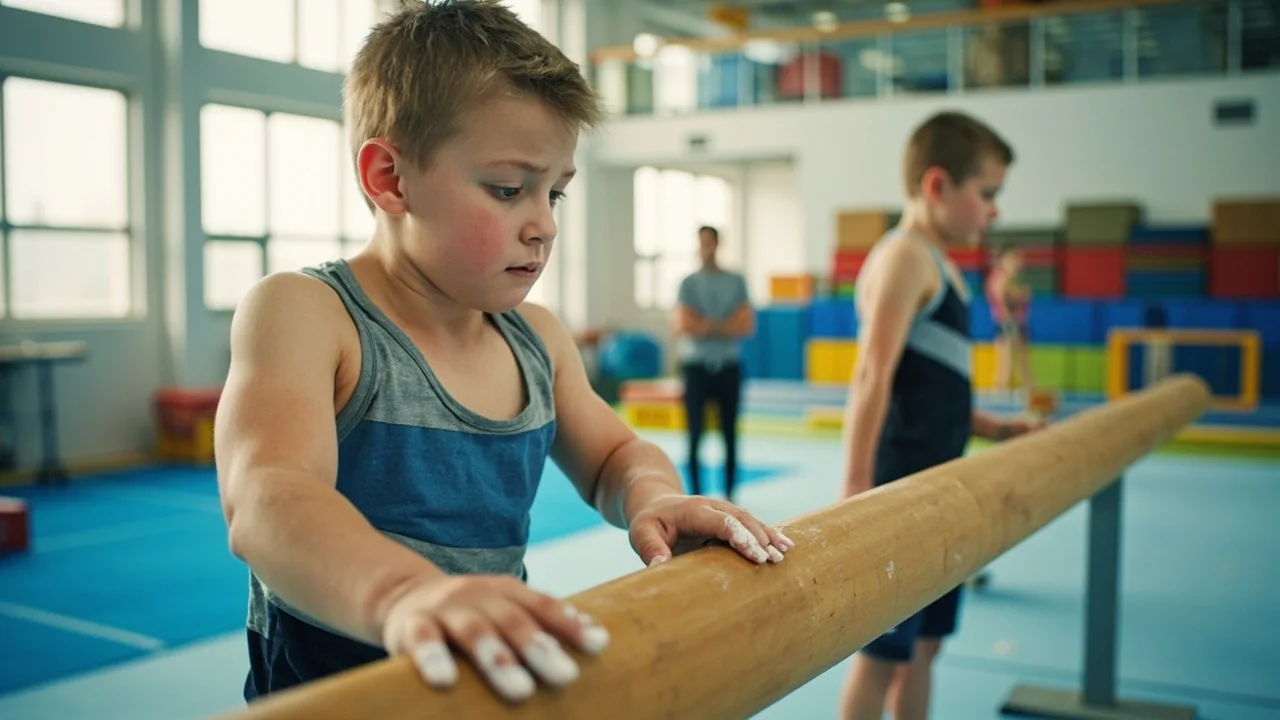
What gymnastics for boys includes and why the right fit matters
A boy standing at the edge of a gymnastics facility with a mixture of curiosity and uncertainty may be wondering whether he belongs there. He may enjoy climbing, flipping, balance work or sports that require coordination, yet he may also have no idea how gymnastics classes differ from school PE or general tumbling. Choosing gymnastics for boys becomes easier when families understand that the goal is not simply to learn a few impressive skills. It is to build dependable movement habits through suitable coaching, progressive practice and age-appropriate training.
Men’s artistic gymnastics includes six competitive events: floor exercise, pommel horse, still rings, vault, parallel bars and horizontal bar. These events place different demands on the body, so a program that interests one boy may not suit another. A child who loves swinging on a horizontal bar may need more upper-body confidence than one who prefers the speed of a vault. A child who struggles with waiting for instructions may thrive in a small introductory class but feel uncomfortable in a large group.
A useful starting point is to separate three levels of participation:
- Fundamental movement classes develop balance, jumping, climbing, rolling, basic tumbling patterns and body awareness. They suit many beginners regardless of whether the child eventually chooses a competitive path.
- Developmental or age-group training introduces gymnastics progressions more systematically, often with a greater emphasis on strength, flexibility, form and routine preparation.
- Competitive preparation requires a serious training schedule, event-specific learning and regular judging. It is a commitment rather than a casual enrichment activity.
Families should not choose the most advanced label on a website. They should choose the environment that matches the boy’s current movement experience, attention span, comfort with instruction and willingness to return week after week. Progress comes from consistent practice, not from enrolling a child in the hardest available class.
| Program level | What it usually emphasizes | Best first question for a parent |
|---|---|---|
| Fundamental or introductory | Basic movement patterns, confidence, coordination and class participation | Will the coach teach skills progressively and adapt them to beginners? |
| Developmental | More detailed technique, strength, flexibility and age-group skills | What skills should my son already demonstrate before moving up? |
| Competitive | Event-specific routines, competition preparation and structured training | What weekly commitment and oversight will this level require? |
How to choose a gymnastics program for your son
A gym may look impressive from the outside, but the quality of the instruction matters more than the amount of equipment. Before enrolling, attend a class or speak with the program director and ask direct questions about how boys are grouped, how progress is assessed and what happens when a child falls behind.
Look for a program that explains its structure in plain language. Ask which ages attend each class, how many gymnasts the coach normally supervises, and whether beginners spend class on all apparatus or focus on a smaller number of skills. The answers should help you picture what your son will actually experience.
The teaching method is another important signal. Good instruction explains why a movement should be performed in a particular way. It breaks a difficult action into manageable parts, gives the athlete enough time to attempt each stage and corrects one or two priorities at a time. A coach who never pauses to explain may demand speed, but speed alone does not teach an athlete how to land, support the body or recover from a mistake.
Watch how the coach treats the boys. Are corrections specific and respectful? Does the coach notice a child who is hesitant to attempt a skill? Are safety expectations explained to both athletes and parents? These observations reveal more about instruction than a brochure full of promises about medals or elite-level pathways.
Ask these questions before signing up:
- What is the ratio of gymnasts to coaches for the class my son would attend?
- How much individual instruction does a beginner receive during a typical class?
- How do coaches identify a gymnast who is ready for more difficult skills?
- Are boys and girls taught separately, together, or in mixed groups at the developmental stage?
- How are landings, spotting, equipment use and warm-up procedures taught?
- What is the policy for trying a new skill, and how is it decided whether a gymnast is ready?
Visit more than one option when practical. The most suitable gym is not always the closest, most expensive or most heavily advertised. Compare the teaching, the class size, the schedule and the child’s response. Enthusiasm matters, but so do clarity, supervision and a progression that does not leave a beginner stranded.
Be cautious about promises of immediate advanced skills. A forward roll, cartwheel, back handspring or strength hold can be learned at different rates depending on strength, mobility, confidence and previous activity. A responsible program should explain the pathway rather than treating one age or one demonstration as a guarantee.
A practical first 12 weeks for a beginner
The beginning of gymnastics should establish reliable movement patterns before adding difficulty. A useful first three months is less about learning a long list of skills and more about becoming comfortable with the gym, following instructions, landing under control and returning to practice after an error. This is especially important for understanding how gymnastics performance is evaluated, because early habits influence later technical progress.
Use a simple weekly rhythm rather than trying to add extra sessions immediately. Most beginner progress comes from attending regular classes, completing home practice at an appropriate level and resting between training days. If the club assigns a structured program, follow it. If the family adds extra work, it should reinforce—not replace—the coach’s priorities.
During the first month, focus on preparation for training. This includes arriving on time, using equipment as instructed, warming up with attention and stopping when fatigued. The athlete should also learn the difference between a safe progression and a dramatic attempt. Practice should end with enough energy to repeat the movement accurately rather than finishing every session exhausted.
Months two and three can add controlled skill progressions once the coach identifies suitable abilities. These might involve a stronger landing, a more stable position, a basic tumbling pathway or a simple strength hold. Each goal should be observable. “Do more tumbling” is vague. “Land each cartwheel attempt with both feet together and without taking a large step” gives the athlete and coach something measurable to work on.
| Training phase | Main focus | Example progress marker |
|---|---|---|
| First 4 weeks | Confidence, routine preparation and safe movement habits | Enters class promptly and attempts familiar activities without avoidable hesitation |
| Weeks 5 to 8 | Body awareness, controlled landings and fundamental strength | Repeats selected skills with steadier technique and fewer visible corrections |
| Weeks 9 to 12 | Coached skill progressions and beginning event preferences | Identifies two or three skills to pursue and can explain the coach’s next step |
A home-practice plan for a beginner should be short and safe. Five or ten focused minutes may be more useful than an unstructured session with several new skills. Start with a mini trampoline or appropriate surface only if the coach has recommended it. Avoid practicing aerial skills on hard floors, over furniture or without suitable supervision. A parent can support posture, balance and mobility practice, but should not attempt to provide advanced spotting without training.
Track the experience rather than only the skill list. Note whether the boy enjoys the class, recovers after mistakes, communicates with his coach and asks for a challenge. Motivation can fade temporarily, but persistent discomfort, fear or indifference may signal that the program or level is not working.
How boys can prepare for the main gymnastics events
Men’s artistic gymnastics rewards different physical qualities across its six events. A beginner does not need to specialize immediately, but understanding the event demands helps families ask useful questions and helps coaches create sensible progressions.
| Event | What the event asks for | Useful early training focus |
|---|---|---|
| Floor exercise | Power, flexibility, rhythm and full-body control | Basic tumbling shapes, controlled landings, balance and transitions |
| Pommel horse | Continuous circular movement, core control and upper-body endurance | Support on the apparatus, circular leg separation and steady rhythm |
| Still rings | Upper-body and grip strength, position control and controlled swing | Safe support, straight-arm strength positions and stable hangs |
| Vault | Speed, explosive power, spatial awareness and a controlled landing | Approach mechanics, hurdle preparation and landing shape |
| Parallel bars | Upper-body strength, balance and transitions above and between the bars | Support, scapular control and simple holds before complex transitions |
| Horizontal bar | Upper-body strength, swinging control and precise release skills | Grip endurance, safe swinging patterns and body-position awareness |
Floor work often appeals to beginners because its basic movements can look immediately understandable. However, a tidy landing matters more than a fast tumbling pass. On vault, speed is useful only when it supports a technically organized approach and a controlled landing. On rings, parallel bars and horizontal bar, strength is not simply the ability to hold on for longer; it includes shoulder position, body tension and the ability to move safely through each position.
Pommel horse develops a different pattern again. Its circular or scissor-like movements demand coordination and endurance. A coach may spend considerable time on apparatus familiarity before adding a full sequence. That is not a lack of ambition. It is how the athlete learns to create smooth movement rather than treating the apparatus as a collection of separate poses.
Families should resist choosing an event too early. Give the boy time to try different activities, then note where he shows curiosity and receives positive coaching feedback. Event specialization becomes more meaningful after he understands what the events actually demand and what his body is ready to handle.
Building strength, mobility and confidence outside class
The broader history of the sport explains why so many distinct movement disciplines share the gymnastics label. The For additional context, history and major branches of gymnastics show that balance, strength, flexibility, coordination, agility and endurance have long been central to the activity. For families, however, the most useful question is practical: what will this boy do each week, who will teach him, and how will the program respond when a skill does not come easily?
Training between classes should support the work done by the coach. A boy does not need a home gym or a complicated supplement routine. He needs regular physical activity, enough sleep, appropriate food and permission to develop the basic physical capacities that gymnastics demands.
Parents can encourage ordinary movement activities that build useful qualities without turning every practice session into a test. Climbing, playground equipment, swimming, cycling, skateboarding and general sport can contribute to coordination and confidence. Balance activities can be simple. Standing on one foot while catching a ball, navigating a low balance beam made for home use, or moving through a sequence of squats and lunges can develop control when performed comfortably and without pain.
Strength work for children should emphasize technique, balanced development and appropriate supervision. Coaches may prescribe holds, push-ups, pull-ups, abdominal exercises or other movements in relation to specific gymnastics skills. Families should not add heavy resistance exercises simply to make a child “stronger.” The best response to an existing program is to ask the coach which qualities need attention and whether the club already provides that work.
Flexibility needs similar care. A child may improve mobility through consistent, comfortable range-of-work practice, but forcing a range can create discomfort and may interfere with technique. The goal is a usable range that allows the body to move safely through positions. An adult should never use another person’s body weight to push a child deeply into a split or stretch.
Useful home or family support includes:
- Keeping regular meals and snacks appropriate to the child’s age and activity level
- Protecting sleep as a fundamental part of training rather than treating it as leftover time
- Using short, specific practice sessions aligned with the coach’s priorities
- Giving calm feedback after a mistake instead of immediately repeating it under pressure
- Allowing time for play, unstructured movement and rest from organized sport
Confidence in gymnastics is not the absence of fear. A healthy competitive attitude lets the athlete recognize fear, prepare for the task and attempt it with appropriate focus. Parents should avoid framing every attempt as a test of character. A supportive response might be: “You worked on the landing and kept your balance closer to the end. Let’s ask your coach what to adjust next time.” That protects effort while keeping the next action realistic.
How to balance gymnastics with school, recovery and family life
A promising class can become a burden if it interferes with sleep, school attendance or recovery from another sport. Before adding extra sessions, map the boy’s week. Include school, unstructured play, meals, sleep and the time needed to decompress after demanding training. A schedule that looks impressive on paper may leave no room for the ordinary activities that support healthy development.
Begin with the schedule recommended by the program. Families often try to accelerate progress by adding strength sessions, private lessons and extra tumbling appointments. More is not always better. Fatigue can make technique less stable, and a busy child may lose the motivation that first made gymnastics enjoyable.
Use a simple weekly check-in rather than constant performance monitoring. Ask whether training is fun, whether anything hurts, whether the boy feels tired rather than sore, and whether he is looking forward to the next session. These questions are more informative than asking only whether he learned a new skill.
Plan around competition periods differently from ordinary training weeks. A young athlete may need more sleep, fewer unrelated commitments and careful attention to recovery as event volume rises. The coach should explain when a competition routine is appropriate, and parents should resist pressure to enter every available meet. Competing can be useful when it supports the child’s goals, but it is not the only measure of success.
Multi-sport participation can be complementary. Many boys benefit from maintaining another sport for enjoyment, general fitness or social time. The potential difficulty is overlapping training loads or competition schedules. Coaches may need to communicate about soreness, technique sessions and fatigue. Families should not present every muscle complaint as a serious injury, but they should not dismiss persistent pain or changes in movement either.
Safety, readiness and signs that a skill should wait
Readiness is not based on age alone. Two boys of the same age may have very different upper-body strength, coordination, balance and confidence. A coach should assess the actual movement before introducing a new challenge. Families can support that process by sharing relevant information about an existing injury, a medical restriction or a fear that continues to affect participation.
Persistent pain, repeated falls, unusual limping, loss of control during previously mastered skills or a sudden reluctance to use an apparatus deserve attention. The athlete should stop the activity and tell a qualified adult. A coach can help determine whether the issue is technical, fatigue-related or something that needs assessment by an appropriate healthcare professional. Parents should not diagnose an injury or encourage training through sharp pain.
Equipment also changes with the athlete. A beginner should use appropriately sized and well-maintained apparatus, protective mats when required, and prescribed spotting methods. It is never acceptable to place an untrained adult behind a high-level skill because they believe they can catch the athlete. Ask the program how spotting is taught and who is qualified to provide it.
Warning signs that a skill may need more preparation include:
- The athlete cannot reproduce the setup position consistently
- Previous basic landings remain unstable
- Required strength positions are held with visible shaking or poor body position
- The athlete cannot safely stop or repeat a swing movement
- The proposed skill is being selected mainly to impress others
No child needs to rush toward a back handspring, release skill, swinging movement or advanced strength position to prove that gymnastics is the right activity. The right progression may take longer, but it produces better control and a more durable training habit.
How to evaluate progress beyond skills and medals
Families often judge gymnastics progress by the number of new skills, competition scores or trophies. These measures can be useful, but they miss much of what matters in a beginner’s development. A broader review includes movement control, coach feedback, confidence, attendance, physical well-being and the athlete’s own sense of engagement.
Monthly conversations with the coach can clarify whether progress is happening. Ask which foundational movements have improved, what remains difficult, what the coach is working on next and whether anything should be adjusted outside class. A useful answer identifies observable behavior, such as a steadier landing or a more stable support position, rather than promising a skill by a specific date.
Scores should be interpreted in context. A judge sees the routine being performed that day, while a parent sees the months of preparation behind it. For families who want to understand the format, how judges evaluate a floor exercise explains why execution and difficulty are separate parts of the assessment. The same principle applies across the sport: attempted difficulty does not replace clean technique.
Consider these indicators at the end of a training block:
| Area | Positive indicator | Question to ask |
|---|---|---|
| Skill development | More consistent performance of a selected movement | Is the improvement repeatable without extra coaching reminders? |
| Movement quality | Better landing shape, body position or control | Can the athlete explain what the coach is refining? |
| Confidence | Willingness to attempt, recover and listen | Does the child remain engaged after an ordinary mistake? |
| Health | Stable attendance and normal recovery between sessions | Is training supporting sleep, school and general well-being? |
| Enjoyment | Continued curiosity and a sense of belonging | Does the child look forward to the gym for reasons beyond medals? |
Keep a record of notable changes rather than filming every session. A short note after a monthly review—two strengths, one focus and one concern—can prevent families from reacting to a single difficult day. Progress in gymnastics is uneven, and a new skill often appears after several weeks of less visible preparation.
Frequently asked questions
What age can boys start gymnastics?
There is no single starting age that suits every child. Readiness depends on the program, the child’s attention and movement experience, and whether the instruction can accommodate a beginner. Some children benefit from early fundamentals classes, while others prefer to begin when they can follow group instructions confidently. Ask the program how it assesses placement and whether boys and girls are grouped by age, experience or both.
Is gymnastics for boys only for competitive athletes?
No. Boys can participate for exercise, coordination, confidence, social connection and general movement development. Many programs offer fundamental or developmental classes before an athlete chooses a competitive pathway. A family does not need to enter competitions for the activity to be worthwhile.
Which gymnastics events are most common for boys?
Men’s artistic gymnastics includes floor exercise, pommel horse, still rings, vault, parallel bars and horizontal bar. A beginner may use simplified versions of these events or focus on foundational skills used across several apparatus. Event specialization usually comes later, after the athlete has developed enough strength, coordination and confidence to handle event-specific demands.
Should my son specialize in one event?
Not immediately in most cases. Early sampling helps a boy discover which movements he enjoys and reveals the physical skills he needs to develop. The club and coach can offer more meaningful guidance once they have observed his abilities, confidence and consistency. Premature specialization may limit movement experience without creating a clear competitive advantage.
How many classes per week should a beginner attend?
Begin with the frequency recommended by the program and keep room for school, sleep and recovery. More sessions are not automatically more productive, especially when the athlete is tired or struggling with basic technique. Families considering extra classes should first ask the coach whether additional frequency addresses a specific need or simply adds fatigue.
What should my son do at home between classes?
Short practice sessions that reinforce the coach’s priorities are usually most useful. These might include prescribed mobility, body-weight strength, balance or basic tumbling preparation on an approved surface. Families should not invent advanced progressions or use unsuitable surfaces for aerial skills. If home practice is not clearly connected to the program, ordinary play and general physical activity are perfectly reasonable alternatives.
Can gymnastics help my son with other sports?
Gymnastics develops balance, coordination, strength, agility and body awareness, qualities that can transfer to many sports. It does not guarantee success in another activity, and it does not replace sport-specific conditioning. If your son trains in another sport, communicate with the coaches so that fatigue, soreness and scheduling do not undermine either activity.
How do I know when my son is ready to move up a level?
Look for consistent performance rather than a single impressive demonstration. Readiness may include reliable basic landings, appropriate strength positions, the ability to follow corrections, safe behavior around equipment and emotional comfort with the class. The coach should make the final placement decision because they can compare the athlete with the expected requirements of the next group.
What should I do if my son wants to stop gymnastics?
Ask what is behind the decision. He may be bored, injured, uncomfortable with the coach, frustrated by competition or interested in another activity. Some problems can be resolved by changing the class, reducing schedule pressure or adjusting goals. If he no longer wants to continue, respect that decision and maintain warm, unstructured physical activity without treating the sport as a failure.
How can parents support progress without adding pressure?
Attend classes when possible, ask specific questions, praise controlled technique and consistency, and keep training decisions with the coach. Avoid comparing the child with teammates or turning every session into a test. Before adding extra practice, competition or supplements, check with the coach and consider the boy’s health, schedule and enjoyment. The most useful support is calm attention to the process rather than pressure to produce visible results quickly.