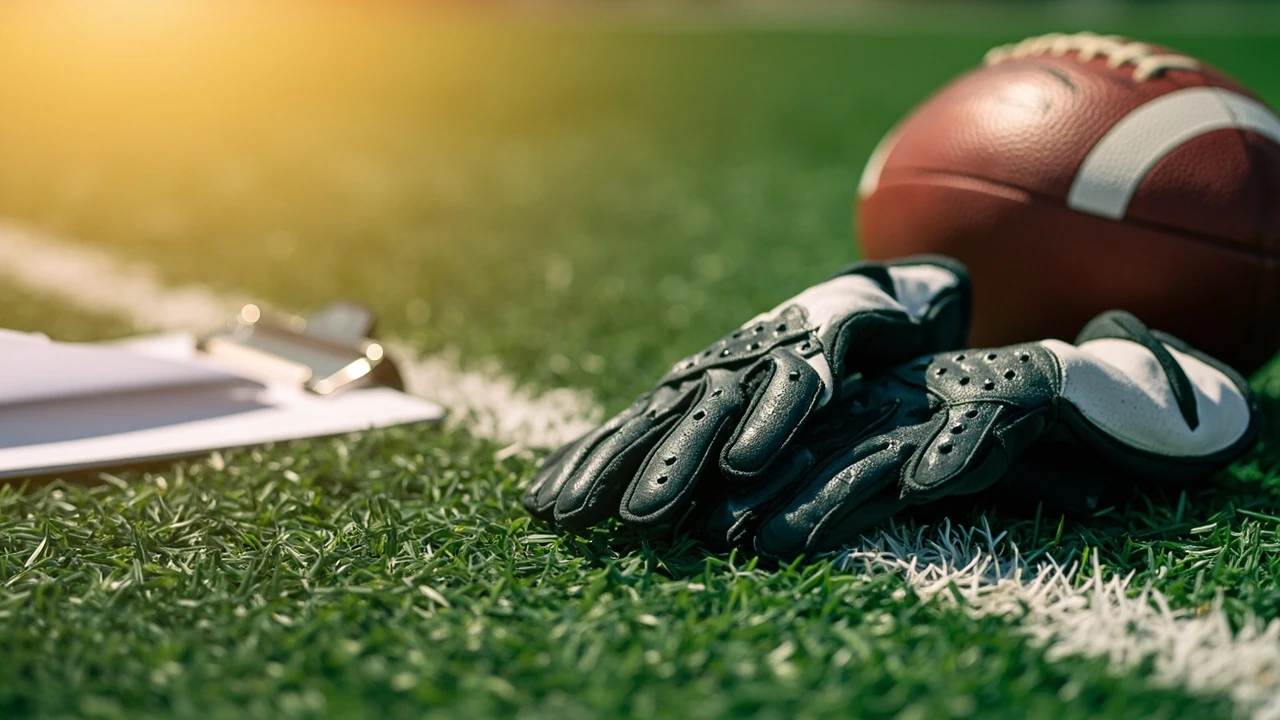
Football gloves: what they actually do for your hands on the field
A wide receiver drops a clean pass in the third quarter, feels the sting of a cold afternoon on his fingers, and blames himself. The next week the same player wears a properly fitted pair of football gloves with a tacky palm and catches the same throw without thinking about his hands. The difference is not confidence. It is the contact patch between skin and ball, the warmth of the fingers, and the cushioning over the knuckles when the ball arrives at speed. Football gloves are a small piece of equipment with an outsized effect on catching, blocking, and protecting the hand across every position group.
Most players who shop for football gloves arrive with the same set of questions. Do they help with grip, or just with comfort? Which style fits a receiver versus a lineman? How tight should they feel, and how do you break them in without tearing the palm? Which features actually matter, and which are marketing? This guide walks through each decision so a player, parent, or equipment manager can choose a pair that fits the position, the weather, and the budget, and so they can keep the gloves working for a full season instead of a single game.
Why players wear football gloves in the first place
Modern football gloves combine three functions that the bare hand cannot deliver at the same time. A tacky palm increases the friction between hand and ball, a padded back absorbs impact, and the fitted sleeve keeps the hand warm when temperature drops on a November sideline. Each of those functions matters at different moments during a game, which is why position groups have leaned on gloves even at the highest levels of play.
The grip benefit is the most often discussed. The palms of football gloves are made from a synthetic material, often a silicone or latex blend, that increases the coefficient of friction on the leather or composite surface of the ball. That extra friction shortens the time the receiver needs to control the ball, which is the difference between a catch and a deflection in close coverage. The NCAA rulebook and the NFL rulebook both permit gloves that meet specific tackiness and material requirements, and officials check them before the game, so players and coaches can rely on them as legal equipment.
The second function is protection. A pair of football gloves with reinforced knuckles can spread the force of a hard-thrown pass across a wider area of the hand, which reduces sting and lowers the chance of a small fracture when a defensive back arrives a beat late. Lineman and linebacker styles use denser padding across the back of the hand to shield against helmet and shoulder contact during a block or a tackle.
The third function is thermal. Hands cool quickly when they are not moving, and cooled fingers lose dexterity before the rest of the body feels cold. A light, close-fitting glove keeps the hand warm enough to flex, grip, and release. Many cold-weather models add a fleece or brushed liner for receivers and quarterbacks in late-season games.
Receiver gloves vs. lineman gloves: the two main style families
The first decision a buyer makes is the position-driven style. Receiver and skill-position gloves prioritize grip and a thin, second-skin fit. Lineman and linebacker gloves prioritize padding and a heavier construction. Skill players also use quarterbacks and defensive backs, while trench players include offensive and defensive linemen, and a hybrid category covers running backs, tight ends, and edge players who need both grip and a little extra back-of-hand protection.
| Style | Typical positions | Palm priority | Padding | Cuff length | Weight feel |
|---|---|---|---|---|---|
| Receiver / skill | WR, DB, QB, RB, TE | Maximum tackiness, thin | Light, flexible | Short, sits above wrist | Second skin |
| Lineman / linebacker | OL, DL, LB | Moderate grip, thicker | Dense padding on back of hand and fingers | Mid-cuff, often with secure strap | Substantial |
| Hybrid | TE, edge rusher, fullback | High grip with reinforced thumb | Medium padding on back of hand | Short to mid-cuff | Balanced |
| Cold weather | All positions in low temperatures | Tacky, slightly thicker palm | Light to medium | Longer cuff, sometimes gauntlet | Insulated |
Receiver gloves are the most popular category. They are designed to disappear on the hand so the player can flex, point, and adjust to a ball in the air without thinking about the glove itself. Lineman gloves are a different animal, closer in feel to a batting glove in baseball than to a cycling glove, with the padding built to take repeated impact from helmets and shoulder pads.
What a good pair should feel like in the hand
Fit is the single most important variable in a pair of football gloves. A glove that is one size too large bunches at the palm, which reduces the contact area on the ball and gives the quarterback’s throw a chance to slip. A glove that is one size too small restricts blood flow and makes the fingers feel stiff in the fourth quarter. The goal is a snug fit with no excess material at the fingertips and no pinch at the base of the thumb.
A useful rule of thumb is to leave roughly a quarter inch of space at the end of each finger. That small gap is the difference between a fit that breaks in well and a fit that pulls apart at the seam after two practices. The palm should lie flat without folds when the hand is relaxed, and the thumb should sit naturally along the index finger without pulling the webbing between them tight. A useful background reference is the Danny Glover footballer, which places this part of the discussion in context.
The cuff matters more than most buyers expect. A short, low-profile cuff sits above the wrist bone and does not interfere with a wristband or a play-calling wristband on the forearm. A longer cuff adds a small amount of warmth and can keep dirt and turf debris out of the glove during a play on the ground. Players who wear a wrist coach or a heart-rate monitor often prefer a low cuff for that reason.
Materials and construction explained
The palm is the part of the glove that does the work. Most modern palms use one of three material families, each with a different feel, durability profile, and grip character.
- Silicone printed palms. A thin, flexible palm with a silicone pattern printed across the surface. Very tacky when new, very thin, and the most common choice for elite receiver gloves. The trade-off is that silicone loses grip as dust and skin oil build up, so the glove needs regular cleaning to stay effective.
- Latex or latex-blend palms. A slightly thicker palm that feels grippier in dry conditions and holds up well across a season. Latex palms are common in training gloves and in mid-range receivers because they balance cost, feel, and durability.
- Synthetic leather palms. The most durable palm option, used in many lineman and youth gloves. Slightly less tacky than silicone, but they hold up to repeated contact with helmet and pad and they do not lose grip as quickly when the surface gets dusty.
The back of the hand uses a stretch woven fabric, a knit mesh, or a light neoprene depending on the price point. Stretch woven fabric is the most breathable. Knit mesh is cooler but can snag on turf. Light neoprene adds padding at the cost of a little breathability. The fingers are usually pre-curved, which is a small but important detail. A pre-curved finger follows the natural bend of the hand at rest, so the glove feels relaxed when the hand is relaxed and does not fight the player when he reaches for the ball.
Stitching and seam placement are where cheaper gloves fail first. Reinforced stitching at the base of the thumb, between the index and middle fingers, and along the pinky edge is a sign of a glove that will survive a full season. Glued-only seams can peel apart after a few hot practices, especially in summer camps where the hand sweats heavily.
How to size football gloves correctly
Sizing varies between brands, so the size label on a Nike glove and the size label on a Cutters glove can both say “Large” and still feel different on the same hand. The reliable approach is to measure the hand and compare it to the brand’s specific size chart, not to a generic S-M-L table.
- Measure the circumference of the hand at the widest part, just below the knuckles, with a soft tape measure. The thumb should be excluded and the hand should be relaxed.
- Measure the length from the tip of the middle finger to the base of the palm, where the wrist crease sits.
- Use the larger of the two measurements to pick a size on the brand’s chart. A hand that measures 8.0 inches around and 7.4 inches long is closer to a size M on most adult charts, but the chart rules vary by brand.
- If the hand falls between two sizes, lean toward the smaller size for a receiver glove and the larger size for a lineman glove. Skill players want a tighter palm, while trench players want a little extra room for the padding to settle.
- Try the glove on with a fist and an open hand. A good fit stays snug in both positions, with no pinch when the fingers close and no gap at the palm when the hand opens.
For youth players, the hand is still growing, so a glove that fits at the start of the season may be too tight by midseason. Most youth sizes are built with a small amount of stretch, but a glove that feels slightly snug out of the package is the right call, not one that feels loose and comfortable on day one.
How to break in football gloves without ruining them
New gloves can feel stiff at the palm, especially in pairs with a thicker synthetic leather or a heavy latex palm. The temptation is to soak them in water, which softens the leather but shortens the life of the glove and can damage the silicone print. A better approach is a short, deliberate break-in routine.
- Wear the gloves for short handling drills before the first practice. Toss a ball against a wall, work the fingers through a stretch routine, and let the palm warm up.
- Lightly dampen the palm with water from a spray bottle if the practice is in dry heat. A barely moist palm helps the synthetic fibers settle to the shape of the hand. Do not soak the glove.
- Store the gloves open and flat, not crumpled in a bag. A glove that sits in a ball for two days develops creases at the knuckles that can tear later.
- Use a grip enhancer spray designed for athletic gloves if the palm has lost tack. A small amount goes a long way and restores grip without damaging the surface.
Receiver gloves usually break in over two to three practices. Lineman gloves take a little longer because the back-of-hand padding needs to settle to the shape of the hand. Once a glove is broken in, the fit should feel like an extension of the hand, with no hot spots at the seam lines and no pinch when the fingers close.
Cleaning and storage that actually extend the life of the glove
A pair of football gloves takes a beating. Sweat, dirt, turf rubber, and the constant flexing of the fingers all shorten the life of the glove if they are not managed. The good news is that a few simple habits can double the useful life of a mid-range pair. As a separate reference, the fighter’ danny glover vows to dig adds source-specific context to this discussion.
- Wipe the palm with a damp cloth after every practice. Skin oil and dust are the two biggest grip killers, and a quick wipe keeps both from building up.
- Hand wash in cool water with a small amount of mild detergent when the glove starts to smell or stiffen. Avoid hot water, which can warp the palm material and damage the silicone print.
- Air dry on a flat surface away from direct heat. A glove that dries on a radiator or in a dryer loses its shape and can shrink the palm.
- Store in a breathable bag, not a sealed plastic bag. A sealed bag traps moisture and creates a perfect environment for bacteria and mold.
- Rotate two pairs during a heavy training week. The glove that sits out for a day dries fully and keeps its tackiness longer than a glove that goes straight from one practice to the next.
A common mistake is to keep wearing a glove after the palm has gone smooth. A smooth palm is not just less grippy, it can also pull on the ball during a catch and slow the receiver’s hands. When the palm starts to look shiny rather than textured, the glove has done its job and should be replaced.
What the rules actually say about football gloves
Both the NCAA and the NFL permit gloves, but they put reasonable limits on what a glove can do. Officials inspect gloves before the game to make sure they are not built to injure another player and that the tackiness is within a defined range. A glove with a metal plate, a sharpened edge, or a tackiness level that lifts the ball off the carrier’s hand is illegal.
| Level | Glove allowed | Tackiness limit | Hard material | Inspection |
|---|---|---|---|---|
| NCAA college football | Yes, position appropriate | Defined by rule, checked pregame | Not permitted on contact surfaces | Referee or umpire at the game |
| NFL | Yes, position appropriate | Defined by rule, checked pregame | Not permitted on contact surfaces | Referee or umpire at the game |
| High school (NFHS) | Yes, position appropriate | State association rules | Not permitted on contact surfaces | Referee at the game |
| Youth leagues | Yes, position appropriate | League specific | Not permitted on contact surfaces | League officials |
For a complete orientation to how protective equipment and apparel are governed, the Wikipedia article on American football equipment is a useful starting point. Specific league rules should always be checked at the source, because officiating crews and equipment inspectors can refuse a glove on game day, and the safest approach is to confirm with the local rule book before buying anything unusual. For broader guidance on how sport equipment is engineered and tested, the ASTM sports equipment standards catalog provides an overview of the standards that govern football protective gear.
Common mistakes when buying football gloves
Most returns and most disappointed buyers run into the same handful of problems. Knowing them ahead of time saves a trip to the equipment room and a wasted budget.
- Choosing style over fit. A flashy pair that does not fit the hand is worse than a plain pair that does. Fit is the only feature that affects performance on every play.
- Picking a receiver glove for a lineman. The thin palm and low padding of a receiver glove do not protect the hand in the trenches, and the player will go through the palm in two games.
- Ignoring the weather. A light receiver glove works fine in September. The same glove in late November can leave the fingers too cold to flex. A cold-weather pair is a separate purchase, not an optional accessory.
- Skipping the break-in. A glove that has never been worn in practice is still stiff on game day. A short break-in routine is part of the equipment plan, not an afterthought.
- Hoping a cheap glove will last a season. Entry-level gloves are fine for youth players who outgrow gear quickly. For a varsity player or a high-volume practice schedule, mid-range construction pays for itself in durability.
If you are new to the wider world of football training and want a useful foundation, the Why Gymnastics Is the Foundation for Every Sport article on the site is a good reminder that grip, balance, and body control start well before a player puts a glove on. For a closer look at how different athletic skills transfer between sports, From Gymnast to All-Round Athlete: How Skills Transfer to Football, Basketball and Hockey covers a related angle for athletes who play more than one sport.
When to replace a pair
A pair of football gloves does not fail all at once. The palm wears first, then the seams at the base of the thumb, then the fingertips where the leather pulls. Watching for these signs keeps the player from losing grip in the middle of a game.
- The palm feels smooth rather than textured, even after a wipe-down. A new pair feels slightly rubbery, and that rubbery character is the grip.
- Seams at the base of the thumb or between the fingers start to lift. Once a seam lifts, it spreads quickly under the stress of catching.
- The fingertips develop small holes. A small hole in the fingertip is the start of a tear that runs back to the knuckle.
- The glove smells even after washing. A persistent smell means bacteria have settled into the padding, and the glove is past the point of useful life.
Buying checklist before you commit
A short checklist is the easiest way to avoid an expensive mistake. The list below is what a careful equipment manager runs through before ordering a team’s gloves, and it works just as well for a parent or a player buying for a single season.
- Position group. Receiver, skill, lineman, hybrid, or cold weather.
- Palm material. Silicone for max grip, latex for balance, synthetic leather for durability.
- Hand measurement. Circumference and length, checked against the brand’s size chart.
- Cuff length. Low profile for wrist coaches, longer for cold weather.
- Construction details. Reinforced thumb seam, pre-curved fingers, breathable back of hand.
- Rule compliance. Legal under the league that governs the player’s games.
- Care plan. A second pair for rotation, a cleaning cloth in the bag, a breathable storage bag.
Putting it all together
The right pair of football gloves is the one that fits the hand, suits the position, holds up across a season, and stays legal under the league’s rules. Start with fit, choose the style for the position, and treat the palm as the part of the glove that does the real work. A receiver needs tackiness, a lineman needs padding, and a hybrid player needs both in smaller doses. Sizing, break-in, cleaning, and storage are the small habits that keep the glove performing week after week, and a backup pair on the sideline is the cheapest insurance a player can buy.
Equipment is one piece of a much larger development plan. Players who want to build the kind of hand strength and control that make a glove feel like an extension of the hand are usually the same players who train their footwork, grip, and balance off the field. A useful next step is to add a grip-focused routine to a regular training week, rotate a clean pair in and out of the bag, and replace a glove the moment the palm starts to feel smooth.
Frequently asked questions
Do football gloves really help with grip?
Yes, when the palm is clean and the fit is right. A tacky silicone or latex palm increases the friction between the hand and the ball, which shortens the time the receiver needs to control a pass. The benefit drops sharply when the palm is dusty, oily, or worn smooth, which is why regular cleaning and timely replacement matter as much as the original purchase.
How tight should football gloves fit?
Snug, with about a quarter inch of space at the end of each finger and no excess material at the palm. The glove should feel like a second skin in both an open hand and a closed fist. A glove that bunches at the palm is too large, and a glove that pinches at the base of the thumb is too small.
What is the difference between receiver gloves and lineman gloves?
Receiver gloves prioritize a thin, tacky palm and a flexible back of the hand so the player can catch and handle the ball. Lineman gloves prioritize denser padding across the back of the hand and fingers to absorb contact from helmets and shoulder pads. Most players should match the glove to the position group they play.
Can football gloves be washed in a washing machine?
Hand washing in cool water is the safer choice. A washing machine can warp the palm, lift the seams, and damage the silicone print. Mild detergent, cool water, and air drying on a flat surface keep the glove in shape for a full season.
Are football gloves allowed in high school and college play?
Yes, in both high school and college play, with limits on tackiness and no hard materials on contact surfaces. Officials inspect gloves before the game, and a glove that fails inspection has to come off. The exact rules vary by league, so check with the local rule book or the officiating crew before game day.
How long do football gloves usually last?
A receiver glove used two to three times a week typically lasts a full season before the palm starts to feel smooth. A lineman glove lasts about the same on the back of the hand, while the palm can last longer because it is not the primary contact surface. Heavy training schedules shorten both lifespans.
What is the best way to restore tackiness on a worn palm?
Wipe the palm with a damp cloth, let it air dry, and use a grip enhancer spray designed for athletic gloves if the tack has not returned. A palm that has gone smooth cannot be restored to factory condition and is a sign that the glove should be replaced.
Do quarterbacks and defensive backs need different gloves than receivers?
Most quarterbacks and defensive backs wear the same receiver-style gloves, with a thin palm and a flexible back. The main differences are personal preference, cuff length, and color rules that vary by team. A quarterback who throws in cold weather sometimes adds a slightly thicker cold-weather pair for late-season games.
Are youth football gloves sized the same way as adult gloves?
Youth gloves follow a separate size chart because youth hands are smaller and shaped differently. The same measuring process works, but the brand’s youth chart is the right reference. Parents should also expect to replace youth gloves more often as the player’s hand grows across the season.
What features are not worth paying extra for?
Decorative back-of-hand prints, flashy colors, and magnetic closures add cost without changing the way the glove performs. The features that do affect performance are palm material, fit, seam construction, and padding on lineman styles. A mid-range glove with solid construction usually outperforms a premium glove with a thin palm and a fancy closure.