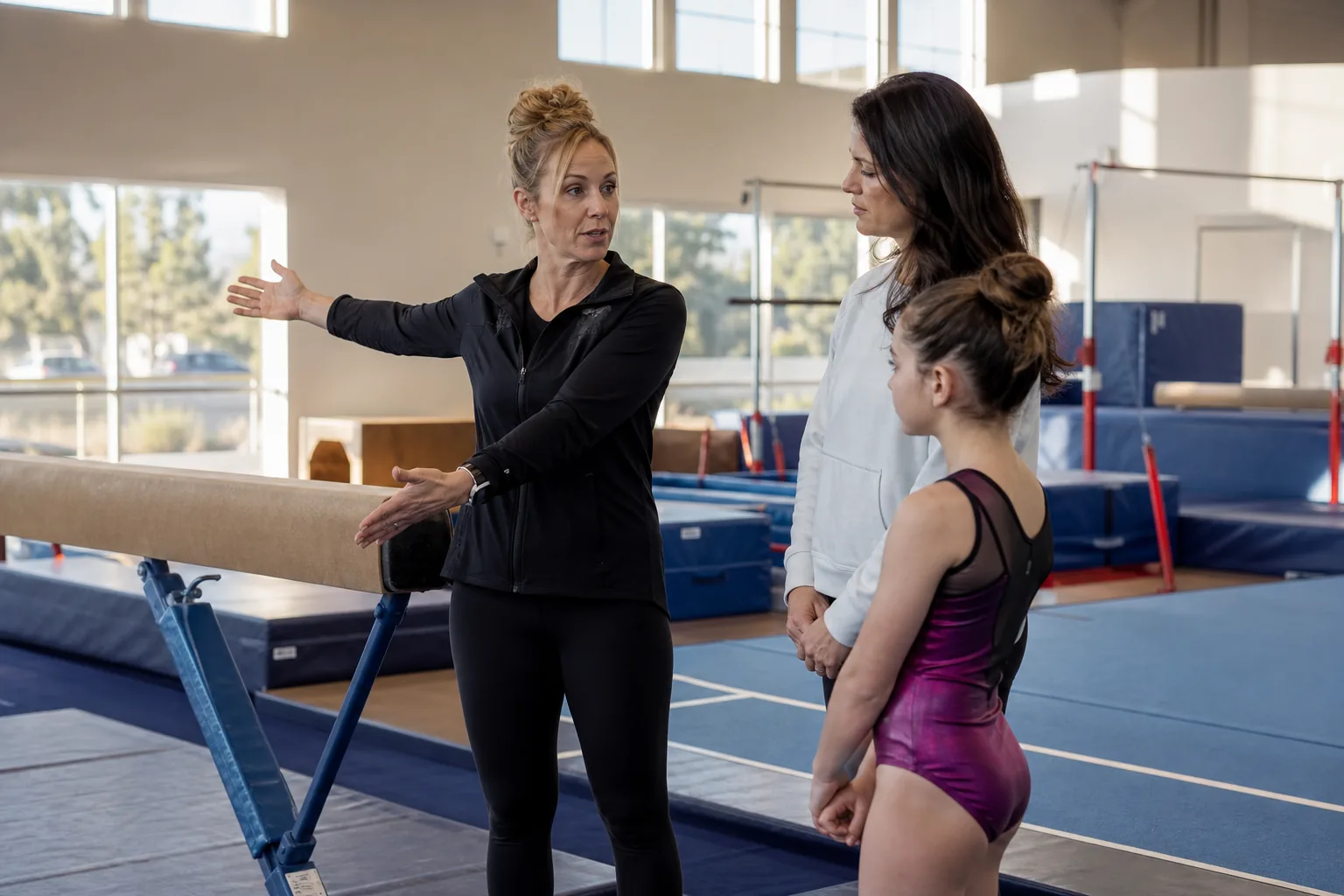
Choosing a gymnastics program can feel harder than choosing a sport. Club websites use different names for similar levels, competition pathways vary, and a large facility can look impressive before a parent has seen how a normal class actually runs.
The useful question is not “Which gym looks most elite?” It is “Which program is appropriate for this athlete, at this stage, with this goal?” A good answer combines coaching, culture, progression, logistics and the way the child responds to the environment.
Start with the athlete’s reason for gymnastics
Some children want to learn a cartwheel. Some need a broad movement foundation. Some are drawn to performance and competition. Others want a social activity that builds confidence and strength. These are all valid starting points, but they do not require the same program.
Write down the main goal before comparing clubs. Include practical limits: available days, travel time, budget and whether the family is open to future competition. This keeps a trial class from turning into an emotional decision based on the most advanced group in the building.
Understand common gymnastics program types
Preschool and early movement classes
These programs should emphasize movement vocabulary, listening, safe landings, basic shapes and confidence using age-appropriate equipment. The class may look playful because play is part of how young children learn. The important detail is whether the activity has a clear purpose and active supervision.
Recreational gymnastics
Recreational classes are the usual entry point for school-age beginners and for athletes who want skills without a competitive commitment. A strong program still has levels and progressions. “Recreational” should not mean random stations or permanent waiting in line.
Pre-team and competitive pathways
Pre-team programs prepare selected athletes for a club’s competition structure. Hours, expectations and cost may increase. Ask how selection works, when progress is reviewed and whether the athlete can return to a recreational track without stigma if goals change.
Tumbling, trampoline and cross-sport classes
Some athletes want floor skills, aerial awareness or support for dance, cheer, diving or another sport. A focused class may be appropriate, provided it still teaches prerequisites and does not rush advanced skills because the athlete is already accomplished elsewhere.
Adult gymnastics
Adult classes should scale difficulty, respect current mobility and strength, and welcome both beginners and returning gymnasts. Ask whether the session is coached or essentially open gym, and what skills the facility permits at each experience level.
What to observe during a gymnastics class
A trial is useful because a timetable cannot show coaching behavior. Watch the ordinary minutes, not only the best skill. Do coaches know where each athlete is? Are instructions short enough that children spend time moving? Are landings and shapes corrected? Does the class progress from preparation to skill?
Look at how a coach responds when an athlete is hesitant. Good coaching can be demanding without being dismissive. An athlete should be allowed to communicate discomfort, ask a question and receive an appropriate progression.
- Equipment and landing areas are organized for the activity.
- Athletes are not attempting skills outside the coach’s attention.
- Progressions are visible; the class is not just a collection of tricks.
- Coaches give specific feedback rather than only praise or criticism.
- Waiting time is managed with purposeful stations or small groups.
Ask how safety and safeguarding work
Parents should be able to ask direct questions about supervision, coach screening and training, emergency procedures, photography, communication with minors and how concerns are reported. The exact system depends on location and organization, but the club should have a clear answer rather than relying on “we have never had a problem.”
Also ask who makes a placement decision and how readiness is assessed. A child’s ability to perform one skill at home does not establish readiness for a higher class. Strength, consistency, listening, shapes and safe progressions matter.
Compare coaching quality, not only credentials
Relevant qualifications and experience are important, but families also need to see how knowledge reaches the athlete. A highly accomplished coach who cannot explain a correction at the child’s level may not be the best match. Conversely, a warm class still needs technical structure.
Ask who will normally coach the class, not only who owns the gym. Learn how substitute coaches are handled and how the club develops its staff. Stability matters because trust and consistent language support learning.
Understand progression and feedback
Gymnastics progress is rarely linear. A good program can explain the skills and behaviors expected at the current level, how athletes are evaluated and when families receive feedback. Advancement should not depend only on age, attendance or pressure from a parent.
For competitive programs, ask how the club balances routine construction, strength, basics and skill difficulty. Clarify expected training hours, meet travel, uniforms, fees and attendance before accepting a place. The complete commitment matters more than the headline tuition.
Red flags when choosing a gymnastics club
- Advanced skills are treated as the main proof of quality for beginners.
- Families cannot get a clear explanation of placement, fees or progression.
- Athletes are regularly shamed, compared or told to hide pain or fear.
- Rules about communication, photography or supervision are vague.
- The sales conversation promises scholarships, rapid advancement or guaranteed competitive results.
One imperfect moment does not define an organization, but a pattern deserves attention. Parents should trust specific observations and documented policies more than reputation alone.
Use the first month as a second trial
The athlete may be excited or overwhelmed after one visit. Give the program enough time to establish a routine, then review. Is the child learning the names and shapes of skills? Can they describe what the coach is helping them improve? Do they generally want to return, even when the class is challenging?
Speak to the coach if the level feels too easy, too difficult or poorly matched to the goal. A constructive response is valuable evidence about the program.
A simple decision checklist
Choose the program that can answer five questions clearly: What will this athlete learn now? How will the coach keep the progression appropriate? How is safety managed? What will the real commitment be? How will the family know whether the placement still fits?
The best gymnastics program is not automatically the largest, closest or most decorated. It is the one where sound coaching, a suitable pathway and the athlete’s reason for being there can stay connected.